
 USA
 Brazil
 Germany
 France
 Italy
 Switzerland
 Sweden
 Spain
 Great Britain
 Norway
 Russia
 South Africa
 Japan
 New Zealand
 Australia

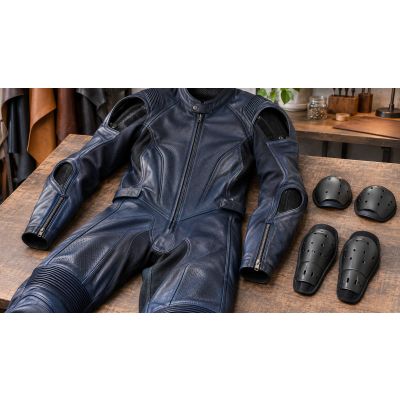
Short answer: Yes, but only in the riding build. Our superhero-inspired riding suit has removable CE Level 1 armor, a back pocket for an optional back protector, and a speed hump you choose on the order form. The cosplay and collectible display builds have no armor and are not meant for the road. Capes must come off before every ride. No suit removes the risk of a crash, so treat this as one part of a full kit with a proper helmet, gloves and boots.
Which build is for riding
We make each design in three builds. Only one is riding gear.
- Riding build: removable CE Level 1 armor and a back pocket for an optional back protector. You choose the speed hump on the order form.
- Cosplay build: same look, no armor, no back protector, no hump. Not for riding.
- Collectible display build: same as cosplay. Not for riding.
The builds are explained side by side in superhero motorcycle suits explained. If you want something you can ride in, start with the riding versions in our superhero motorcycle suits.
What the riding build includes
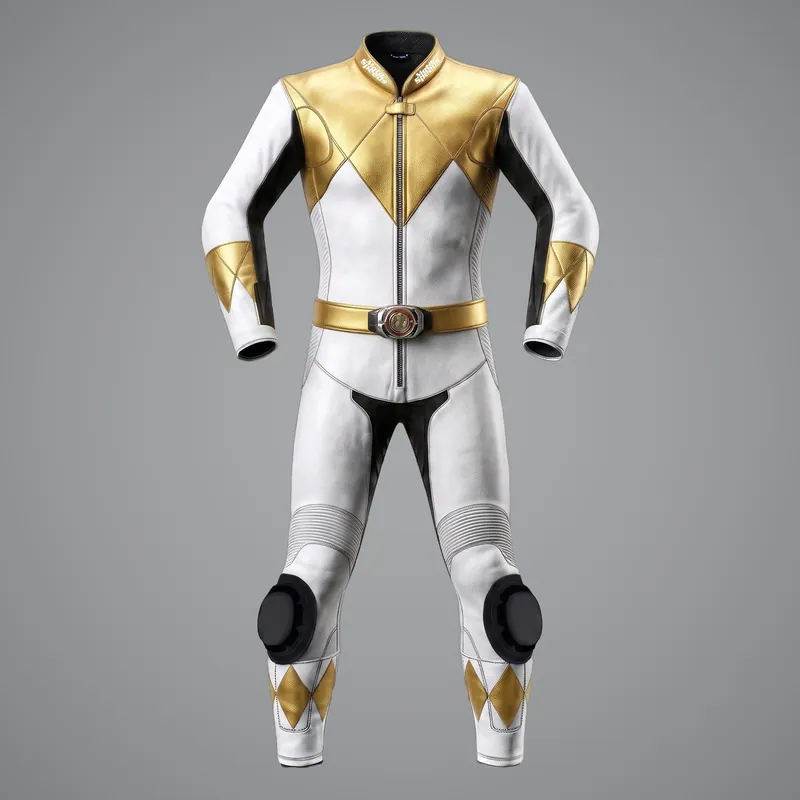
The riding build is designed around three things.
- Removable CE Level 1 armor at the shoulders, elbows, knees and hips.
- A back pocket for an optional EN 1621-2 back protector, sold as an add-on. No spine protector is included as standard.
- A speed hump option at the upper back, chosen on the order form: none, standard, ventilated or Hydro.
What does Level 1 mean? CE armor is tested to European standards (EN 1621-1 for shoulders, elbows, knees and hips, and EN 1621-2 for back protectors). The tests measure how much impact force gets through the armor. Level 2 lets through less force than Level 1, so Level 1 is the lower tier. Level 1 armor still counts as tested protection, and many riders wear it. If you want more, CE Level 2 armor is a paid upgrade on the riding build. Our article what CE armor is and why it matters goes deeper. For the back, see do you need a back protector.
Armor only works when it sits over the right part of your body. That depends on fit, which is why a well-fitted riding build matters more than the badge on the armor. See where armor sits in a race suit.
Whole-garment ratings are a separate matter. EN 17092 classes a complete garment on abrasion, seam strength and impact. No suit of ours carries a whole-garment class; the armor is CE-rated (EN 1621-1). Read decoding CE ratings if you want the background.
Sculpted parts and padding on the road
Superhero suits have raised shapes: chest plates, shoulder caps, ribbing. On top there are cut leather panels, and the shapes may be built up over padding. It helps to separate two things:
- Design padding gives the suit its shape. It is not armor.
- Protective armor is the CE-marked pieces in the riding build.
Raised shapes can change how the suit sits under a helmet strap or in a tucked position on a sport bike. Do a seated fit check with your bike (see the checklist below). Panel seams also add stitching in places a plain suit would not have. If a seam sits where the leather is stressed, ask us about it before ordering.
Capes and loose parts
Take the cape off before riding. A cape can catch wind, flap into your line of sight, or snag on the seat, a footpeg or a passer-by. Only a few designs have a cape (Batman Classic, Batman Dark Knight, Superman Black and Thor), and it must come off before riding. For Thor, ask how the cape is handled on a riding build. The same goes for any loose strap or accessory. If it can flap, remove it.
Helmet, gloves and boots
A suit is not a full kit. Before any ride you also need:
- A helmet that meets the rules where you ride. In the US, check the Department of Transportation helmet standard and NHTSA guidance, and in Europe check UN ECE 22.06 labeling.
- Gloves with protection at the palm and knuckles. Matching gloves are a product option, in sizes XS to 3XL.
- Motorcycle boots with ankle protection. Matching boots are a product option, up to EU 46 / US 12. See also our custom motorcycle boots.
Pre-ride checklist
- Is this the riding build, with armor installed?
- Are the armor pieces sitting over elbows, shoulders, knees and hips when you are on the bike?
- If you added a back protector, is it in the back pocket and not shifting?
- Is the cape off?
- Are zips fully closed, with nothing loose?
- Can you reach the bars, brake and clutch levers without the suit pulling?
- Does the suit suit your type of bike? A sport bike tuck and a cruiser upright seat need different fit checks.
- Helmet, gloves and boots on?
What no suit can promise
No gear can guarantee you will walk away from a crash. Armor reduces the force at covered points, and leather resists abrasion, but speed, surface, angle and what you hit decide the outcome. We do not promise crash results. If you want formal assurance, look for the certification label on the garment and ask the manufacturer what it covers.
Who should skip the riding build
If you only want the look for events, the cosplay build is lighter and costs less. Pay for the riding build only if you will ride.
How the three builds differ for road use
| Question | Riding | Cosplay | Display |
|---|---|---|---|
| Has removable CE Level 1 armor | Yes | No | No |
| Back pocket for optional back protector | Yes (protector is an add-on) | No | No |
| Meant for public roads | Yes | No | No |
| Meant for a track day | Check the organizer's rules | No | No |
| Capes on the road | No, remove them (only a few designs have one) | Not applicable | Not applicable |
Fit on the bike
A suit that fits in the mirror may not fit on the bike. Before you ride in a new suit, sit on the bike and check these points:
- Reach: your arms should reach the bars without pulling at the shoulders or the back of the suit.
- Knees: bend your knees as if on the pegs. The suit should not bind at the knee or push the armor out of place.
- Neck and collar: turn your head left and right with your helmet on. Raised collars can press on the helmet strap.
- Hump: check that it does not touch the back of your helmet in your normal riding position.
If the fit is off, say so before you ride. Our team can often advise on made-to-measure adjustments for the next order. See how to measure yourself for a perfect leather fit.
Weather, heat and abrasion
Leather resists abrasion better than most fabrics, and thick full-grain leather is a common choice for motorcycle gear. Our suits use full-grain cowhide, 1.2-1.4 mm. Thickness and construction vary, and we do not claim a specific abrasion rating. For heat, a full leather suit is warm in summer. Wear a wicking base layer and plan your stops. In rain, leather takes on water and needs drying and care afterward. See how to care for leather gear.
Where a jacket fits in
You may not want a full suit. A superhero motorcycle jacket is an option for lighter use, and you can pair it with riding pants. A jacket alone does not protect your legs, so pair it with proper pants and boots if you ride. Our jackets have removable CE Level 1 armor at the shoulders and elbows (Level 2 is a paid upgrade) and a back pocket for an optional back protector, so check the product page for each jacket. The women's jackets are milled cowhide and also have CE Level 1 armor at the shoulders and elbows.
Questions to ask before you ride
- Which build did I buy, and does it have armor installed?
- Do I know where each armor piece should sit?
- Is there any part of the suit that could catch on the bike, a lever or a footpeg?
- Do my helmet, gloves and boots match the type of riding I do?
- Have I told someone my route, and am I riding at a level that matches my skill?
FAQs
Is a superhero motorcycle suit safe to ride in?
The riding build is made with protection in mind: removable CE Level 1 armor and a back pocket for an optional back protector. No suit is crash-proof, and the cosplay and display builds are not for riding at all.
Which build has armor?
The riding build. The cosplay and display builds have none.
Can I wear the cape while riding?
No. Remove it before you ride.
What does CE Level 1 mean?
It is the lower of two impact-absorption levels in the EN 1621 tests for motorcycle armor. Level 2 transmits less force than Level 1. Level 1 is standard on the riding build, and Level 2 is a paid upgrade.
Do I need a helmet with the suit?
Yes. A suit does not protect your head. Use a helmet that meets the standard required where you ride.
Can I use a cosplay suit on a track day?
No. It has no armor and no back protector, and most track organizers have their own gear rules. Ask the organizer, and use the riding build or purpose-built race leathers.
Want the road-ready version? See the superhero motorcycle suits and choose the riding build, or start with a superhero motorcycle jacket if you prefer a lighter piece.