 USA
USA  Brazil
  Germany
  France
  Italy
Italy  Switzerland
  Sweden
  Spain
Spain  Great Britain
  Norway
  Russia
  South Africa
  Japan
Japan  New Zealand
  Australia
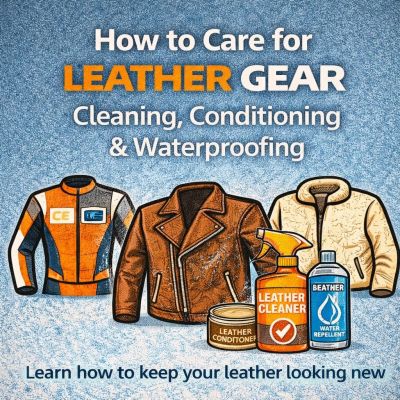
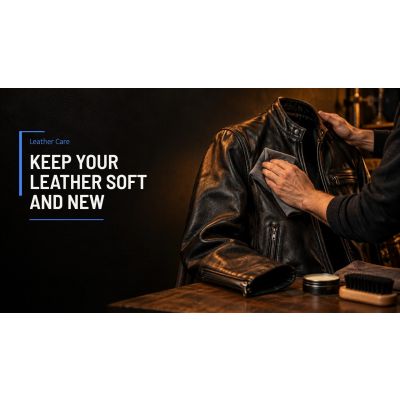
How a leather jacket looks after a few seasons depends heavily on care. Leather is tough, but it still needs attention: sweat, sun, rain, road grime and heat all act on it slowly. Regular care, done as the maker's instructions describe, helps keep it comfortable.
Key Takeaways
- Wipe gear down after rides and air it out, since sweat and grime build up over time.
- Follow the garment's care label and the maker's instructions; the right cleaner depends on the leather's finish and construction.
- Condition only if the maker recommends it, and lightly, because too much product leaves leather heavy.
- Dry wet leather naturally, away from heaters and direct sunlight, and store it cool and dry.
This guide shows how to clean a leather suit, how to maintain a and how to use waterproofing without damaging the leather.
Table of Contents
Why Leather Gear Care Matters
Leather is a natural material. It dries out when ignored, cracks when its oils are stripped, and suffers when sweat sits inside for weeks. The Canadian Conservation Institute's guidance on caring for leather points to light, heat and damp as sources of damage: UV and visible light cause fading and weaken the skin structure, and mould can grow on leather in damp conditions. That guidance is written for museum and heritage collections, not worn clothing, so for riding gear the maker's instructions come first.
Good leather gear care does three things:
- Protects strength by limiting drying and cracking.
- Keeps comfort by preventing stiffness and rough patches.
- Maintains appearance, so a jacket such as a keeps its finish.
A Simple Weekly Care Routine
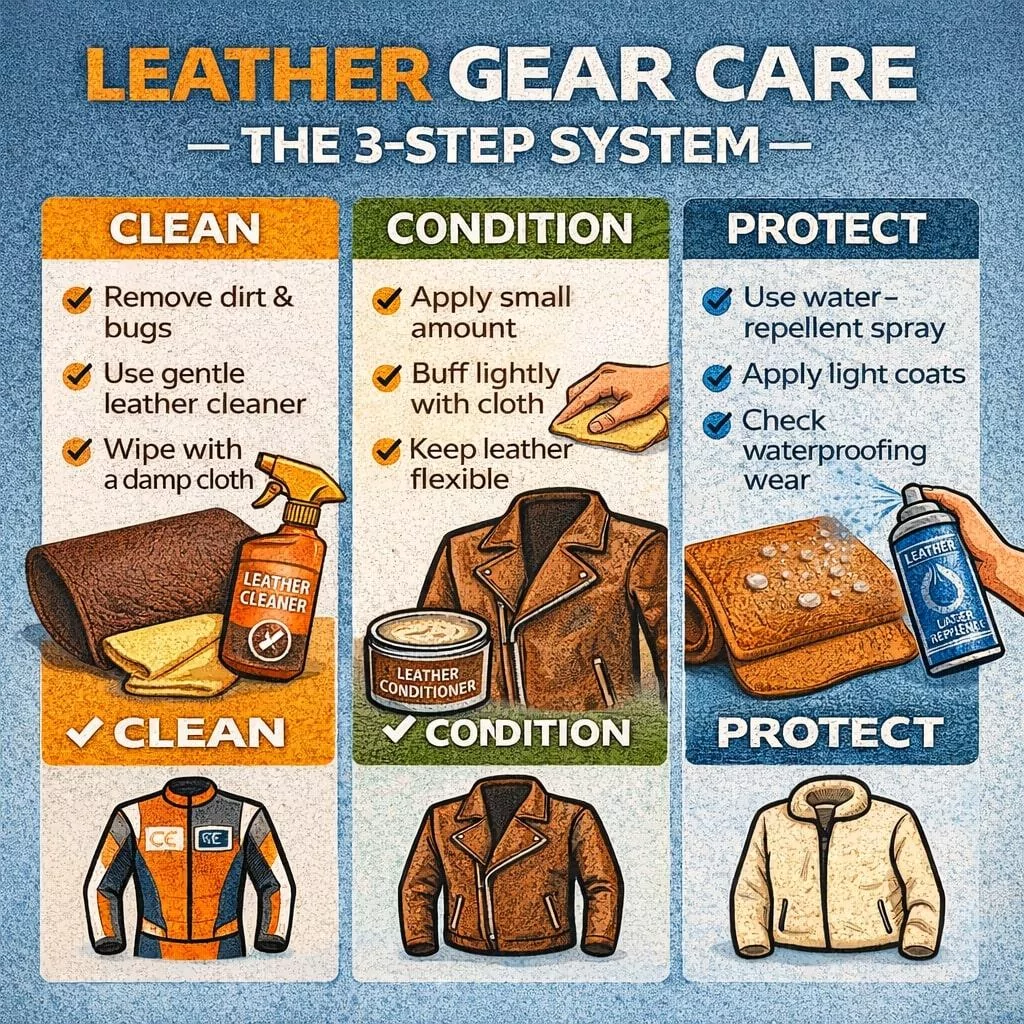
A short routine done regularly does more than one deep clean a year. Adjust it to the garment's care label and the maker's instructions.
Weekly Checklist (5 Minutes)
- Wipe bugs and road grime with a damp microfibre cloth.
- Air out the suit or jacket after riding.
- Check seams, zippers and stretch panels for damage.
Monthly Checklist (15 Minutes)
- Clean high-contact areas such as the neck, cuffs and inner arms.
- Condition only if the care label or the maker allows it and the leather feels dry.
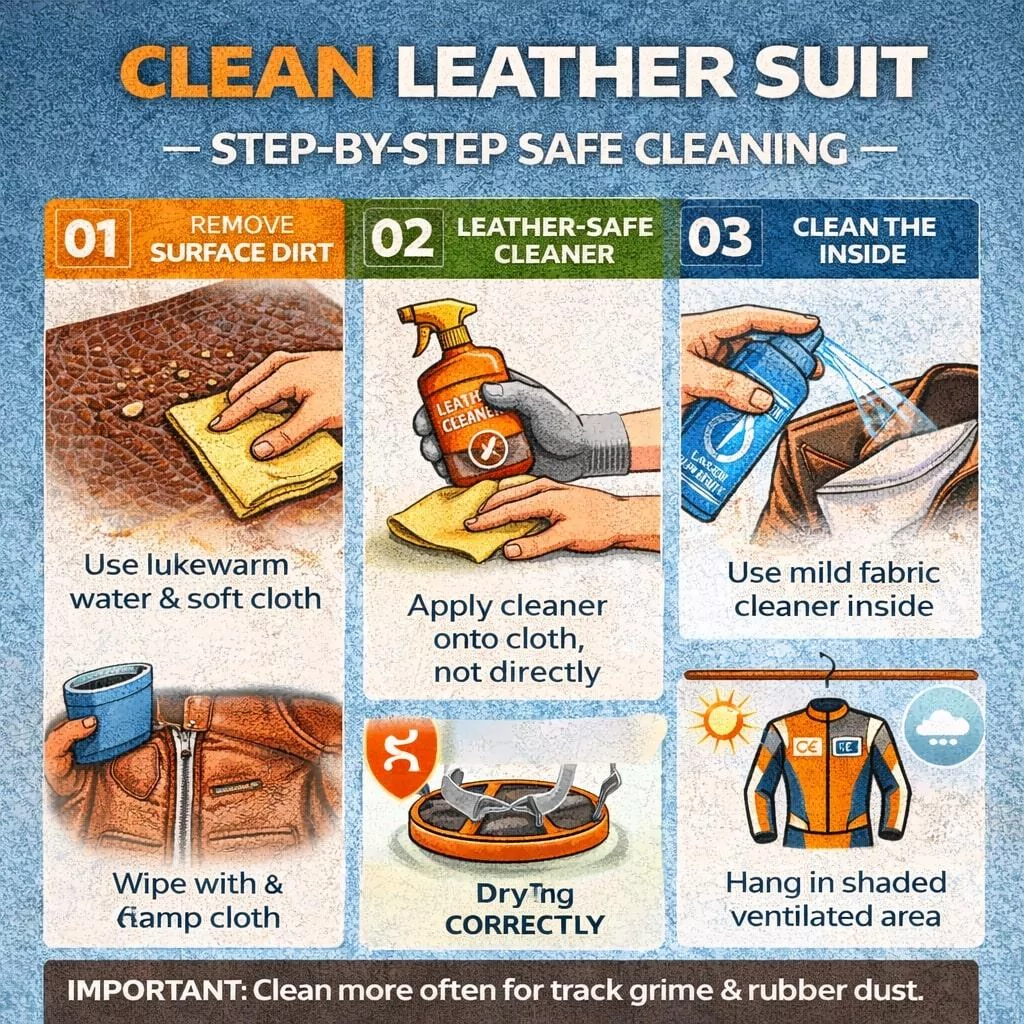
How to Clean Leather Gear Safely
Cleaning leather is not the same as cleaning fabric. Harsh soaps, solvents and soaking can damage some finishes. Check the care label or the maker's instructions before using any soap. Some conservation guidance for museum leather, from the Canadian Conservation Institute, cautions against alkaline cleaners such as saddle soap, but the right product depends on the finish and construction. Leather gear should not be machine washed unless the care label says it is allowed.
Step 1: Remove Surface Dirt
Use a soft cloth, dampened with lukewarm water if the label allows, and wipe gently. Do not scrub hard.
Step 2: Use a Leather-Safe Cleaner
If the maker approves a cleaner for the garment, apply it to the cloth, not directly to the leather. Work in small circles and focus on dirty zones such as the elbows and knees. For stubborn grime, moisten it and wait a few minutes before wiping.
Step 3: Clean the Inside Too
Sweat builds up in liners. Wipe the interior with a soft, slightly damp cloth, and check the label first, since linings, armour and membranes vary. Padded linings that can be removed may be washed separately if the maker says so.
Step 4: Dry Correctly
Keep wet leather away from heaters and direct sunlight. Hang the gear in a shaded, ventilated place and let it dry naturally.
Note: riders who use a suit on track should clean it more often, since track grime includes rubber dust and fuel residue.
How to Condition Leather Without Overdoing It
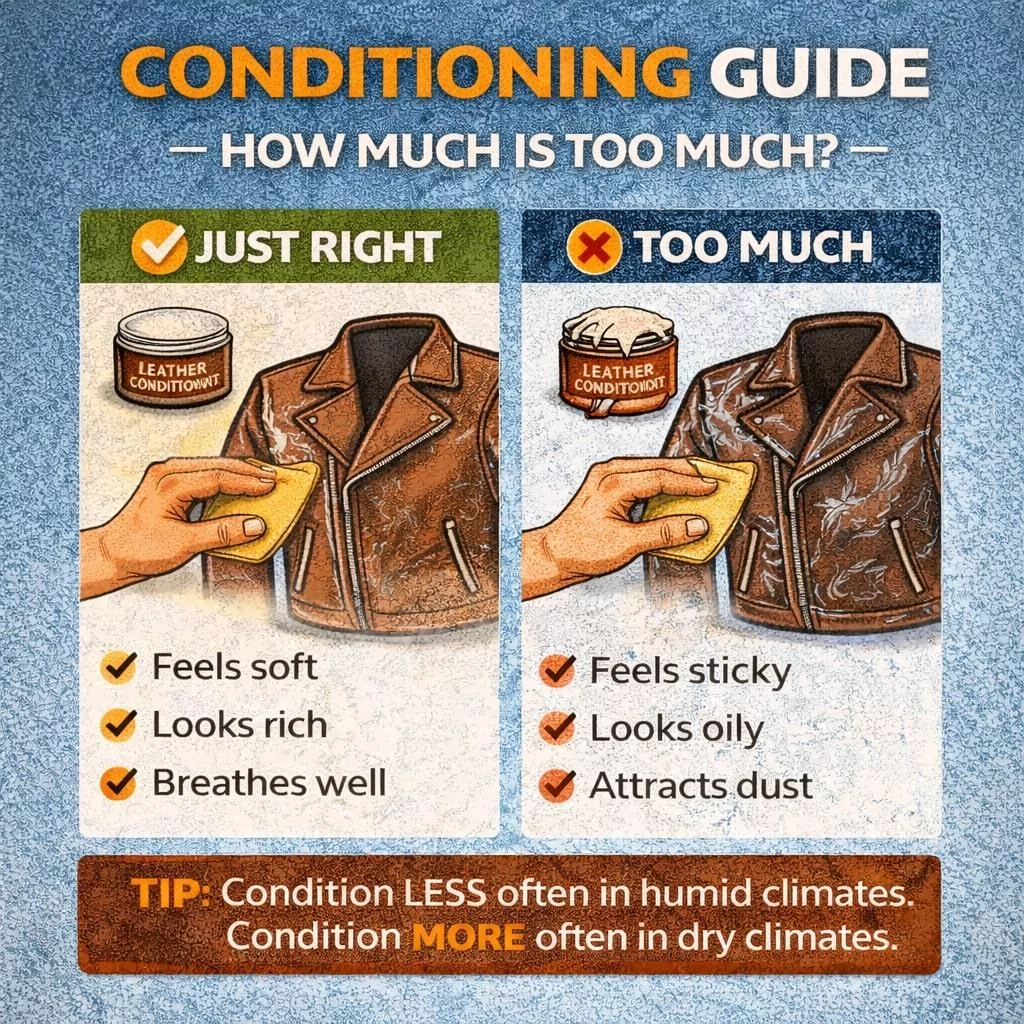
Conditioner is sometimes used to replace oils lost to heat, sweat and time. Whether it suits a given garment depends on the finish and construction, so condition only if the maker recommends it. Too much leaves leather heavy and tacky.
When Conditioner Is Needed
- The leather feels stiff.
- The leather looks faded or dry.
- Small creases look pale or dusty.
How to Condition Correctly
- Put a small amount on a cloth.
- Apply a thin, even layer.
- Leave it to absorb for the time given in the product instructions.
- Buff lightly with a clean cloth.
Tip: test any conditioner on a hidden area first.
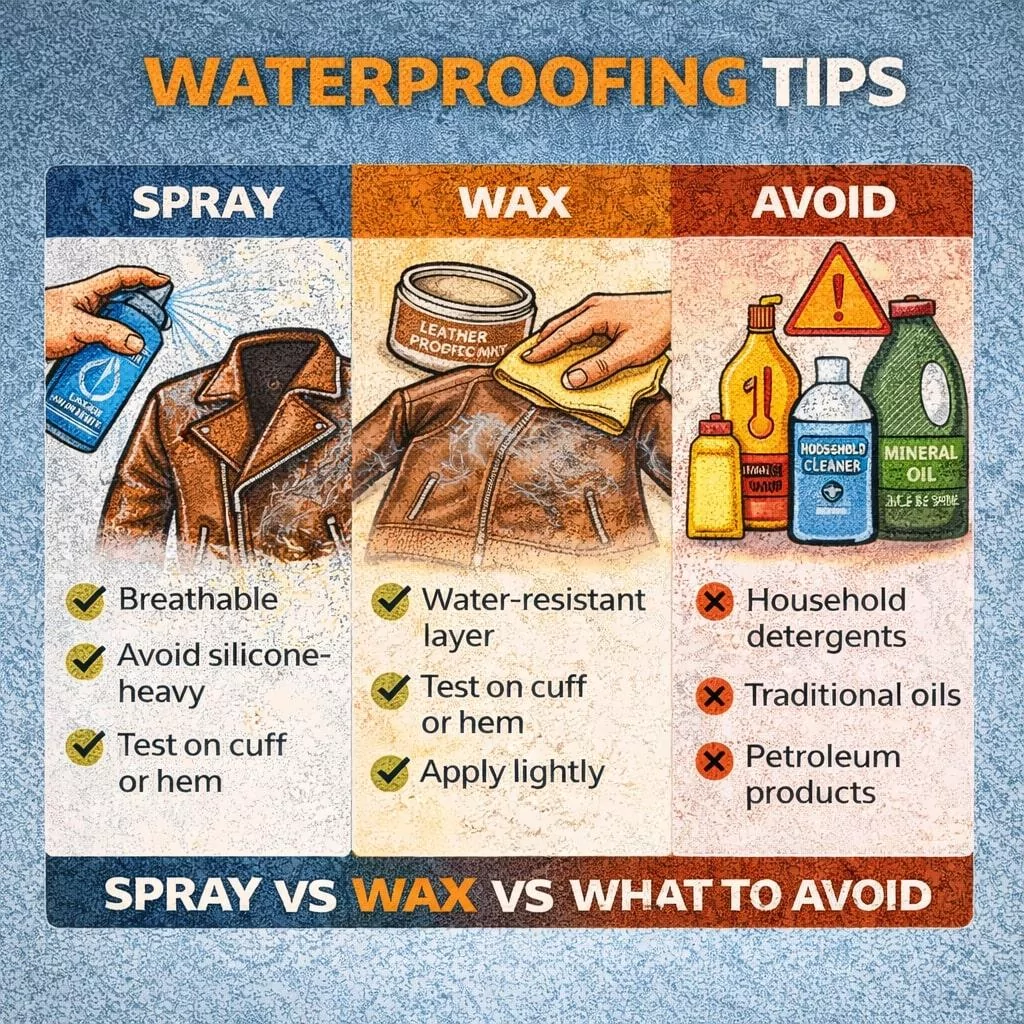
Waterproofing Tips That Do Not Ruin Leather
Leather copes with light rain, but repeated soaking can leave it stiff and dry. A water-repellent treatment can help if the maker recommends one, but coatings may be unsuitable for race leather, perforated panels or stretch panels, so check the label first.
Rule 1: Use the Right Product
Choose a breathable water-repellent spray or wax made for leather riding gear, and follow the instructions on the label.
Rule 2: Clean Before Waterproofing
Waterproofing over dirt traps the dirt in the surface, so clean the leather first.
Rule 3: Test on a Small Area
Try the product inside a cuff or on a lower hem, since some products darken leather slightly.
Rule 4: Apply Light Coats
Two light coats work better than one heavy coat, with drying time between them.
Drying and Storage Rules
Drying is where much of the damage happens. Heat from radiators and heaters dries leather out too fast, and Canadian Conservation Institute guidance, written for heritage collections, advises keeping leather away from heat sources and damp spaces. For worn gear, follow the maker's storage advice.
Correct Drying Method
- Hang the gear on a wide hanger.
- Keep it away from direct sunlight.
- Let air circulate naturally.
Storage Rules
- Hang the jacket in a cool, dry place, following the maker's storage advice, since damp encourages mould.
- Avoid damp basements and spots near radiators.
- Use a breathable garment bag if a cover is needed.
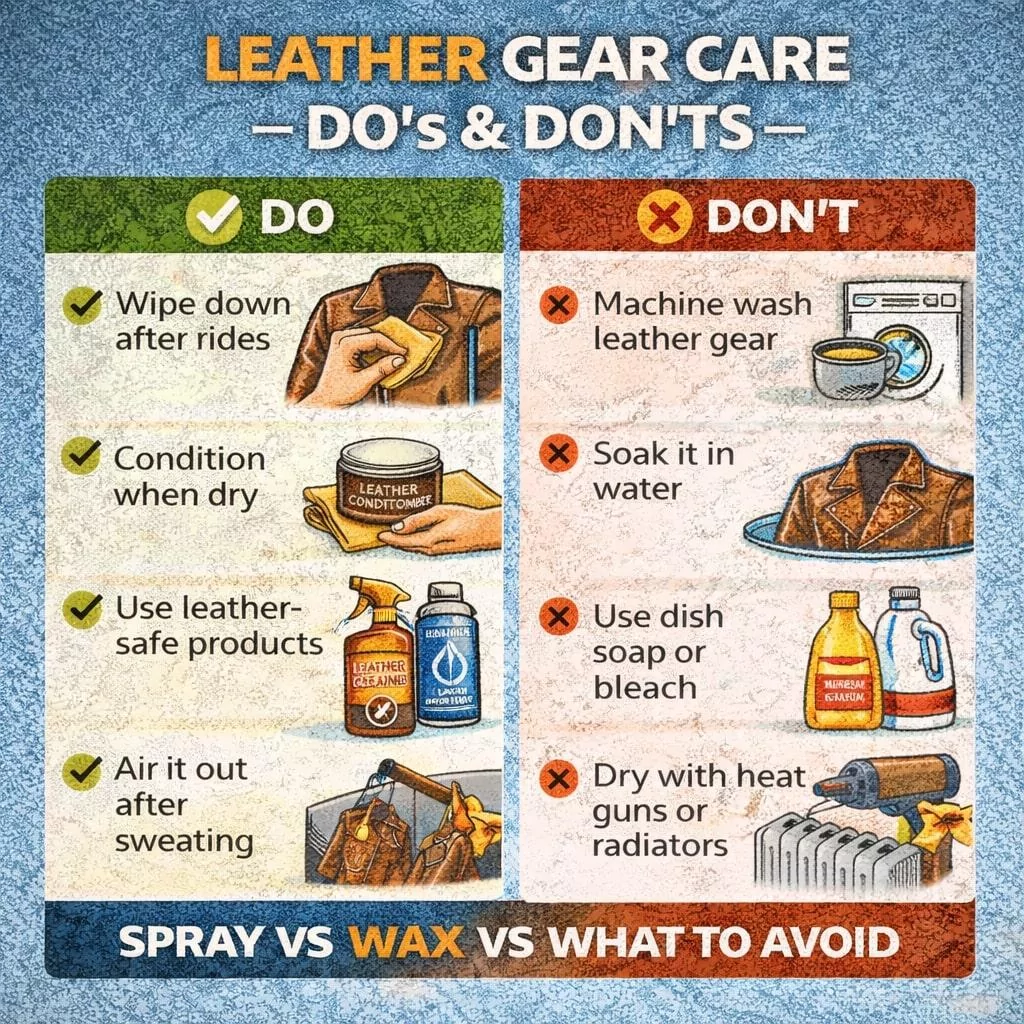
Do's and Don'ts
Do
- Wipe down after rides.
- Condition only as the maker recommends.
- Use leather-safe products.
- Air gear out after sweating.
Do Not
- Machine wash leather gear unless the care label says it is allowed.
- Soak it in water.
- Use dish soap or bleach.
- Dry it with heat guns or radiators.
What to Look for in Care Products
Rather than pointing to a single product, it helps to know what a good one does. Check that any product suits the garment's finish and the maker's instructions.
A Good Leather Cleaner
- A neutral formula designed for leather garments.
- No bleach or harsh solvents.
A Good Conditioner
- Absorbs quickly.
- Restores softness.
- Does not leave an oily residue.
What to Avoid
- Household detergents and dish soap.
- Stiff brushes and abrasive pads.
- Non-neutral creams and solvents.
For gear designed around a rider's measurements from the start, see .
Conclusion: Keep Leather in Good Condition
Leather rewards regular, gentle care. Clean gently, condition lightly, waterproof carefully and dry patiently, and the gear stays flexible and comfortable.
Frequently Asked Questions
How often should I clean leather riding gear?
Cleaning frequency depends on the garment and how it is used. A dry wipe after rides is gentle, and a more thorough clean should follow the care label or the maker's instructions. Riders who sweat heavily or ride on track may need to clean more often, because sweat and track residue build up. Clean when the leather looks dirty, not on a fixed calendar.
Can I use regular soap to clean a leather suit?
Check the care label or the maker's instructions first. Household detergents, dish soap and bleach are not suited to leather, and machine washing is only suitable if the label allows it. The right cleaner depends on the finish and construction, so work in small areas on a cloth and test somewhere hidden first.
Should I waterproof leather gear?
It can help if the maker recommends a coating and the product is breathable and made for leather riding gear. Clean the leather first, test the product on a hidden spot, and apply two light coats with drying time between them. Always follow the label instructions, since some products darken the leather.
What should I do if my leather gets wet?
Blot off excess water, hang it on a wide hanger in a shaded, ventilated place and let it dry naturally. Keep it away from radiators, heaters and direct sunlight. Once it is fully dry, check the care label before conditioning it.
Can I condition leather too much?
Yes. Too much conditioner can leave leather heavy, tacky and prone to attract dust. Apply a thin layer with a cloth, let it absorb as the product instructions say, and buff off the excess. Condition only if the maker recommends it.
Written by the Leather Collection Editorial Team.