 USA
USA  Brazil
  Germany
  France
  Italy
Italy  Switzerland
  Sweden
  Spain
Spain  Great Britain
  Norway
  Russia
  South Africa
  Japan
Japan  New Zealand
  Australia
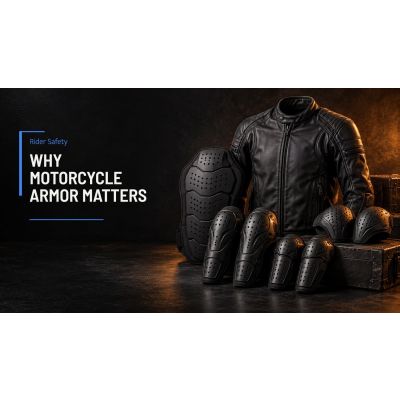
CE armour is the set of protectors, removable or built in, inside a motorcycle jacket or suit that are tested to reduce the impact force reaching the rider's body. Leather resists abrasion in a slide, but it does little against blunt impact, so armour does a different job.
This guide explains what the CE mark means, how Level 1 and Level 2 differ, where protectors sit and why fit decides whether they stay in place.
Key Takeaways
- CE marking on motorcycle clothing falls under the EU Personal Protective Equipment Regulation (EU) 2016/425.
- Level 2 protectors must transmit less force than Level 1 protectors in the same standardized test.
- A garment class under EN 17092 (AAA, AA, A) and a protector level are two separate ratings.
- Armour only helps when it stays over the joint or spine it was made for, so fit matters.
- Leather resists abrasion and armour handles impact, so a rider needs both.
Table of Contents
What Is CE Armour?
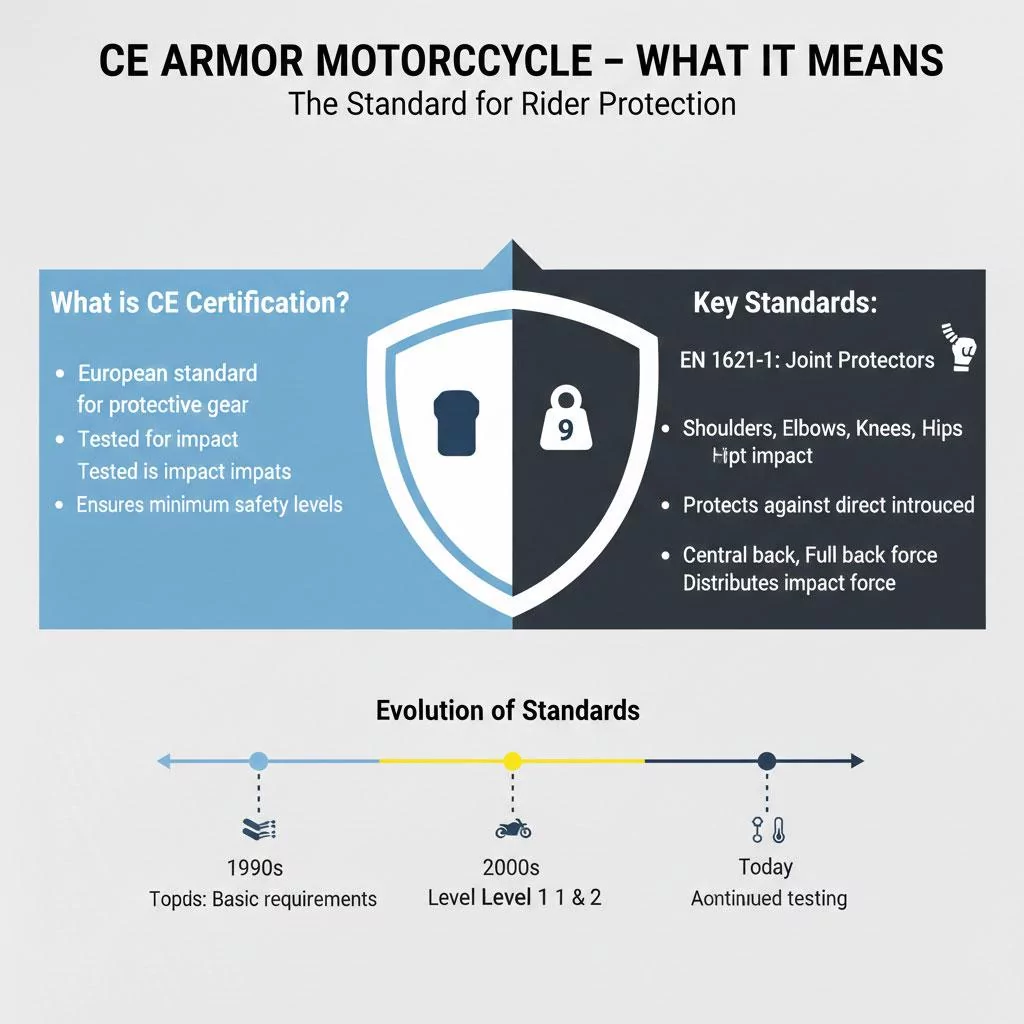
CE stands for "Conformité Européenne" and shows that a product is declared compliant with European requirements. Motorcycle clothing is personal protective equipment under Regulation (EU) 2016/425, and protective garments sold in Europe must be CE marked. EN 17092 is the standard for the garments, while the EN 1621 series covers separate impact protectors (CE certification overview).
In motorcycle gear, CE armour refers to protectors tested to absorb impact energy. A protector spreads and dampens a hit so that less of the force reaches the joint or spine underneath. Without a protector, more of that force reaches the body.
How CE Armour Is Tested
CE armour is tested in a laboratory against defined force limits.
Impact Testing Process
- A striker is dropped onto the protector, which sits on an anvil.
- A sensor beneath the anvil records how much force passes through the protector.
- The lower the transmitted force, the more impact the protector has absorbed.
A protector earns a level only when its results stay within the force limits for that level. The figures come from the standard, not from marketing language.
CE Level 1 vs Level 2
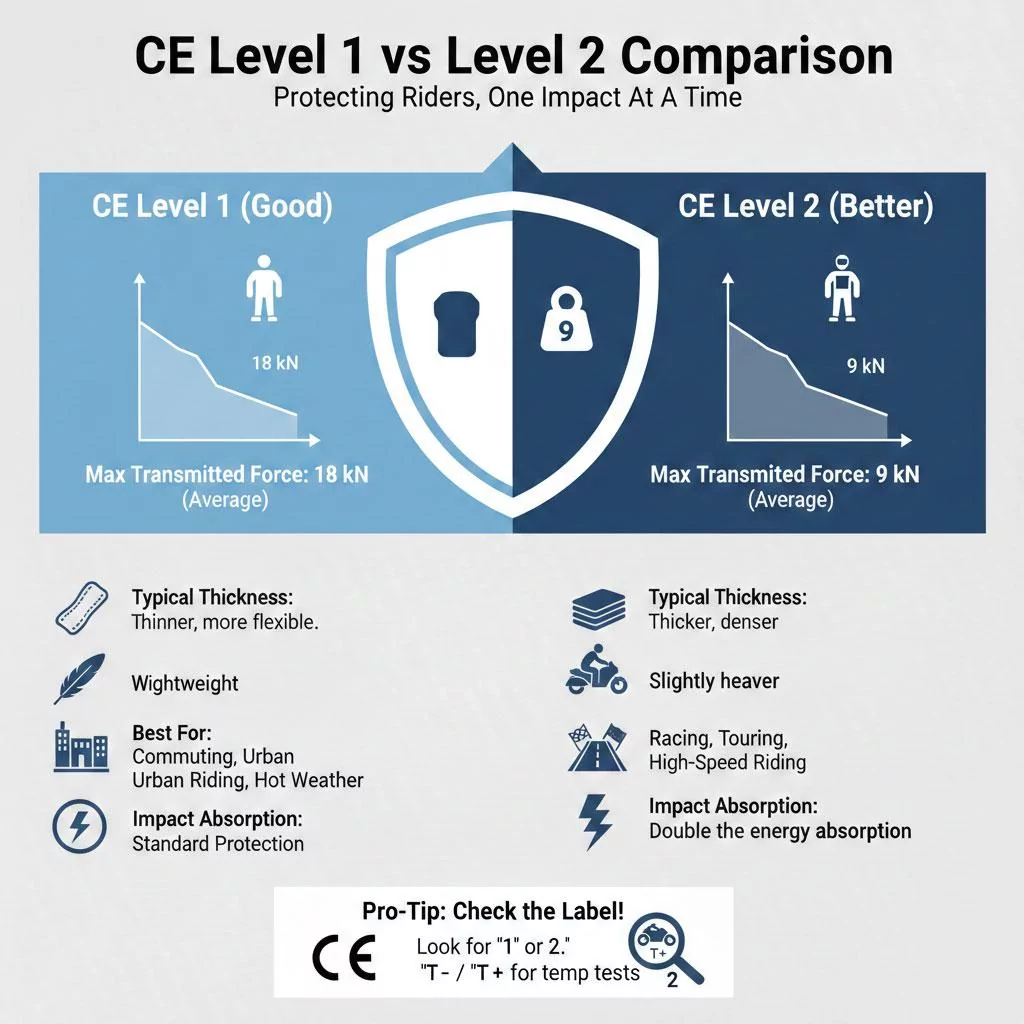
Not all motorcycle jacket armour is the same. Both levels are pass marks, and Level 2 has the stricter one (Wikipedia: motorcycle armour).
CE Level 1
- Limb protectors (EN 1621-1): average transmitted force below 35 kN, with no single result above 50 kN (SATRA)
- Back protectors (EN 1621-2): average below 18 kN, with no single result above 24 kN
CE Level 2
- Limb protectors (EN 1621-1 Level 2): average transmitted force below 20 kN
- Back protectors (EN 1621-2 Level 2): lower limits than Level 1; the exact figures are set in the standard itself
A lower figure means less force reaches the body, so Level 2 transmits less force than Level 1 in the same test. The level describes the protector. The EN 17092 class of the garment (AAA, AA or A) is a separate rating for the clothing itself.
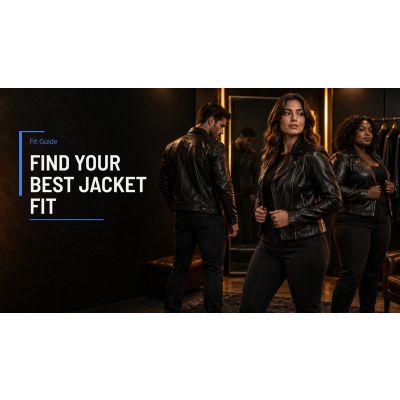
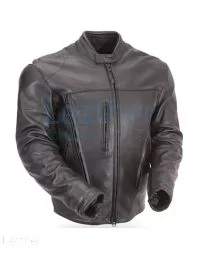
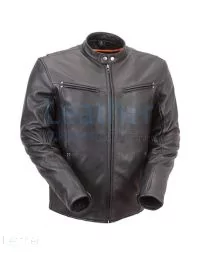
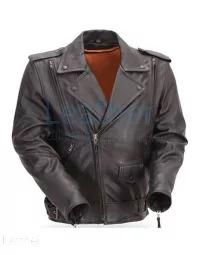
Riders comparing jackets with removable armour, such as this , should check which level the protectors carry before buying.
Where CE Armour Is Placed
Armour only works when it sits over the area it was designed to protect.
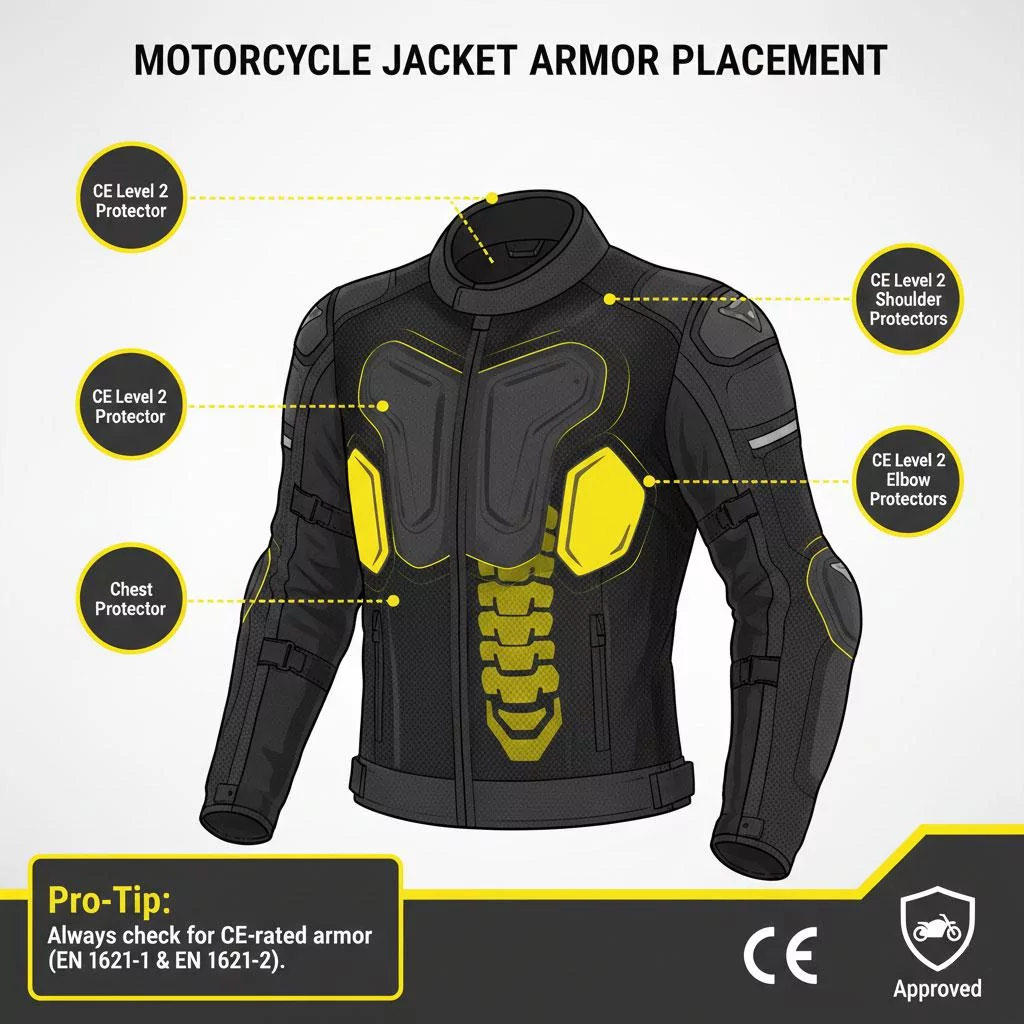
Common Protector Zones
- Shoulders and elbows
- Back (spine protector)
- Chest, where the garment has a pocket for it
- Knees in pants and suits
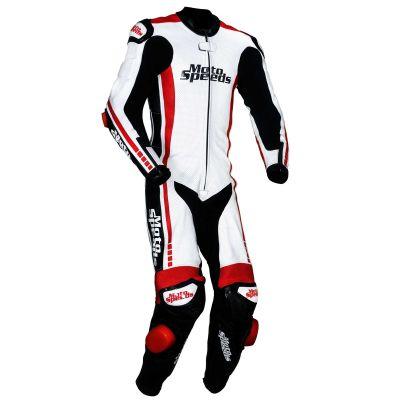
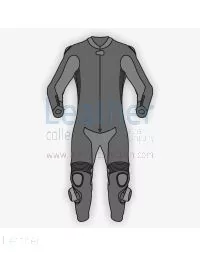
Limb protectors under EN 1621-1 cover joints, while back protectors fall under EN 1621-2. Jackets usually carry upper-body protection. Suits add knee protection, and riders comparing track-oriented garments can browse .
Correct placement keeps the protector over the zone it was tested to cover.
What CE Armour Is Made Of
Protectors are made from foam and other engineered materials, and construction differs between manufacturers.
The material matters less than the tested level marked on the protector, because that rating shows how it performed in the laboratory. Flexibility still counts, since a protector that moves with the body is easier to wear correctly.
Why Fit Matters for Armour Performance
Armour only protects when it stays aligned.
If a jacket is too loose, armour shifts. If it is too tight, armour may not sit correctly. This is why tailored jackets and proper sizing matter.
Custom Motorcycle Leather Race Suits
Riders between sizes can look at , which are cut to individual measurements. Proper fit keeps armour over the zones it was designed to cover.
Can You Upgrade Motorcycle Jacket Armour?
Some jackets have pockets that accept replacement or upgraded protectors. Check the garment maker's instructions first.
Upgrade Options
- Replace Level 1 protectors with Level 2 where the pocket allows
- Add chest protectors
- Install a larger back protector
Before upgrading, check pocket compatibility and sizing. Never force armour into a pocket not designed for it.
Conclusion: Armour and Fit Work Together
CE armour is a core part of protective riding gear, not a styling detail. Every ride carries risk, and tested protectors address impact in a measurable way.
Good leather resists abrasion. Armour handles impact. A rider needs both.
Choose a designed to support proper armour.
Frequently Asked Questions
Is CE armour mandatory?
Rules on what riders must wear differ by country, so local law applies. CE marking is a product requirement: protective motorcycle clothing sold in the EU must carry it under the PPE Regulation. That is separate from any law about wearing armour, so riders should check the rules where they ride.
Can I wash armour?
Remove the armour before washing the garment. Follow the care label where protectors are sewn into the clothing, and avoid machine-washing removable protectors unless the maker says it is allowed. Always follow the instructions supplied with your own armour.
Does leather alone protect?
Leather resists abrasion when a rider slides, but it does little to reduce blunt impact. Armour is the part of the kit tested for impact. The two work together, which is why jackets and suits combine abrasion-resistant leather with protectors in the key zones.
Can armour expire?
Armour can age. Protectors should be replaced after any impact from an accident and checked regularly for cracks, hardening or deformation. Manufacturers give different guidance on service life, so follow the instructions supplied with the armour.
Written by the Leather Collection Editorial Team.