 USA
 Brazil
 Germany
 France
 Italy
 Switzerland
 Sweden
 Spain
 Great Britain
 Norway
 Russia
 South Africa
 Japan
 New Zealand
 Australia

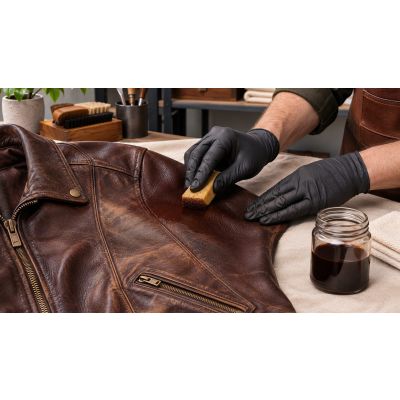
Short answer: you can touch up scuffed or faded areas with leather dye, but changing the color of a whole finished jacket is risky and often looks uneven. Going darker works far better than going lighter. If you want a new color, ordering a custom leather jacket in that color is the cleaner route.
Check your leather first
Dye behaves differently on each finish, so identify yours before you buy anything.
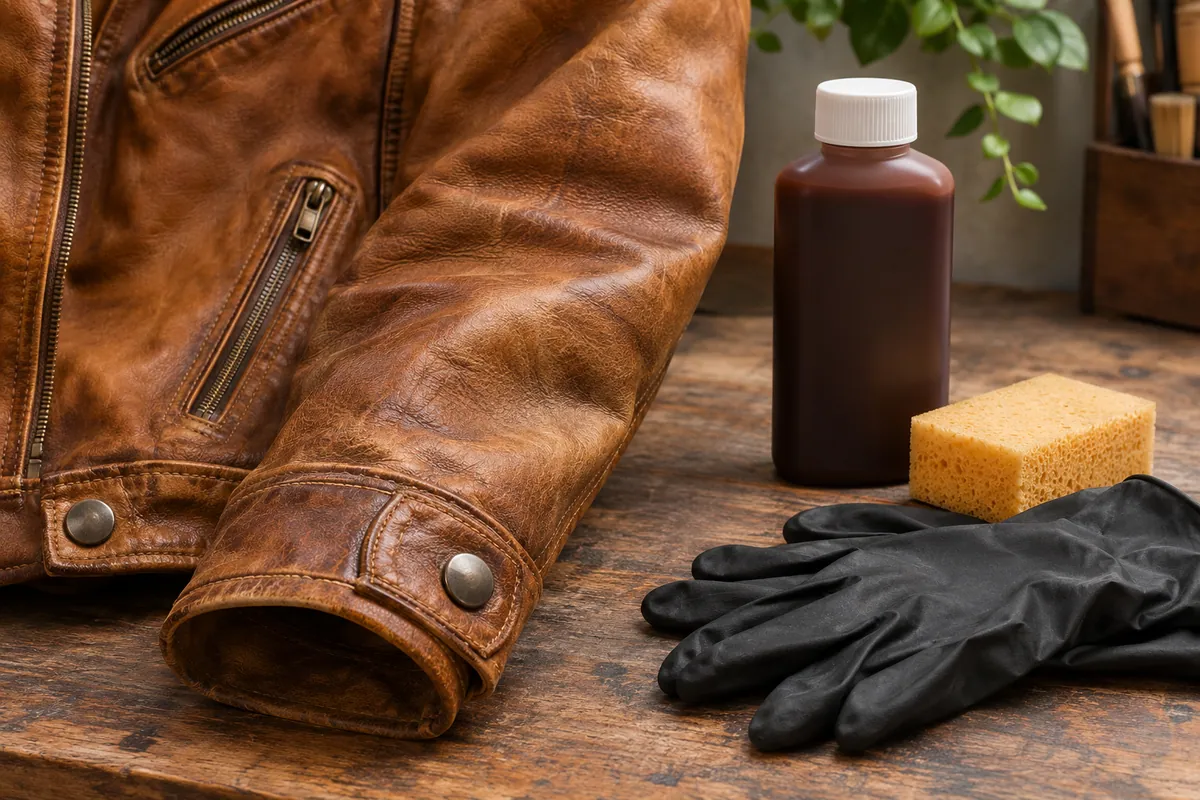
- Aniline and semi-aniline: dyed through with little or no surface coating. These take dye best, but they also show every mistake.
- Pigmented (finished) leather: sealed with a colored coating. Dye sits on top of the coating or does not take.
- Suede and nubuck: take dye, but the nap makes even coverage difficult and rubs off on clothes if it is not done well.
The safest test is to try a small amount of the dye on a hidden spot, let it dry and see whether the color takes evenly. Our guide to types of leather explains how hides differ, and suede vs smooth leather care covers the finish question.
Risk by finish
| Finish | Touch-up | Full color change | Main risk |
|---|---|---|---|
| Aniline / semi-aniline | Good | Possible, darker only | Blotches and visible overlaps |
| Pigmented | Fair | Poor | Dye sits on the coating and cracks or rubs off |
| Suede / nubuck | Fair | Poor to fair | Uneven nap, dye transfer to clothes |
| Embossed, patent or coated | Poor | Not recommended | Dye will not bond to the coating |
Touch-up for scuffs and fading
Touch-up is where dye earns its place. Edges, elbows and cuffs lose color first, and a matching shade can bring them back.
- Clean the area following our guide to cleaning and conditioning at home, and let it dry fully.
- Test the dye on a hidden spot, such as an inside hem, and let it dry before judging the shade. Dye often looks darker wet.
- Apply thin coats with a sponge or soft cloth. Several light coats beat one heavy coat.
- Let each coat dry as the product instructs, then finish with a conditioner so the leather stays supple.
Always follow the dye maker's instructions over any general advice, including this article.
Changing the whole color
This is where most projects fail. Several things go wrong at once:
- Blotches. Leather absorbs unevenly, so color pools in some spots and skips others.
- Stiffness. Soaking a jacket in dye can dry out the leather and make it stiff.
- Dye transfer. Poorly set dye can rub onto shirts, bags and seats.
- Mismatched parts. The lining, thread, zips and snaps keep their old color, so the jacket can look patched together.
Dye also cannot lift color out. It can only add color on top of what is already there.
Which direction works
Dark over light never works the other way around. A tan jacket can be dyed brown or black with reasonable results. A black jacket cannot become tan, and a dark brown one will not turn light. Choose a shade at least as dark as the current one, and expect the original tone to show through. Black is the most forgiving target, which is why most "dye a jacket black" projects succeed more often than other colors.
What you need for a touch-up
A basic kit is short: leather dye or recoloring balm in a matching shade, a leather cleaner or deglazer if the dye maker calls for one, sponges or soft cloths, disposable gloves, a conditioner and something to protect your work surface. Mix nothing unless the instructions say so. Work in a ventilated room, and wear gloves because dye stains skin for days.
Matching is the hard part. Dye dries a shade different from how it looks in the bottle, and sun-faded leather is rarely the same color it was new. Mix a small amount, test on the hem, let it dry and look at it in daylight. If it is close but not perfect, build the color with a second thin coat instead of a heavier first one. Lighter areas will always show a slight edge where the new color meets the old, so feather the dye outward from the worn patch.
Professional restoration
A specialist restorer can color-match, refinish and seal leather with professional equipment, which is far more even than a bottle at home. Ask what finish they will use, whether the lining and hardware are included, whether the work is guaranteed, and for photos of similar jobs. For a valuable or sentimental jacket, this is the safest way to attempt any change.
Order a new color instead
If the goal is a different color, dyeing an old jacket is rarely cheaper than it looks once you count the supplies, the risk and the result. A made-to-order piece lets you choose the color from the start, with the lining, thread and fit planned around it. Leather Collection makes jackets to order in standard or custom sizes; browse the custom leather clothing range and see our size chart to plan your measurements. Leather can be ordered in any color on request.
When not to dye at all
Skip the project if the leather is cracked, peeling or flaking. Dye will not fill cracks, and it can make them look worse. Skip it if the jacket is a pale color you want to make bright, if the lining is the problem rather than the leather, or if the piece is rare or valuable. Skip it too if the leather has a sealed or glossy coat that beads water, because color will not hold. In these cases, repair or replacement is a better use of your money than another coat of dye.
FAQs
Can you change the color of a leather jacket?
Sometimes, within limits. Going darker on aniline or semi-aniline leather is the most realistic case. Finished leather and large changes often turn out patchy.
Can you dye a leather jacket black?
Black is the most forgiving color to dye toward, especially on aniline leather. The lining, zips and stitching will not change, so expect the old color to show in places.
Will dye make the leather crack?
Heavy coats of dye, or dye applied to dry leather without conditioning afterward, can leave the surface stiff and prone to cracking. Use thin coats and condition afterward.
What dye is best for scuffs?
A leather dye or recoloring balm matched to your shade and finish. Test on a hidden area first and follow the maker's instructions.
Can you dye suede?
Yes, but it is harder to get even, and the nap can trap dye that later rubs off. A suede-specific product and a hidden test are essential.