 USA
USA  Brazil
  Germany
  France
  Italy
Italy  Switzerland
  Sweden
  Spain
Spain  Great Britain
  Norway
  Russia
  South Africa
  Japan
Japan  New Zealand
  Australia
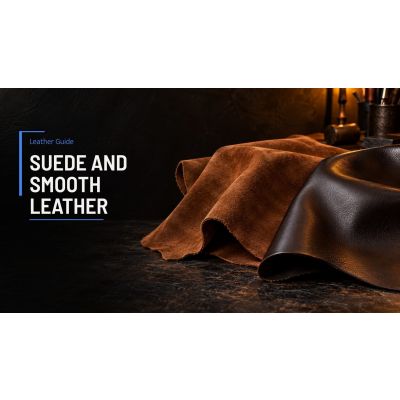
Suede and smooth leather need different care because their surfaces are different: suede has a soft, napped surface that holds on to dirt and moisture, while smooth leather has a finished grain surface that can usually be wiped. The first rule for both is the same: follow the care label and the maker's instructions, because the right product depends on the finish and construction of the garment.
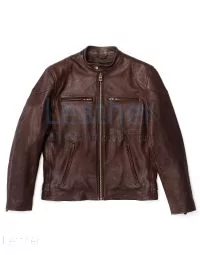
That matters when choosing a jacket as much as when cleaning one. A and a may both be called leather, yet their finishes differ and so does the care they need. The suede bomber's product page states "specialist suede dry-clean only", while the cafe racer jacket's page describes sheepskin with a plain finish; each page carries its own care notes.
Key Takeaways
- Suede is made from the underside of the skin and has a napped surface; smooth leather shows the outer grain side.
- Moisture, salt and oils can stain or wear suede, so keep it dry and avoid soap and water.
- Smooth leather is easier to wipe clean, but its finish decides which products are safe.
- No single routine suits every garment; the maker's instructions come first.
- Conservation guidance written for museum collections says dressings have no preservative effect; for worn clothing, follow the maker's advice.
What is the difference between suede and smooth leather?
The difference starts with which part of the hide is used. According to Wikipedia's leather article, top-grain leather includes the outer layer of the hide, the grain, which has finer, more densely packed fibres. Suede is made from the underside of a split to create a soft, napped finish. Nubuck sits between the two: top-grain leather that has been sanded or buffed on the grain side to give a slight nap.
Smooth leather is also finished in different ways. Full-grain leather is typically finished with a soluble aniline dye, which lets the natural grain show. Corrected grain leather is buffed or sanded to remove flaws, then dyed and embossed. A heavily coated surface and a lightly dyed one respond differently to cleaners, which is why a single instruction cannot cover every smooth jacket.
| Feature | Suede | Smooth leather |
|---|---|---|
| Surface | Soft, napped, fuzzy | Flat grain, matte to glossy |
| Source layer | Underside of the skin or split | Outer grain side |
| Liquids and stains | Absorbs readily; marks easily | Depends on finish; often wipeable |
| Cleaning approach | Dry methods first; avoid soap and water | Soft cloth first; check finish |
How to care for suede
Suede is porous. Wikipedia notes that salt, dirt, water, oils and moisture can stain or wear out suede, and that excess moisture can damage it, so it should not be cleaned with soap and water or machine washed. In practice that points to a dry-first approach.
Keep it dry and brush gently
Most suede care products are built around the nap. Wikipedia notes that suede brushes and suede rubbers are tools commonly used to clean suede. Test any product on a hidden spot, such as the inside of a hem, before using it on a visible panel.
Treat spills and rain differently from dust
Many makers advise letting a wet suede garment dry naturally on a broad hanger, away from radiators and direct heat, and brushing the nap afterwards. For oil stains and set-in marks, a specialist cleaner who handles suede is the usual route. If the label says dry clean only or professional clean only, follow it.
Protective sprays
Some makers recommend a protector spray designed for suede. Whether one is suitable depends on the dye and finish, so read what the maker says about the garment before applying anything.
How to care for smooth leather
Smooth leather is less demanding day to day. Dust and light dirt may come off with a clean, soft cloth where the maker allows it. The main question is the finish: an aniline-dyed surface and a coated or corrected-grain surface can take very different products, and a cleaner that suits one can mark the other.
Wipe, dry and rest the garment
After wet weather, many makers advise blotting the surface and letting the garment dry on a shaped hanger away from direct heat. Follow the storage advice on the care label.
Think twice about dressings
Conditioners, creams and oils are often treated as a routine step, but museum conservators take a more cautious view. The U.S. National Park Service Conserve O Gram on leather dressings reports that dressings have no preservative effect and that frequent use has caused darkening, embrittlement and a white waxy bloom called fatty acid spew. That guidance is written for heritage collections, not worn clothing. The same document accepts dressings on personal items that must still function, such as work boots, baseball gloves and saddles, so for a garment the practical takeaway is to follow the maker's advice rather than a general rule.
Which one suits your routine?
Care effort should factor into the purchase. Smooth finishes are often easier to wipe, but check the finish and the label. Suede asks for dry, careful handling, so it helps to be comfortable with that before choosing it.
Ask about the finish and the recommended care before ordering, and keep the care label that arrives with the garment.
Common mistakes to avoid
- Using the same product on both. A product made for one finish may not suit the other; read what it says before use.
- Drying with heat. Keep a wet garment away from radiators and hair dryers.
- Soap and water on suede. Wikipedia advises against cleaning suede this way.
- Over-treating. Use only products the maker recommends for the finish.
Frequently Asked Questions
Can suede be cleaned with water?
Water is generally a poor choice for suede. Moisture can stain or damage the napped surface, and soap and water are not recommended for cleaning it. Dry tools such as a suede brush are commonly used instead, and heavily soiled pieces can go to a professional who works with suede.
Is smooth leather easier to look after than suede?
Often, because a grain surface may be wiped with a soft cloth where the maker allows it, while suede holds dirt in its nap. The finish still matters: coated, aniline-dyed and corrected-grain leathers respond differently to cleaners, so follow the maker's instructions for the garment rather than a general rule.
Do leather jackets need conditioner?
It depends on the leather and the maker's advice. Conservation guidance written for museum collections finds that dressings have no preservative effect and can cause darkening and a waxy bloom, though it concerns heritage collections, not worn clothing. Check the care label, and test any product on a hidden area first.
What is the difference between suede and nubuck?
Suede is made from the underside of a split and has a soft, napped finish. Nubuck is top-grain leather that has been sanded or buffed on the grain side to create a short nap. Both have a velvety surface, so the care label matters for both.
Written by the Leather Collection Editorial Team.