 USA
USA  Brazil
  Germany
  France
  Italy
Italy  Switzerland
  Sweden
  Spain
Spain  Great Britain
  Norway
  Russia
  South Africa
  Japan
Japan  New Zealand
  Australia

Women's leather clothing is rarely a casual purchase: a jacket, coat or skirt is worn for years, so the fit and the leather matter more than the label. Custom-made leather clothing is cut to the buyer's own measurements instead of a standard size chart, and the choices around leather, cut and details can be set at the order stage.
Key Takeaways
- Custom-made leather clothing is cut to individual measurements, which helps where standard sizes miss bust, waist, hip or sleeve proportions.
- Leather type changes the feel and use: sheepskin is soft and light, cowhide is sturdier, goatskin is flexible.
- For riders, armour only works when it sits over the joint, and EN 1621-1 Level 2 armour transmits less force than Level 1.
- Options vary by product, so the product page shows what can be customized.
This guide explains where a custom fit helps most, which leathers suit which garments, and how the protection standards read for women who ride. Explore the full range in the Leather Clothing collection.
Why Standard Sizing Falls Short
Shoulders, bust, waist, hips and height vary from one woman to the next, while ready-to-wear sizing rests on a limited set of proportions. Leather shows a poor fit more than fabric does, because it has little give and creases where it is tight or hangs loose.
What a Custom Fit Changes
- Shoulder seams sit on the shoulder rather than above or below it.
- The bust and waist are shaped to the body instead of being tight or loose.
- Sleeves and body length match the arm and torso.
- Hip and back measurements are balanced.
Leather softens and shapes to the wearer with use, but a garment that starts out well fitted settles in more evenly than one that starts out wrong.
Choosing the Leather
The type of leather affects weight, drape and use. The usual choices are:
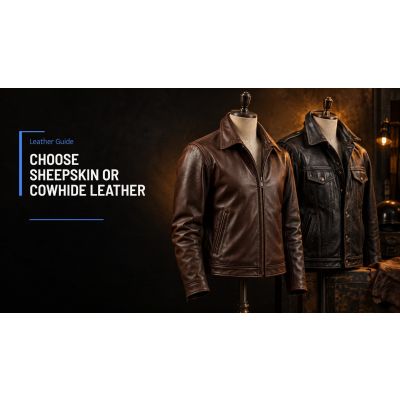
- Sheepskin: soft and lightweight, common for everyday jackets.
- Cowhide: sturdier and more structured, suited to biker jackets and coats.
- Goatskin: flexible, used for skirts and vests as well as jackets.
- Nappa: a smooth, soft finish on lamb or sheep leather.
- Suede: a napped surface with a casual look, usually less weatherproof than smooth leather.
How long a piece lasts depends on the hide, the tannage, the construction and how it is cared for, so no single lifespan figure applies.
Cut and Design Choices
Made-to-measure ordering usually lets the buyer choose the details that decide how a garment wears. Options vary by product, and the product page shows what can be changed. Typical decisions include:
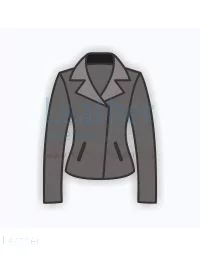
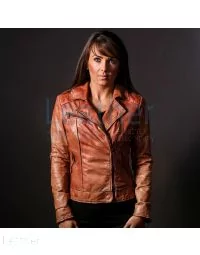
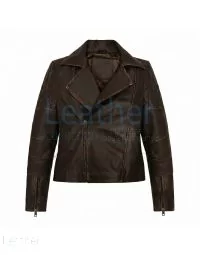
- Jacket cut: biker, café racer, bomber, cropped or trench.
- Closure and collar: zipper or buttons, stand, lapel or folded collar.
- Fit: slim, relaxed or tailored through the waist.
- Hardware and stitching colour, lining and personalization.
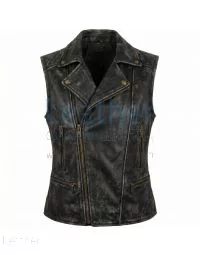
The and the show how this works for two different cuts, and the cover shorter garments. Looking for something else? See the as well.
Practical Features for Daily Use
A custom order can match the garment to the way it is worn: a lighter hide for daily wear, a thermal lining for winter, extra pockets, or, where the product page offers it, armour pockets for riding. Choosing these before cutting is simpler than altering a finished garment, since leather cannot be let out invisibly once it has been stitched and the holes are visible.
Protection for Women Riders
Riding gear works only if the armour stays over the shoulders, elbows and back in the riding position. Standard patterns do not follow every rider's bust, shoulder and torso proportions, so armour can end up away from the joint it should cover. A is cut to the rider's measurements for that reason.
What the Standards Say
Impact protectors are tested under EN 1621-1 (shoulders, elbows, hips, knees) and EN 1621-2 (back). Under EN 1621-1, Level 1 means an average transmitted force below 35 kN, and Level 2 means below 20 kN (Motorcycle armour on Wikipedia). Garments are rated separately under EN 17092, which uses classes AAA, AA, A, B and C based on abrasion, tear and seam testing (Motorcycle protective equipment on Wikipedia). Check the product page for which armour and class a garment lists before treating it as riding gear.
Value and Sustainability
A garment that is fitted, repairable and worn for many seasons replaces several cheaper ones, which is the real argument for value. The environmental case rests on the same point: fewer replacements mean less waste, but this holds only if the garment is actually worn for years and kept in good condition.
Final Thoughts
Custom-made leather clothing is worth considering when standard sizes do not fit, when a specific cut or detail matters, or when armour placement matters for riding. Leather Collection has made hand-stitched, made-to-order gear since 2009.
Frequently Asked Questions
What measurements are needed for a custom leather jacket?
Most made-to-measure orders ask for chest or bust, waist, hips, shoulder width, sleeve length and overall length, and some also ask for height and weight. The product page and size chart give the exact list, and measuring over thin clothing gives a more reliable result.
How do CE Level 1 and Level 2 armour differ?
Both are tested under EN 1621-1 with the same impact. Level 1 allows an average transmitted force below 35 kN, and Level 2 allows below 20 kN, so Level 2 lets less force through. Back protectors use stricter limits under EN 1621-2, below 18 kN for Level 1 and below 9 kN for Level 2.
Which leather suits a jacket and which a skirt?
Cowhide gives structure and suits biker jackets and coats, while sheepskin and nappa are softer and lighter for everyday jackets and dresses. Goatskin is flexible and works for skirts and vests. Suede suits casual pieces but is less weatherproof than smooth leather.
Can a custom leather jacket be used for riding?
Only if it states an EN 17092 class and protectors with a stated EN 1621 level; armour alone does not make a fashion jacket riding gear. Look for the garment class, the protector level and the standard it refers to, and check these details on the product page.
Written by the Leather Collection Editorial Team.