 USA
USA  Brazil
  Germany
  France
  Italy
Italy  Switzerland
  Sweden
  Spain
Spain  Great Britain
  Norway
  Russia
  South Africa
  Japan
Japan  New Zealand
  Australia
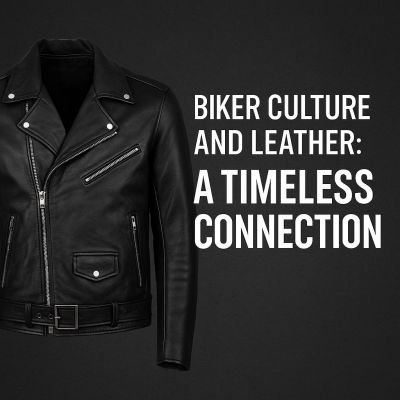
Leather has been part of motorcycling since riders first needed clothing that could handle wind, rain and road surfaces. From jackets and vests to gloves, boots and race suits, it is also the material most closely tied to the look and identity of the biker world.
This guide covers how the tradition began, what leather actually does for a rider, how motorcycle clubs use it, and what to look for in leather riding gear today.
Key Takeaways
- The Schott Perfecto, introduced in 1928, set the template for the leather motorcycle jacket, and 1950s films fixed its rebel image in popular culture.
- Leather is used for riding because of its abrasion resistance, and protective standards such as EN 17092 and EN 1621 define how much protection a garment or armour must offer.
- Club vests and jackets carry patches known as colours, which is why leather doubles as a form of identity as well as clothing.
- When choosing riding leather, check the protection class, armour level, fit and construction rather than style alone.
Where Biker Culture Met Leather
As motorcycling spread in the early twentieth century, riders needed clothing that stood up to wind, rain, road debris and falls. Leather answered that need: it is a tough, flexible hide that resists abrasion far better than ordinary cloth.
The Perfecto and the Wild One
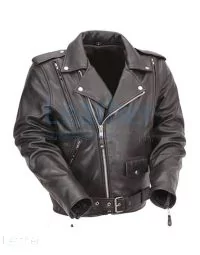
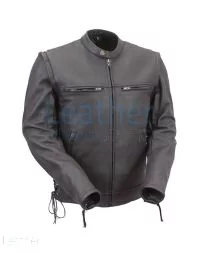
Schott NYC introduced the Perfecto in 1928, and it is generally described as the first leather motorcycle jacket of its style. Its diagonal front zip and close, structured cut became the reference for the biker jacket. The look reached a wider audience through The Wild One (1953), in which Marlon Brando wore a Perfecto-style jacket; historians still debate whether it was a genuine Schott or a replica (Perfecto motorcycle jacket history).
Today the same silhouette appears in modern biker jackets with updated linings and armour. Want to explore classic biker styles?
Why Leather Became the Standard for Riders
Leather earned its place through function first and appearance second. Different grades, such as full grain, top grain, corrected grain and suede, differ in how well they resist abrasion, tearing and bursting, so the grade and thickness matter as much as the word "leather" on the label (motorcycle protective equipment overview).
What leather protects against
- Road rash and skin abrasion in a slide
- Contact with gravel and debris
- Wind and cold on long rides
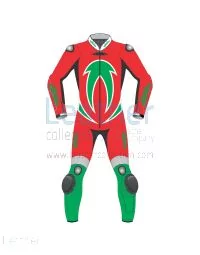
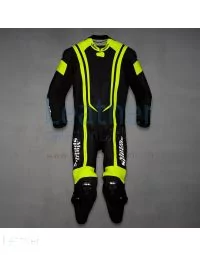
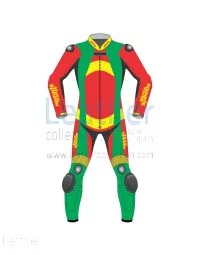
This is why leather suits remain the standard in track riding. Under EN 17092, the highest class, AAA, covers one- and two-piece leather suits suitable for racetracks. A rider moving from the street to the track can browse the range, and should check each product page and label for any EN 17092 class, since a class applies to a tested garment rather than to a whole range.
Features that make leather riding gear work
- Reinforced shoulders and elbows
- Impact armour in the shoulders, elbows and back
- Zip closures that stay flat against the wind
- Adjustable cuffs and collars
- Perforated panels for ventilation
- Pre-curved sleeves that follow a riding posture
Impact armour is covered by the EN 1621 standard, which defines Level 1 and Level 2; Level 2 limb protectors must transmit less force than Level 1 in the same impact test (EN 1621-1: mean below 20 kN for Level 2 versus below 35 kN for Level 1); the standard does not promise a crash outcome. A leather jacket can be fitted with armour, and the rider should check the level and fit of the protectors, not only their presence; the product page of this is the place to check what is listed. For back protection, the is the page to check for what back protection is listed.
Leather as Identity: Clubs, Colours and Patches
For many riders, leather also carries meaning. Motorcycle clubs wear patches, collectively called colours, on the back of a jacket or riding vest, and mutual recognition between clubs is part of what those patches signal (motorcycle club colours). Individual riders add their own marks too: patches, pins and the scuffs and creases of years of use.
Why a vest or jacket becomes personal
- Patches record membership, place and personal history.
- Leather ages visibly, so each piece reflects the miles it has seen.
- Vests and jackets are often customized, which makes them hard to replace.
Riders who want a jacket cut to their own measurements and styling can look at , which are made to order.
Biker Leather Through the Decades
The 1950s fixed the rebel image of the black leather jacket in films and photographs. Since then the garment has moved between riding gear, fashion and subculture, while the practical core stayed the same: a leather shell that protects the rider. Modern versions add armour made to EN 1621 requirements, ventilation and weather-resistant finishes, and some are designed with removable parts such as the .
Leather Compared With Textile Gear
Textile jackets and mesh suits can be a sensible choice in hot weather or for commuting, and they can also meet EN 17092 classes. Leather remains the usual choice where abrasion resistance is the priority, which is why it dominates racing. The right answer depends on the type of riding, the climate and the protection class the rider wants, so the label matters more than the material alone.
How Riders Choose Leather Gear Today
Most riders balance three things: protection, comfort and style. A short checklist helps:
- The protection class on the label (for example EN 17092 AA or AAA) and the armour level
- The leather type and thickness for the riding style
- Venting or removable liners for the climate
- A cut that suits the riding position: classic biker or slim racing
- Fit at the shoulders, elbows and knees, where armour must stay in place
Leather Collection has made hand-stitched, made-to-order leather gear since 2009, which allows size and styling to be matched to the rider.
Final Thoughts
The link between bikers and leather is part history, part practical engineering. The material earned its place by protecting riders, and then became a symbol of independence, club identity and personal style. Whatever the reason for choosing it, the sensible approach is the same: pick leather gear for its construction and protection first, and let the look follow.
Frequently Asked Questions
Why do bikers wear leather?
Leather resists abrasion better than ordinary fabric, so it helps protect skin in a slide. It also handles wind and cold well, and over time it became part of rider identity, especially through club jackets and vests carrying patches.
What is the Perfecto jacket?
The Perfecto is a leather motorcycle jacket introduced by Schott NYC in 1928. It is generally described as the first leather motorcycle jacket of its style, with a diagonal front zip and a structured cut. Marlon Brando wore a Perfecto-style jacket in The Wild One in 1953.
What do EN 17092 classes AAA, AA and A mean?
EN 17092 classifies motorcycle clothing by protection level. Class AAA is the highest and covers racetrack leather suits, class AA is described as well suited to touring riders. Classes A, B and C are lower, with B and C the lowest.
Is leather always better than textile riding gear?
Not always. Textile and mesh gear can suit hot weather and commuting, and some of it meets recognized protection classes. Leather is usually chosen where abrasion resistance matters most, such as track riding, so the choice depends on climate, riding style and the class on the label.
Written by the Leather Collection Editorial Team.