 USA
USA  Brazil
  Germany
  France
  Italy
Italy  Switzerland
  Sweden
  Spain
Spain  Great Britain
  Norway
  Russia
  South Africa
  Japan
Japan  New Zealand
  Australia
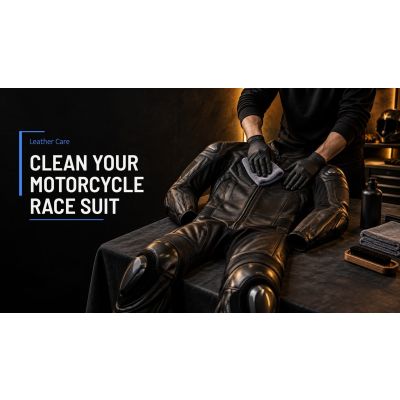
Cleaning a is part of maintaining it. Looking after a race suit matters as much as servicing the motorcycle: a well-maintained bike rides smoothly, and a well-maintained leather suit stays supple, comfortable and ready to protect. Race-grade options are collected under .
Key Takeaways
- Clean in three stages: clean the exterior and interior, dry the suit slowly, then condition the leather if the care label allows it.
- Use leather-specific soap and conditioner with soft cloths and a soft brush; never a washing machine, rotating brush or dryer.
- Give extra attention to zips, perforations and stitching, where dirt collects and leather wears first.
- Always dry at room temperature in moving air, and follow the maker's care label where it differs from general advice.
Clean the suit when it is visibly dirty, such as after heavy use, sweaty track days or dirty conditions, and follow the maker's care label for frequency. A quick wipe-down after a ride keeps dust and sweat from building up between full cleans.
What You Need
The kit is simple: soft cotton cloths, a soft brush (a soft toothbrush works for seams and perforations), lukewarm water, a leather soap or cleaner made for garments, and a leather conditioner. All of it is available from motorcycle shops and leather-care suppliers. Test any product on a hidden area of the suit first, such as the inside of a hem, and wait until it dries to check for colour change.
Step 1: Cleaning the Suit
Exterior
Start with an inspection. Lay the suit out in a well-lit place and look over the whole garment for areas that need special attention. Zips, perforated panels and stitching joints are usually where dust and sweat residue collect. Mix a few drops of leather soap into lukewarm water, dampen a cloth (it should not drip) and work over the suit one section at a time. Use the soft brush gently on seams and perforations, then wipe each section with a cloth dampened in clean water and finish with a dry cloth.
Avoid soaking the leather or applying water directly. Excess moisture left in leather can leave marks and stiffness as it dries.
Interior
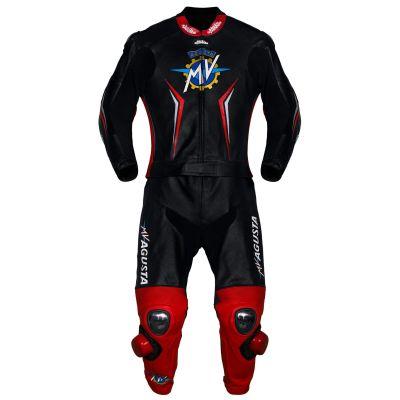
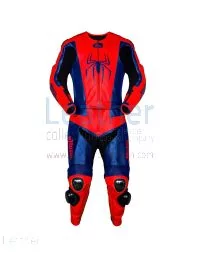
Many suits have a detachable mesh liner that is easy to take out and wash by hand in cool water with mild soap. A detachable lining is a practical feature to look for when choosing a suit, because fixed linings are harder to clean at home even when they are sweat-wicking or anti-microbial. Two-piece suits, such as , are also simpler to handle, since the jacket and pants are cleaned and dried separately. For a suit with a fixed lining, turn your inside out and let it air in a ventilated space, wiping the lining lightly with a damp cloth if needed.
Step 2: Drying
Once cleaning is finished, hang the suit on a wide, padded hanger and let it dry completely. Choose a place where air can move around the whole garment, out of direct sun and away from radiators or heaters. Do not use a dryer or any heat source to speed things up. Slow drying keeps the leather from shrinking, stiffening or cracking.
Step 3: Conditioning
If the care label allows conditioning, do it only when the suit is fully dry. Choose a product the maker approves for the leather and follow its instructions. Apply a small amount with a soft cloth, or on the cloth rather than directly on the leather, and massage it in with light pressure. Pay close attention to stitching and perforated areas, which are more exposed and tend to dry out first. Buff off any excess and hang the suit again to rest overnight.
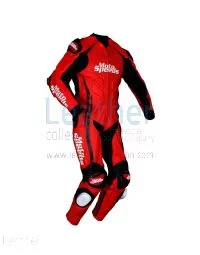
Follow the maker's care instructions for cleaning and any conditioning; the right products depend on the finish. Full cowhide suits such as the benefit from the same routine as any other leather race suit.
Leather Cleaning Dos and Don'ts
Do
- Use cleaning products made specifically for leather
- Use a small amount at a time
- Take care around zips, vents and stitching
- Allow the suit to dry before adding the next product
- Use light pressure
- Take your time
Don't
- Use harsh household chemicals that are not made for leather
- Use mechanical devices such as rotating brushes or washing machines
- Overload the leather with cleaner or conditioner
- Clog the stitching or perforations with product
- Scrub hard at marks; repeat gentle passes instead
If the suit has deep stains, mould, or damaged stitching after a crash or slide, a specialist leather cleaner or repairer is the safer route than home treatment.
Frequently Asked Questions
Can I put a leather race suit in the washing machine?
No. Washing machines, rotating brushes and tumble dryers are not suitable for leather, because water, heat and agitation can stiffen, shrink or crack the hide and damage stitching. Clean the exterior by hand with a damp cloth and leather soap, wash only a detachable lining by hand in cool water with mild soap, and follow the maker's care label for anything else.
How often should a race suit be cleaned?
Clean the suit when it is visibly dirty and follow the maker's care label for frequency. Heavy use, sweat and dirty conditions call for cleaning sooner, and a quick wipe-down after a ride keeps dust and sweat from building up. The care label from the suit maker takes priority over any general schedule, so check it before choosing products or frequency.
How should a leather suit be dried after cleaning?
Hang it on a wide, padded hanger in a ventilated room away from direct sunlight, radiators and heaters, and let it dry completely at room temperature. Do not use a hair dryer or tumble dryer. Drying can take many hours, so leave it overnight, and only apply conditioner once the suit is completely dry.
Do I need to condition leather after cleaning it?
Whether to condition, and with what, depends on the leather's finish and the maker's care label. Follow the label; if it is silent, ask the maker before applying any conditioner. If the maker approves one, use a small amount on a soft cloth and buff off the excess, because too much can clog perforations and leave the surface greasy.
Written by the Leather Collection Editorial Team.