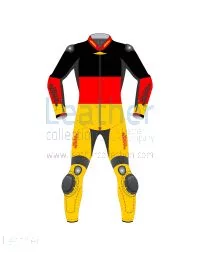
 USA
USA  Brazil
  Germany
  France
  Italy
Italy  Switzerland
  Sweden
  Spain
Spain  Great Britain
  Norway
  Russia
  South Africa
  Japan
Japan  New Zealand
  Australia

Moving from road riding to the track usually ends the same way: everyday gear is no longer enough, and a proper leather race suit becomes the priority. A is a technical piece of equipment, and its price reflects materials, protection class, construction and fit. This guide explains what drives the cost.
Key Takeaways
- The main price drivers are the leather (cowhide or kangaroo), the protection class and armour, construction details and whether the suit is made to measure.
- A lower price is not automatically a problem, but the label, armour level and fit should be checked before price is compared.
- Airbag compatibility and stretch panels add cost and need to be matched to the rider's plans.
- A suit that fits correctly keeps armour in position, which matters more than a long feature list.
What Determines the Price of a Race Suit?
Leather: Cowhide or Kangaroo
- Cowhide: The usual material for race suits. It offers good abrasion resistance and durability and is the common choice for track-day riders.
- Kangaroo leather: Used where lower weight and flexibility are wanted. It is described as lighter than cowhide and can be cut thin (kangaroo leather overview). It typically costs more than cowhide.
Protection Class and Armour
EN 17092 classes garments from AAA to C. Class AAA is the highest and covers one- and two-piece leather suits suitable for racetracks (EN 17092 protection classes). Armour is a separate item: protectors at the shoulders, elbows and knees are rated under EN 1621 as Level 1 or Level 2, and Level 2 limits the force transmitted through the protector to a lower value than Level 1 in the EN 1621 laboratory test; this is not a promise about crash outcomes.
Other items that influence price include hard external sliders, a back protector and airbag compatibility. A suit described as airbag-ready is designed with room for a system such as the Alpinestars Tech-Air 10, a stand-alone airbag vest worn under the suit, which needs a suit that stretches enough to accommodate it (Tech-Air 10 airbag system review).
Price Tiers Without the Sticker Shock
The market usually falls into three broad tiers.
Entry level
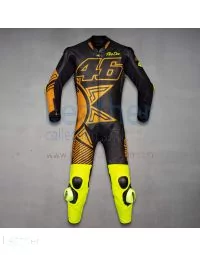
Entry-level suits suit occasional track-day riders. They typically use cowhide and standard armour and may leave out comfort details such as extensive stretch panels or perforation. What matters is that the suit carries the right protection class and fits properly. The range shows the common formats.
Mid range
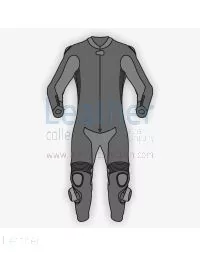
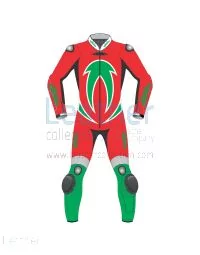
Regular track riders often move up for better ergonomics: pre-curved sleeves, more stretch material, more perforation for cooling and sturdier external sliders. A design is an example of a one-piece suit in this category.
High end and custom
The top tier includes kangaroo suits and suits made to the rider's measurements. A well-fitted suit helps keep armour over the joints it is meant to cover when riding.
Is a Custom Suit Worth the Extra Cost?
A custom suit costs more at the outset, but it brings several practical advantages:
- Armour position: A close fit helps protectors sit over the joints they are meant to cover.
- Wear: A suit that fits puts less stress on seams.
- Personalization: Colours, logos and ventilation can be chosen. Leather Collection makes hand-stitched, made-to-order suits and has done so since 2009.
For a two-piece option, the range is a good comparison point.
Final Thoughts
When asking what a racing suit costs, the more useful question is what the suit offers for the money: protection class, armour level, leather and fit. Choose the suit that matches the riding, check the label, and confirm the fit before comparing prices.
Frequently Asked Questions
What is the difference between cowhide and kangaroo race suits?
Cowhide is the usual, more affordable material and offers good abrasion resistance. Kangaroo leather is often chosen for low weight and can be cut thinner, though it normally costs more. Check the class stated on the suit itself.
What does EN 17092 class AAA mean for a race suit?
AAA is the highest protection class in EN 17092, the European standard for motorcycle clothing. It covers one- and two-piece leather suits suitable for racetracks. Classes AA and A sit below it, so the class on the label helps compare suits fairly.
Do all race suits work with an airbag?
No. Airbag systems need room, and a suit has to be airbag-ready or stretch enough to take one. A stand-alone vest such as the Tech-Air 10 is worn under the suit, so the manufacturer's fit requirements should be checked before buying.
Is a custom-fit race suit worth it?
For many riders, yes. A made-to-measure suit can help keep armour over the joints when riding and can be tailored to unusual proportions, colours and ventilation needs. Riders who fit standard sizes well may not need it at all.
Written by the Leather Collection Editorial Team.