 USA
 Brazil
 Germany
 France
 Italy
 Switzerland
 Sweden
 Spain
 Great Britain
 Norway
 Russia
 South Africa
 Japan
 New Zealand
 Australia


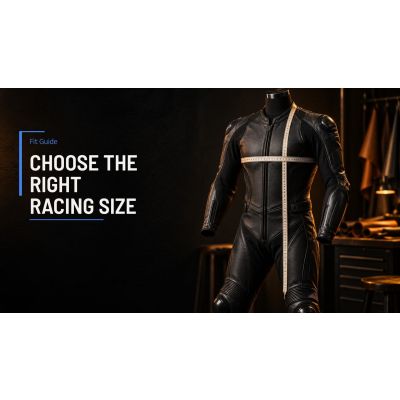
On track, the race suit is the most important piece of equipment a rider wears. Unlike a casual leather jacket, it is a technical garment cut for the riding position, and a poorly fitting suit can let armour move away from the joint and reduces comfort and control. A badly fitted suit is uncomfortable and can be a safety problem. This guide sets out how a race suit should fit, from the weekend track-day rider to the competitive racer.
Key Takeaways
- A race suit is sized for the riding crouch, not for standing in the paddock.
- It should feel snug, not tight, with no excess material bunching and with armour centered over the joints.
- Sleeves should reach the wrist bones and legs should cover the ankle bones.
- Try the suit on with the base layer, boots, gloves and back protector that will be worn with it.
Why Snug Is the Right Starting Point
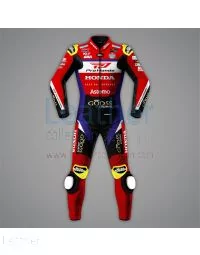
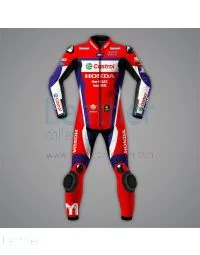
The most common mistake new riders make is choosing a suit that feels comfortable standing up. Replica suits such as those in the range follow the same logic as any race suit: if it feels as loose as pajamas in the paddock, it is probably too big.
A race suit should sit close to the body. A suit, especially a one-piece suit, must be comfortable while riding, not when standing up, and a pull across the shoulders when it is new is normal because leather gives with use. Tightness also has a safety purpose: it keeps the armour where it belongs during a slide. If there is excess room at the elbows or knees, protectors can shift away from the joint.
Standing Test vs. Riding Position
- Judge the crouch. Race suit sizing prioritizes fit in the tucked position, with knees bent, arms extended and back curved forward.
- Expect some pull on foot. The suit may feel tight across the chest and shoulders while standing; that tension should ease in the crouch.
- Check the crotch and thighs. A little tension when walking is expected, but it should relax once the rider is on the bike with feet on the pegs.
Key Indicators of a Good Fit
Check specific points on the body when trying on a or a one-piece suit.
1. Armour Alignment
The most important check is armour placement. In the riding crouch, the elbow and knee protectors should sit over the joints, and the back protector should stay centered on the spine. A visible gap between armour and joint means the suit is too loose or the wrong size.
2. Sleeve and Leg Length
- Wrists: Sleeves should reach the wrist bones, so gauntlet gloves can overlap the cuffs without bunching.
- Ankles: The legs should cover the ankle bones, leaving no gap between suit and boots.
3. Range of Motion
In the tuck, a rider should be able to move arms and legs through their full range without the suit binding, even if it feels stiff when new.
Layers, Boots and Protectors
Try on a suit with the boots, back protector and gloves that will be worn with it, so the complete kit works together. The same applies to the base layer: wear the same layer in the fitting that will be worn riding. A should be assessed this way before it is chosen.
Break-In and Sizing Options
Leather loosens slightly with use, so a new suit that feels snug is normal. Leather stretches over a break-in period of several track sessions, and a slightly snug new suit conforms to the body. Break-in varies with the leather and construction; follow the maker's guidance. Riders between sizes can consider made-to-measure sizing, which is how a is cut for the rider rather than a standard size, and browse the range to compare cuts.
Final Thoughts: Safety Over Style
A suit that fits correctly reduces the chance of armour shifting, keeps the rider comfortable in the tuck and lets the rider focus on the track. Judge the fit in the riding position, with the full kit on, and treat a snug start as a good sign.
Frequently Asked Questions
How tight should a motorcycle race suit be?
It should feel snug, not tight, with no excess material bunching. Judge it in the riding crouch instead of standing, because race suits are cut for the tucked position. A little pull across the chest and shoulders while standing is normal, but numbness or restricted breathing means the suit is too small.
Why does my new race suit feel tight when I stand up?
Race suits are cut for the riding position, so they can feel restrictive standing straight. Pulling across the shoulders is normal when the suit is new, and leather gives with use. Test the fit in a tucked position with knees bent and arms extended; the suit should feel more comfortable there than when standing.
How do I know the armour sits in the right place?
In the riding crouch, elbow and knee armour should sit over the joints, shoulder armour should be centered over the shoulder joint, and the back protector should stay centered on the spine. If armour slides off position or leaves a gap, the suit is too loose or the wrong size.
Written by the Leather Collection Editorial Team.