 USA
USA  Brazil
  Germany
  France
  Italy
Italy  Switzerland
  Sweden
  Spain
Spain  Great Britain
  Norway
  Russia
  South Africa
  Japan
Japan  New Zealand
  Australia

A leather jacket starts as a drawing long before it becomes a pattern, a cut and a stitched garment. This article walks through the decisions that shape a jacket design: where ideas come from, how the leather is chosen, how a sketch turns into a fitted garment, and what separates a carefully made jacket from a mass-produced one.
Key Takeaways
- Design ideas for leather jackets often come from vintage workwear, motorcycle jackets and the lines of modern city architecture.
- Lambskin is soft and drapes well, while cowhide and goatskin are heavier and suit biker-style jackets.
- A pattern and a test sample in plain fabric are made before any leather is cut, because leather cannot be re-sewn without leaving holes.
- Full-grain leather keeps the natural grain surface; corrected-grain leather is sanded and finished to look uniform.
- Black, a simple outfit around the jacket and a balanced fit are the easiest ways to style leather.
Where Jacket Designs Begin
Design ideas rarely come from leather alone. Vintage jackets from the 1950s, with their rugged shapes and utilitarian details, remain a common reference point, as do the clean lines of modern buildings. A designer usually takes a familiar silhouette, such as the biker jacket, and adjusts the proportions, collar, pockets or hardware so that it feels current without losing its character.
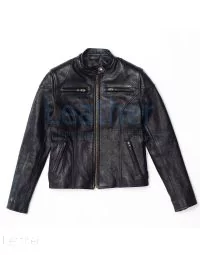
The wearer matters as much as the reference. Watching how people move and dress in busy cities shows which cuts feel comfortable in daily use. Leather is a bold material, so jackets are often designed to look confident while staying easy to wear. Racing-inspired shapes are one example, and the range shows how that cut is adapted for everyday wear.
Choosing the Right Leather
The feel of the leather decides how a jacket hangs and behaves. Lambskin is soft and light, which is why it is widely used for soft apparel and for tailored pieces such as women's blazers. Cowhide and goatskin are thicker and tougher, which gives a traditional biker jacket its sturdy, armour-like feel. The skill lies in matching the strength of the hide to the purpose of the jacket.
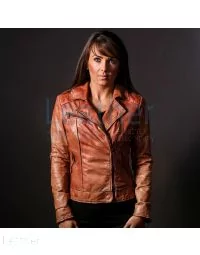
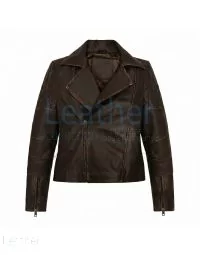
For women's styles, the pages collect the lighter cuts, while a shows how a heavier biker shape is adapted to a more fitted pattern.
Full-Grain and Corrected-Grain Leather
Grade matters as much as animal. Full-grain leather keeps the entire grain layer without removing the surface, so it shows natural texture and develops a patina with wear. Corrected-grain leather is buffed, sanded, dyed or embossed to hide surface flaws and create a uniform look (see the overview of leather grades on Wikipedia). Neither is wrong, but they look and age differently, and it is worth asking which one a jacket uses.
From Sketch to Finished Jacket
The process begins with pencil and paper. A designer typically sketches many variations before settling on one. The chosen sketch becomes a pattern, a set of flat shapes that shows exactly how the leather will be cut and joined.
Before any leather is used, a sample is usually sewn in basic fabric to check the fit. This step exists because leather is unforgiving: a needle hole stays visible, so mistakes in the pattern need to be found early. Once the fit is confirmed, the leather is cut so that the grain and any natural marks of the hide fall consistently across the garment.
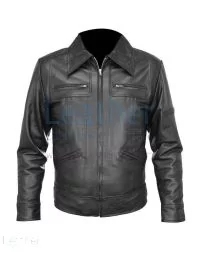
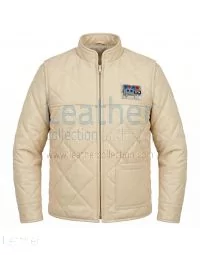
Fit and detailing differ between cuts. A shirt-style jacket such as the relies on clean lines and structure, while a needs extra room and shaping around the shoulders and spine.
Handmade Garments vs Mass Production
Mass-produced jackets are cut in large batches by machine and often use corrected-grain leather. Details are where the difference shows: heavy-duty zippers, reinforced snaps and breathable linings tend to last longer than plastic zippers and thin linings. Hand stitching and made-to-order production, the approach Leather Collection has taken since 2009, allow more control over those details. The is one example of a piece where the hardware and lining are part of the design.
A heritage-inspired design such as the also shows how a classic shape can be kept simple, with the construction doing the work rather than large logos.
Sustainability in Leather Design
Durability is the main sustainability argument for leather: one well-made jacket worn for many years replaces several short-lived ones. Tanning is the environmental pressure point. Chrome tanning is fast and common in industrial production, but chromium is a heavy metal and raises environmental concerns, while vegetable tanning uses plant tannins and is the oldest method. Designers are also looking at upcycled leather and plant-based alternatives, although these are still developing.
Styling Leather Jackets
A black biker jacket over a white T-shirt and jeans is the classic combination. The same jacket can also be worn over a floral dress for contrast. Black remains the default, but burgundy, forest green and tan also work. The general rule is balance: if the jacket is bold, keep the rest of the outfit simple.
Where Leather Design Is Heading
Two directions are visible in current design: understated jackets with clean shapes and no prominent logos, and cuts that are designed to fit anyone regardless of gender. Both reward good pattern-making over decoration.
Frequently Asked Questions
What is the difference between full-grain and corrected-grain leather?
Full-grain leather keeps the whole grain layer, so its natural texture shows and it develops a patina with wear. Corrected-grain leather has its surface buffed, sanded, dyed or embossed to hide flaws and look uniform. Full-grain is more natural in appearance, while corrected-grain looks more even from the start.
Which leather suits a biker jacket?
Cowhide and goatskin are the usual choices because they are thicker and tougher than lambskin. That weight gives a biker jacket its structured feel. Lambskin is softer and lighter, so it is more common for tailored jackets and blazers than for traditional motorcycle styles.
Why is a sample made before the leather is cut?
Leather cannot be unpicked without leaving needle holes, so the fit is tested first in plain fabric using the finished pattern. Problems with the sleeve, shoulder or length can then be corrected before the real hide is cut, which protects the leather and the final garment.
Is leather a sustainable choice?
Leather lasts for many years when cared for, which reduces how often garments are replaced. The tanning method is the main environmental concern, since chrome tanning uses a heavy metal while vegetable tanning uses plant tannins. Asking how a leather was tanned gives a clearer picture than the material alone.
Written by the Leather Collection Editorial Team.