 USA
USA  Brazil
  Germany
  France
  Italy
Italy  Switzerland
  Sweden
  Spain
Spain  Great Britain
  Norway
  Russia
  South Africa
  Japan
Japan  New Zealand
  Australia
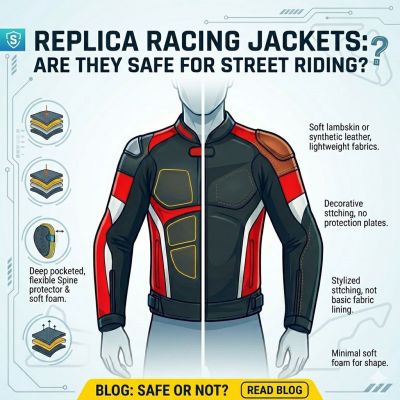
A MotoGP replica jacket copies the look of race gear: team colours, sponsor graphics and an aggressive cut. Whether it also protects on a public road depends on how it is built, not on the logos. This guide explains what separates a protective replica from a fashion piece and what to check before riding in one.
Key Takeaways
- Protection comes from construction: leather, stitching, armour and fit, not from branding.
- EN 17092 is the European standard for motorcycle clothing, with classes AAA, AA, A, B and C; class B covers abrasion only and class C only carries protectors.
- Impact protectors have their own standards: EN 1621-1 for shoulder and elbow protectors and EN 1621-2 for back protectors.
- Without armour, a leather jacket protects mainly against abrasion, not impact, so the specification sheet matters more than the design.
Table of Contents
What Is a Replica Motorcycle Jacket?
A MotoGP replica jacket copies the design of professional racing gear. It often includes:
- Team colours
- Sponsor-style branding
- Race-inspired styling
- An aggressive cut
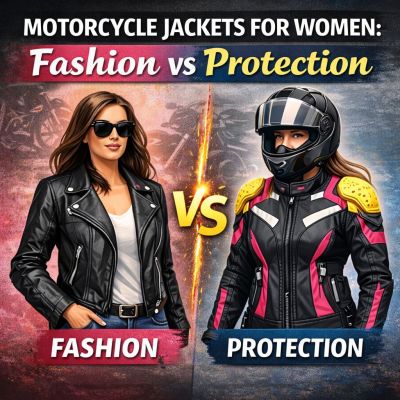
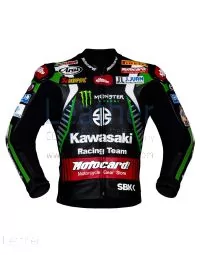
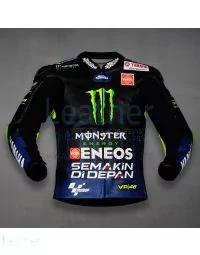
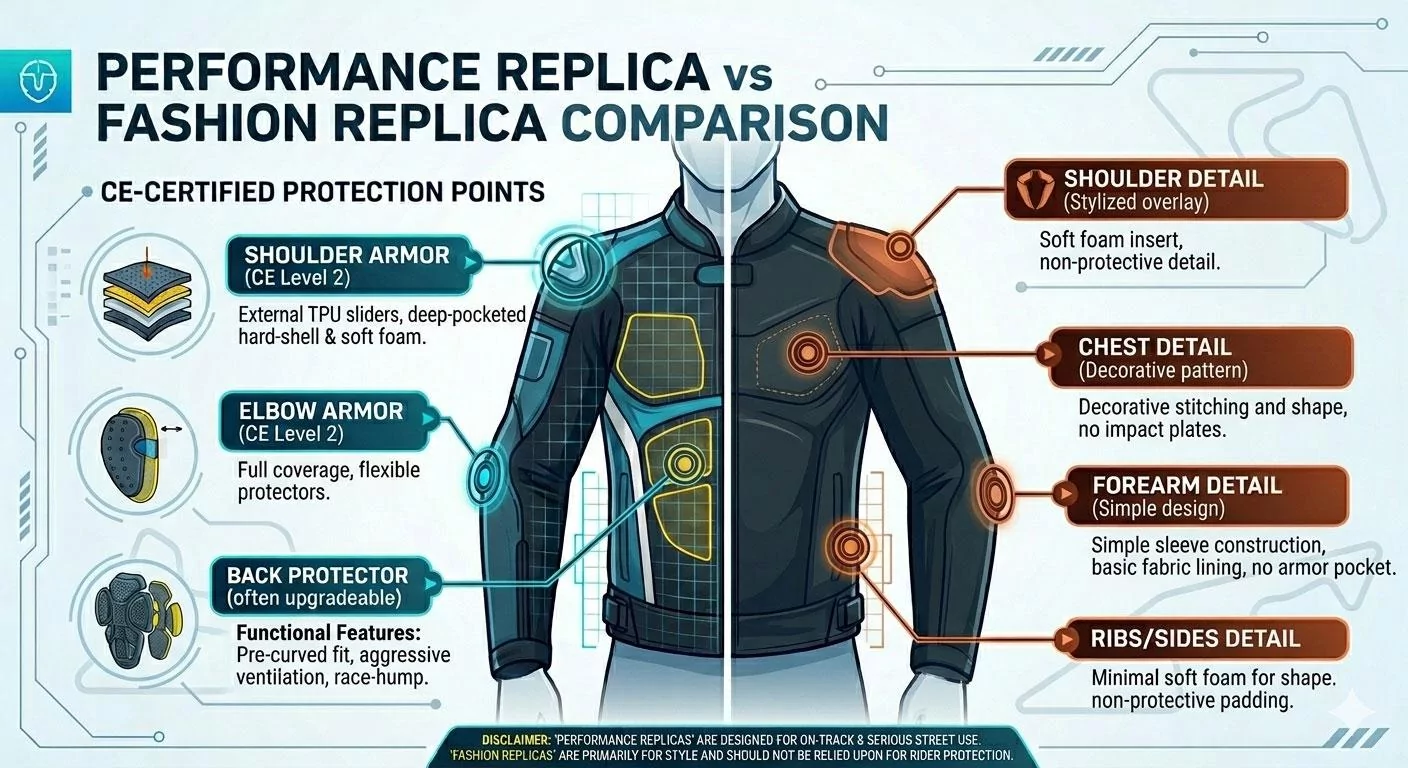
Design does not automatically equal protection. Replica jackets fall into two groups: performance replicas and fashion replicas. A race-team design such as the shows the styling; the construction details still have to be checked separately.
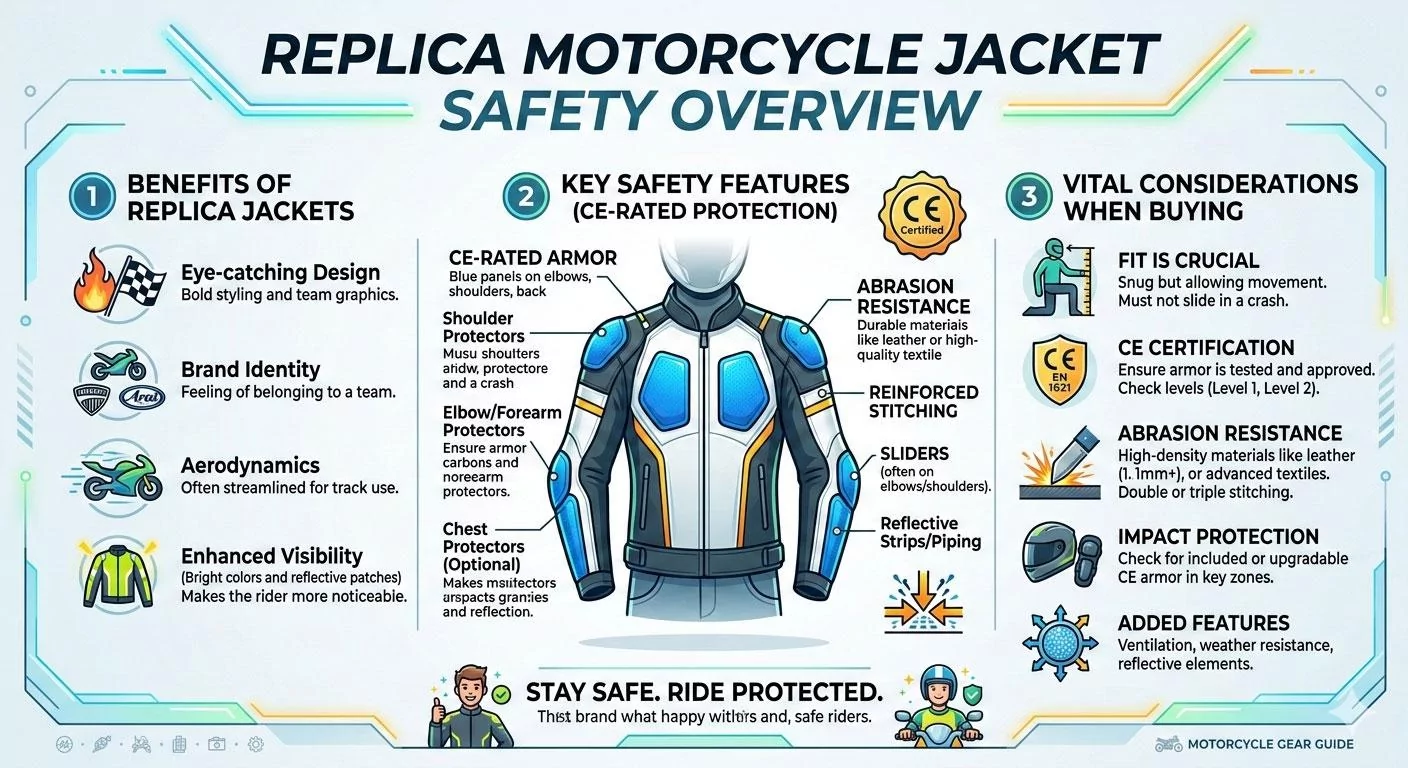
Racing Replica vs Fashion Replica
Performance Replica
- Made from cowhide leather
- Includes removable impact armour
- Cut for a riding position
- Reinforced stitching
Fashion Replica
- Thin leather or synthetic material
- No armour or armour pockets
- Loose street fit
- Built mainly for appearance
The difference matters in a crash: one is built to protect skin, the other mainly to look good. Race-styled designs are listed in the collection.
What the Safety Labels Mean
EN 17092 splits motorcycle clothing into five classes. Among AAA, AA and A, a higher class means tougher requirements. Class B offers abrasion protection similar to class A but no impact protection, and class C adds impact protectors but gives no minimum abrasion protection. The classes are described on the SATRA EN 17092 page. A garment earns a class through testing of the finished jacket, so a label says more than the leather description or the logo.
Armour and Impact Protection
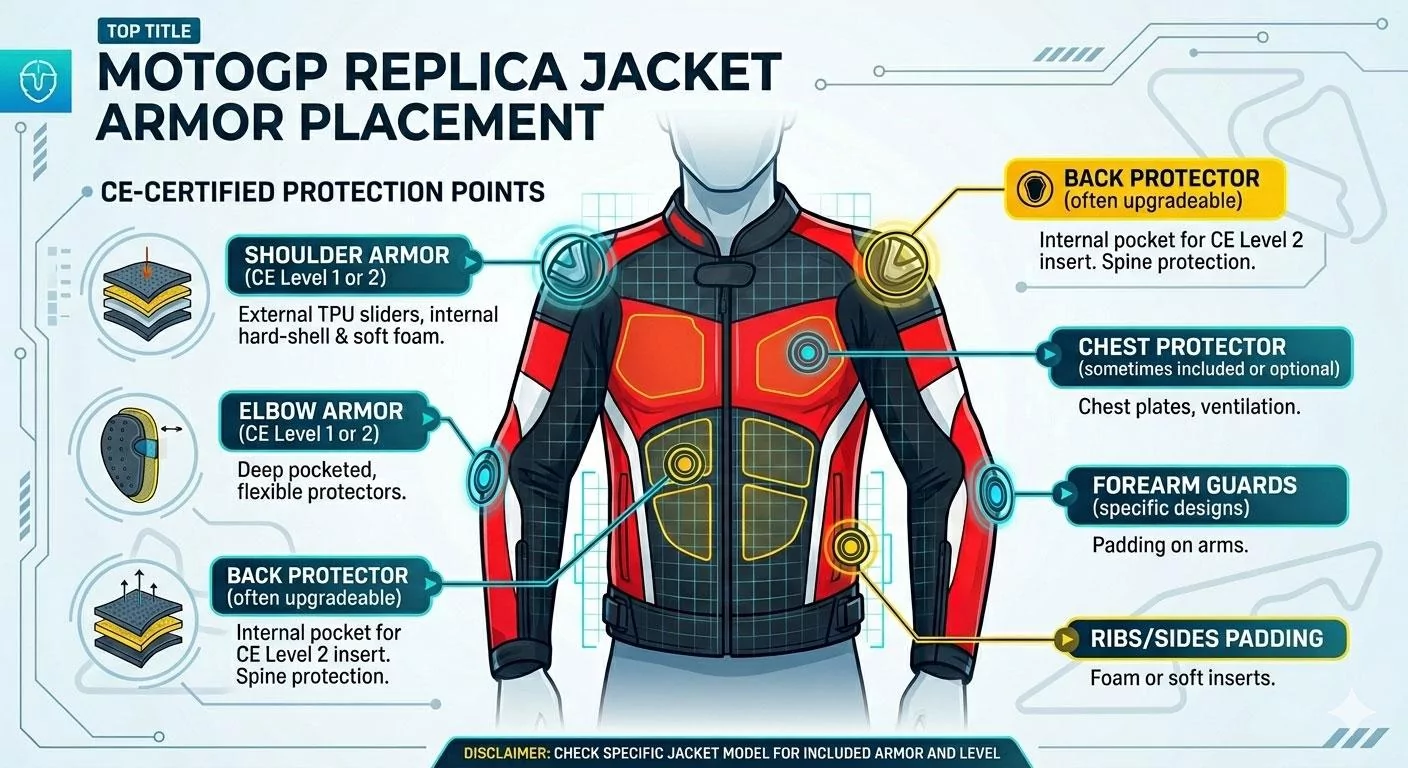
Replica motorcycle jacket safety depends heavily on armour. Impact protectors are tested to separate standards: EN 1621-1 for shoulder, elbow, hip and knee protectors and EN 1621-2 for back protectors.
Check for:
- Protectors marked EN 1621-1, with their Level stated, at the shoulders and elbows
- A back protector pocket, ideally with a protector marked EN 1621-2
- Secure armour placement that does not shift
Without armour, leather mainly protects against abrasion, not impact. A jacket’s listing should name the standard, the Level and the zones the armour covers; a listing that only says “CE armour” leaves those questions open, so ask the seller.
Leather and Stitching
Street riding leather has to resist abrasion during a slide, and seams have to hold. Abrasion, tear and seam strength are among the properties tested when a garment is certified to an EN 17092 class. Feel alone does not show how a jacket performed in testing, so the label and specification matter.
Ask for the leather type and its thickness in millimeters, and inspect the stitching at the shoulders, elbows and underarms. Leather thickness is one factor; the tested EN 17092 class is the reference. Fit and riding position also need to be considered together. Made-to-measure options such as address fit directly.
Fit and Riding Position
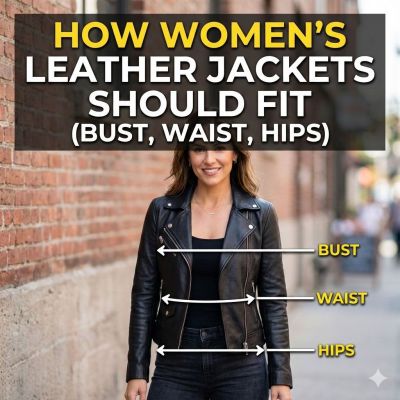
Replica jackets are often cut aggressively. A race-fit jacket feels tight when standing and relaxes in the riding position.
If a jacket is too loose, armour shifts away from the shoulders and elbows. If it is too tight, movement is restricted. Proper fit improves both comfort and protection.
When Replica Jackets Suit Street Riding
Suitable if:
- The jacket is made from cowhide or another leather intended for riding
- Seams are reinforced
- Armour marked EN 1621 is included or can be fitted
- The cut works in the riding position
- The seller states a tested EN 17092 class, where one is claimed
Not suitable if:
- The material is thin fashion leather
- No armour or armour pockets are included
- The cut is loose or casual
- It is designed purely for lifestyle wear
Always verify specifications before buying.
Style Should Not Replace Protection
Replica motorcycle jacket safety depends on construction, not branding. A properly built MotoGP replica jacket can be suitable for street riding, while a fashion-focused version may leave the rider unprotected. Look beyond logos: check the leather, confirm the armour and inspect the stitching.
Frequently Asked Questions
Are all MotoGP replica jackets safe for street riding?
No. Replica describes the styling, not the construction. Some are built as riding gear with heavy leather, reinforced seams and armour pockets, while others are fashion jackets with thin material and no armour. Check the specification for the leather, the armour and the fit before riding in one.
What do the EN 17092 classes mean?
EN 17092 has five classes. Among AAA, AA and A, a higher class means tougher test requirements for the finished garment. Class B gives abrasion protection similar to class A without impact protectors, and class C adds impact protectors but gives no minimum abrasion protection.
Can armour be added to a replica jacket?
Only if the jacket has armour pockets cut for protectors at the shoulders, elbows and back. Shoulder and elbow protectors are covered by EN 1621-1 and back protectors by EN 1621-2. Without pockets, a separate class C layer can carry protectors, but it gives no minimum abrasion protection.
How can leather quality be checked?
Ask the seller for the leather type and thickness, then inspect the seams and the zip. A tested class label is a result for the finished garment, so it says more than a description. Leather that feels thin, overly soft or loosely stitched deserves caution.
Written by the Leather Collection Editorial Team.