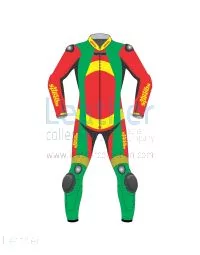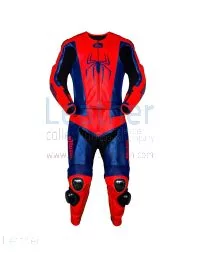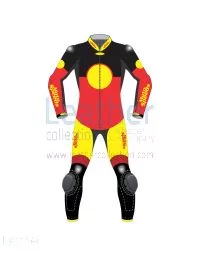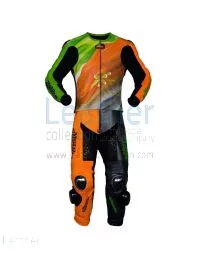
 USA
 Brazil
 Germany
 France
 Italy
 Switzerland
 Sweden
 Spain
 Great Britain
 Norway
 Russia
 South Africa
 Japan
 New Zealand
 Australia


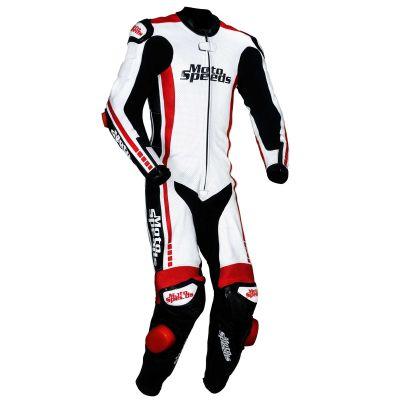
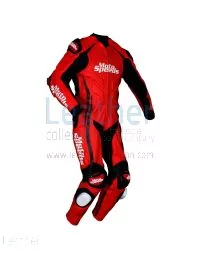
A leather suit is the garment that covers a rider from shoulders to ankles in one piece of protective clothing. The is a leather motorcycle suit aimed at sport riders and trackday riders who want continuous leather coverage with armour positions at the shoulders, elbows and knees.
Key Takeaways
- A one-piece leather suit gives continuous coverage with fewer gaps than a separate jacket and pants.
- EN 17092 AAA is the class intended for leather racing suits, and shoulder, elbow and knee armour is tested under EN 1621-1.
- The product page for the Tyro suit lists drum-dyed milled cowhide, double and triple safety stitching, removable armour at the shoulders, elbows, knees and hips, and a pro-curved track design.
- Fit, armour markings and leather care decide how well any suit works in practice.
Why Choose a Full Leather Suit?
A full suit joins jacket and pants into one garment, so there is no gap at the waist where skin can be exposed in a slide. Riders who choose a one-piece suit usually gain:
- continuous body coverage in a single garment
- leather abrasion resistance on every panel
- armour positions at the main impact points
- a race-style cut that suits a tucked riding position
These traits are why leather suits are popular among sport riders and trackday riders. A suit is less convenient than a jacket and pants for everyday stops, which is a trade-off to weigh against its coverage.
Leather Construction
The product page lists the Tyro suit in 1.2 to 1.3 mm drum-dyed milled cowhide, a traditional material for racing clothing, as a one-piece race suit with a two-piece option. In motorcycle use leather offers:
- resistance to sliding and abrasion
- a break-in period in which the leather follows the rider's body
- protection from wind and debris at speed
The standard that describes this clothing is EN 17092. It has five classes, and class AAA is the one intended for one- or two-piece leather suits used on the track (MCG). The class that applies to a particular suit is shown on its label, so check it before use.
Protection Features
Protection is built into the design as well as the material. The Tyro includes the following features:
Safety Features
- Removable armour at the shoulders, elbows, knees and hips, as listed on the product page, which describes it as CE Level 2 (EN 1621-1:2012) but also lists CE Level 2 as an add-on, so confirm what is included
- Armour standard: protectors for limb joints are tested under EN 1621-1 (Wikipedia: motorcycle armour)
- Double and triple stitching in stress areas
- YKK semi-auto-lock zippers on the openings, as listed on the product page
EN 1621-1 describes how limb-joint protectors are tested, in two performance levels based on transmitted force. A pocket does not make a suit protective on its own, so riders should confirm the markings on the armour they fit and consider a back protector as well.
Comfort for Long Rides
Comfort affects how often a suit gets used. The Tyro suit uses:
- A pro-curved race track design for an aggressive riding posture, as listed on the product page
- Stretch inserts and accordion-style panels for flexibility, as listed on the product page
- A detachable, breathable interior liner for airflow
- A race fit cut for a tucked riding position
These details help on trackdays and on longer rides, though a race suit is cut for a tucked position and feels most natural in that posture.
Choosing and Fitting a Suit
A suit should be snug without restricting movement. In the riding position, the sleeves and legs should not ride up, and the armour should sit over the joints rather than slip off them. Sizing against body measurements, rather than a usual clothing size, is the sensible starting point. Riders comparing options can look at the range, the , or two-piece options such as the .
Looking After the Suit
Follow the care label or the maker's instructions; the right cleaning or conditioning product depends on the leather's finish and construction. After a wet ride, blot the suit and let it air-dry away from direct heat.
Final Thoughts
The Tyro leather suit is a one-piece leather design for sport and trackday riding, with removable armour, double and triple safety stitching and a pre-curved cut. Its value depends on fit, on the markings of the armour fitted and on how the leather is looked after.
Frequently Asked Questions
What is the difference between a one-piece and a two-piece suit?
A one-piece suit is a single garment and leaves no gap at the waist. A two-piece suit joins a jacket and pants with a zip, which makes it easier to wear and carry. Both styles can be leather. The one-piece format is the usual choice for track riding.
What does EN 17092 AAA mean?
EN 17092 divides motorcycle clothing into five classes, AAA to C. AAA is intended for garments with very high abrasion resistance, such as one- or two-piece leather racing suits. The class applies to a specific tested garment, so the label of the actual suit shows what it was assessed for.
Does a leather suit include armour?
The product page lists removable armour at the shoulders, elbows, knees and hips, and describes it as CE Level 2 (EN 1621-1:2012), but the page also lists CE Level 2 as an add-on, so what is included should be confirmed before ordering. Protectors for these joints are tested under EN 1621-1, and a back protector is tested under EN 1621-2. Riders should check the markings on whichever armour is fitted.
How should a leather suit be cleaned?
Follow the care label or the maker's instructions, because the right cleaner or conditioner depends on the leather's finish and construction. If it gets wet, blot it and let it air-dry away from direct heat.
Written by the Leather Collection Editorial Team.