 USA
 Brazil
 Germany
 France
 Italy
 Switzerland
 Sweden
 Spain
 Great Britain
 Norway
 Russia
 South Africa
 Japan
 New Zealand
 Australia

Racing boots look similar on a shelf, yet they differ widely in what they are built to do. Some carry a shifter pad, some carry ankle armour, and some simply use the word racing in the product name. For track riders, the useful question is which features are tested, which are optional, and which depend on how the boot fits the rider.
Key Takeaways
- EN 13634 is the European standard for motorcycle boots; it covers abrasion, impact cut resistance and transverse rigidity, among other tests.
- Ankle impact protection, fuel oil resistance and slip resistance of the sole are optional claims, so the label or product description has to state them.
- A snug heel and midfoot matter more than a soft first impression: a boot that shifts on the foot also shifts armour away from the ankle.
- Standard sizing suits most riders; made-to-order boots make sense when no standard last fits or when the boots must match a custom suit.
Racing boots are protective equipment first and everyday footwear second. They sit between the foot and the ground in a slide or impact, so the tested features, the closure and the fit all affect how well they stay in place. The sections below cover how riding style changes the choice, which protection features to look for, how to judge fit, and when made-to-order boots are worth considering.
What Sets Racing Boots Apart from Street Boots?
Racing boots prioritize protection and ankle stability over walking comfort. They usually have a taller shaft, reinforced ankle collars, a stiff structure around the foot and a closure that locks the boot to the leg. Street boots are lower and more flexible, which suits walking and daily use but gives the ankle less support.
Track organizers often set a minimum. One organizer, for example, requires leather riding or racing boots that cover the ankles for track days. Requirements differ between organizers, so riders should check the rules of the event before buying.
How Riding Style Changes the Choice
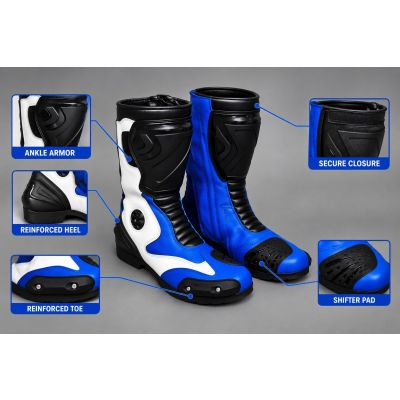
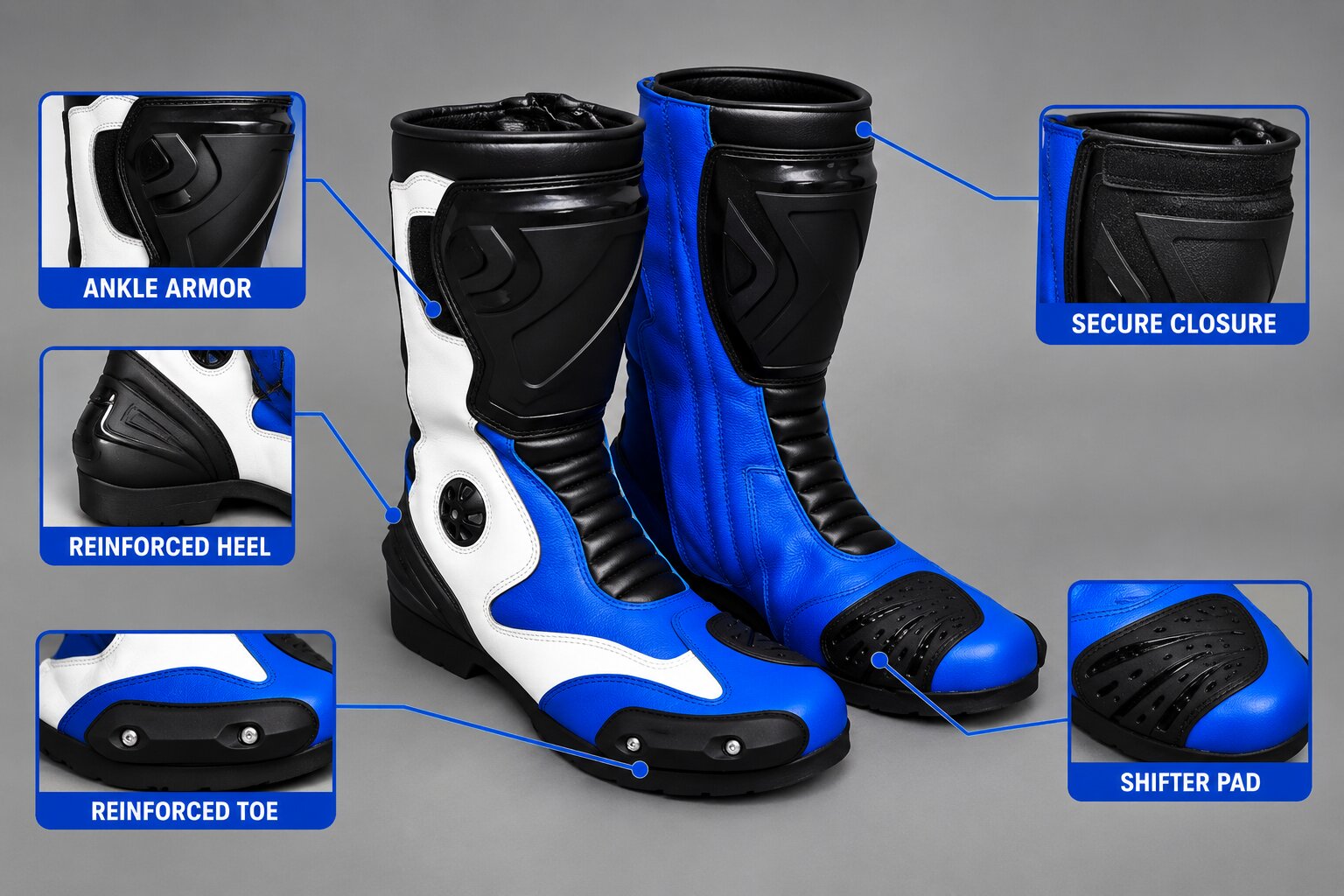
Track-day and club riders spend long sessions at sustained lean angles, and a low-side crash can put the foot and ankle on the ground while the bike is still moving. This riding calls for a tall racing boot with ankle protection, reinforced heel and toe areas and a secure closure.
Sportbike riders who split time between road and track often choose a shorter boot that still has a reinforced ankle, a shifter pad and abrasion-resistant leather. It is easier to walk in, but it gives up some ankle height, so the protective features need closer inspection.
Newer riders should prioritize ankle support and a stable fit over brand or colour. A boot that fits the natural shape of the foot gets worn, and a boot that gets worn is the one that provides protection.
Which Protection Features Should Buyers Check?
EN 13634 is the European standard for protective motorcycle footwear. It assesses details such as the height of the upper and seam construction, plus transverse rigidity, impact cut resistance and abrasion resistance of the upper. A boot that states conformity has been tested against these requirements; a boot that only says racing in its name has not necessarily been tested against anything.
Under the same standard, manufacturers may claim five optional properties: impact energy protection to the shin and ankle, resistance to water penetration, fuel oil resistance of the outsole, slip resistance of the outsole, and water vapour permeability. Because these are optional, riders should confirm on the label or product page which ones a boot actually claims. For track use, ankle impact protection and an oil-resistant, slip-resistant outsole are the most relevant claims.
Beyond the labels, a few construction details can be checked by hand:
- Ankle area: look at whether armour or a reinforced structure covers both the outer and inner ankle bones; this is a buying tip, not a requirement of EN 13634, where ankle impact protection is optional.
- Heel and toe: a firm heel counter keeps the heel from moving inside the boot, and the toe cap should cover the whole toe box.
- Shifter area: the left boot needs a reinforced, securely stitched pad where the gear lever contacts the leather.
- Closure: straps, buckles or laces must be easy to operate with gloves on and must hold their setting during a ride.
How Fit and Sizing Affect Comfort and Protection
Fit decides whether the protective features end up where they are needed. A boot that is too loose lets the foot slide and moves the ankle armour off the joint. A boot that is too tight restricts circulation and tires the foot, which tempts riders to shift their position on the pegs.
A racing boot should feel snug at the heel and midfoot from the first try-on, with enough toe room to move the toes slightly but not enough for the foot to slide forward under braking. The heel should stay down when walking. Leather softens a little with wear, but a boot that is painful at the first fitting is unlikely to become comfortable later.
Walking around in the boots for several minutes, flexing the ankle and putting the foot in a peg position gives a better read than standing still. When two sizes are close, many riders prefer the snugger one, provided it causes no numbness or pressure points; a fitter can advise. Feet also swell a little during a long session, so a boot that feels secure but not painful at the start is a reasonable target.
Which Materials and Construction Details Matter?
Leather type, thickness and finish all influence abrasion resistance, but a single thickness figure does not describe a boot. Standards test the finished product for abrasion resistance, so a tested claim says more than a millimeter number. A manufacturer should be able to state what the upper is made of and what abrasion testing the boot has passed.
Stitching is another weak point to inspect. High-stress areas such as the ankle collar, heel and toe should show tight, even stitching with no gaps and no visible separation when the boot is flexed. The sole should be attached by stitching as well as adhesive where the design allows it, and sole bond strength is one of the properties covered by the EN 13634 tests. Breathable linings help in warm weather and reduce moisture build-up during long sessions.
Standard Size or Made-to-Order Boots?
Most riders find a workable fit in standard sizes if they try several models, because lasts differ between makers. Made-to-order boots are worth considering when feet are unusually wide or narrow, when arch height does not suit standard lasts, or when the boots need to match a custom suit in leather type and colour.
Leather Collection has made gear to order since 2009, with hand-stitched construction. Riders comparing options can start with the
section, and the is one example of how a matched set can be reviewed on its product page.When boots need to match a suit in leather and colour, a complete suit such as the is worth viewing alongside them.
Buying Checklist
- The label or product page states conformity with EN 13634.
- Ankle impact protection is stated, and it covers both sides of the ankle.
- The outsole claims slip resistance and fuel oil resistance if the boots are for track use.
- The heel stays down and the midfoot feels supported when walking and flexing.
- The closure holds its setting and can be used with gloves on.
- Seams are even and the sole is attached securely.
- The boot meets the gear rules of the event or track.
Frequently Asked Questions
Which standard applies to motorcycle racing boots?
EN 13634 is the European standard for protective motorcycle footwear. It assesses the upper height and seam construction, and tests transverse rigidity, impact cut resistance and abrasion resistance. Boots that conform to it can state so on the label, while a name such as racing or track on its own says nothing about testing.
Does every certified boot include ankle armour?
No. Under EN 13634, impact energy protection for the shin and ankle is one of five optional properties a manufacturer may claim, alongside water penetration resistance, fuel oil resistance of the outsole, slip resistance of the outsole and water vapour permeability. Riders should check which claims a given boot makes before buying.
How tight should racing boots feel?
Racing boots should feel snug at the heel and midfoot without pain or numbness, with the heel staying down when walking. The toes need slight room to move but not enough to slide forward when braking. A boot that is uncomfortable at the first fitting is unlikely to improve with wear, since leather softens only a little.
Why does the sole matter on track?
Fluids such as oil, fuel or coolant can end up on a circuit surface, and a sole that grips poorly on them makes foot placement on the pegs and walking in the paddock less secure. Slip resistance and fuel oil resistance of the outsole are optional claims under EN 13634, so the label should be checked.
What is the difference between racing and street boots?
Racing boots are built for protection and ankle stability, with a taller shaft, reinforced ankle area and a closure that holds the leg firmly. Street boots are lower and more flexible, which suits walking and daily riding but gives less ankle support. Riders who attend track days generally need the racing type.
Written by the Leather Collection Editorial Team.