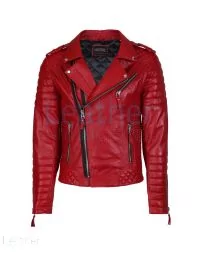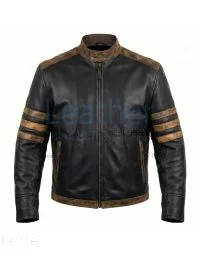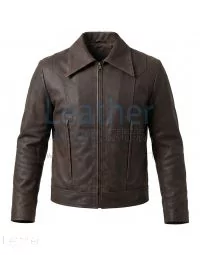
 USA
USA  Brazil
  Germany
  France
  Italy
Italy  Switzerland
  Sweden
  Spain
Spain  Great Britain
  Norway
  Russia
  South Africa
  Japan
Japan  New Zealand
  Australia
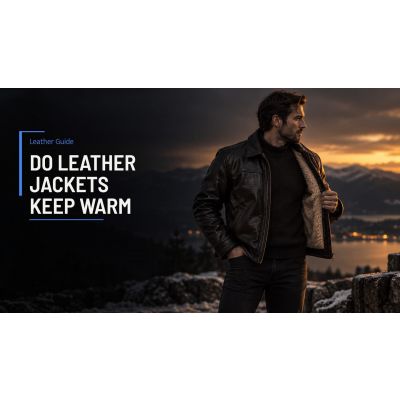
When the temperature drops, a familiar question comes back: can a leather jacket compete with a wool coat or a padded parka? Leather is often linked with spring and fall, yet it has properties that matter in cold weather. The answer depends less on the hide itself than on the lining, the fit and the layers worn underneath.
Key Takeaways
- Leather blocks wind well, but on its own it adds limited insulation.
- Most of the warmth comes from the lining, such as shearling, quilting or fleece.
- A snug fit that leaves room for thin layers keeps warm air in and cold air out.
- Below freezing, layering under the jacket does the work that loft does in a down coat.
- Wet leather should dry slowly at room temperature, away from radiators and heaters.
How Leather Handles Cold
Leather is a dense, fibrous material. On its own it adds limited insulation, and its main strength in cold weather is that it stops wind.
Natural Wind Resistance
Unlike denim or light cotton, leather is a solid hide with no open weave, so wind has little way through. That matters because, as the National Weather Service explains, wind draws heat from the body and drives down skin temperature. A leather shell reduces that effect and helps keep the layer of warm air between the skin and the jacket undisturbed.
Key Factors That Influence Warmth
Not all give the same thermal protection. For cold weather, three things matter most.
- The type and weight of the hide: Heavier leathers such as cowhide block wind more than thin skins such as lambskin, but they are also stiffer. Check product details for weight and construction.
- Internal lining: A plain silk or polyester lining adds little warmth. For colder climates, look at:
- Shearling or sheepskin: a skin tanned and dressed with the wool left on (Wikipedia: shearling). For jackets lined with fur or shearling, see .
- Quilted panels: stitching creates pockets that can trap air, as in the .
- Fleece or flannel: soft materials that add a warm layer against the body.
- The fit: A jacket that is too loose lets cold air circulate inside. A snug but not restrictive fit keeps warm air close to the body, with enough room for thin layers.
Strategies for Extreme Cold
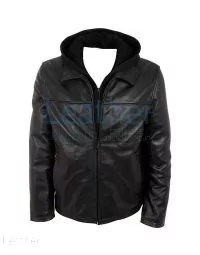
A leather jacket such as the can handle moderate winter conditions, but it needs help once temperatures fall below freezing. Leather lacks the loft of a down jacket, so the wearer has to build warmth through layers.
The Art of Layering
To turn a leather jacket into a deep-winter shell, use three layers:
- Base layer: a moisture-wicking thermal top or merino wool shirt to keep the skin dry.
- Insulating mid-layer: a chunky knit sweater, a hoodie or a light down vest.
- Outer shell: the leather jacket, which blocks the wind and holds the warmth in.
Pro Tip: Wool scarves and high-collar sweaters help. Leather feels cool to the touch, so keeping the neck away from direct contact with the collar can make the jacket more comfortable.
Check the Closures
Warmth also depends on how well the jacket seals. A close collar, snug cuffs and a zipper that closes fully all reduce the gaps where cold air gets in. Try the jacket on with the layers planned for winter before deciding on a size.
Riding in Cold Weather
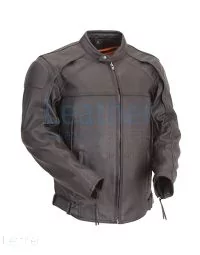
Riders face more moving air than pedestrians, because riding speed adds to the wind passing over the jacket. For that reason lining and layers matter even more on a motorcycle. Styles aimed at winter use, such as the , are a useful starting point.
Leather that gets wet in winter should dry at room temperature and away from radiators and heaters, in line with conservation guidance from the Canadian Conservation Institute. Rushing the drying process with direct heat risks stiffening the hide.
Final Thoughts: Warmth Depends on the Build
So, do leather jackets keep you warm? Yes, with conditions. Leather blocks wind, while the lining and layers provide most of the insulation. A heavier jacket with a warm lining and a snug fit can handle a cold commute or a winter ride, while an unlined jacket suits milder days.
Choosing the lining, the fit and the layering together gives a more reliable result than relying on the hide alone.
Frequently Asked Questions
Is a leather jacket warmer than a wool coat?
Not on its own. Leather blocks wind but adds limited insulation, while a wool coat generally traps more warm air. A leather jacket closes that gap when it has a warm lining such as shearling or quilting, or when it is worn over a thermal base layer and a knit mid-layer.
Which lining keeps a leather jacket warm?
Shearling, which is sheepskin tanned with the wool left on, is a common choice for cold weather. Quilted linings with synthetic or down fill and fleece or flannel linings also add insulation. A plain silk or polyester lining adds very little warmth, so check the lining before buying a jacket for winter.
Should I size up for winter?
Choose a size that fits comfortably over the layers you plan to wear, without making the jacket loose. A jacket that is too loose lets cold air circulate inside, while one that is too tight compresses the layers beneath it and restricts movement. Try it on with a sweater.
Can I wear a leather jacket in freezing weather?
Yes, with layering. Add a thermal base layer and an insulating mid-layer under the jacket, and use a scarf to cover the neck. Keep the jacket dry, and if it gets wet, let it dry slowly at room temperature, away from radiators and heaters.
Written by the Leather Collection Editorial Team.