 USA
USA  Brazil
  Germany
  France
  Italy
Italy  Switzerland
  Sweden
  Spain
Spain  Great Britain
  Norway
  Russia
  South Africa
  Japan
Japan  New Zealand
  Australia
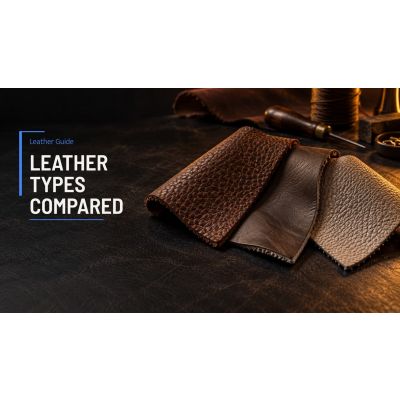
Not all leather feels the same. The type of leather used in a jacket or suit changes its comfort, its weight and how it handles abrasion, and the grade of the hide matters as much as the animal it came from.
This guide explains the types of leather, how each one feels, how strong it is and where it works, from racing suits to casual jackets.
Key Takeaways
- Cowhide is the usual choice for racing suits and riding jackets because the hide is thick; a garment's protection is shown by its EN 17092 class label and armour, not by the type of leather alone.
- Goatskin is lighter and more flexible than cowhide, which suits casual jackets; a goatskin riding jacket should still state an EN 17092 class and include armour.
- Sheepskin is soft and light, but it is a material for comfort and style rather than for abrasion protection.
- Grade matters as much as species: full-grain keeps the entire grain layer, while corrected and split leathers are processed more heavily.
- Kangaroo leather is a further option in racing leathers, valued for being supple, light and strong.
Table of Contents
What Is Leather?
Leather is made from animal hide that goes through tanning to prevent decay. The animal source, grain structure, and tanning method define how the leather feels and performs.
When people talk about leather quality, they usually mean three things:
- Strength—how well it resists tearing and abrasion
- Texture—how it feels on the skin
- Durability—how long it lasts with regular use
Cowhide Leather Explained
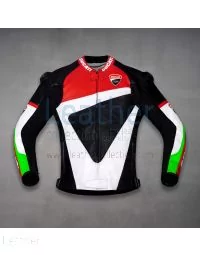
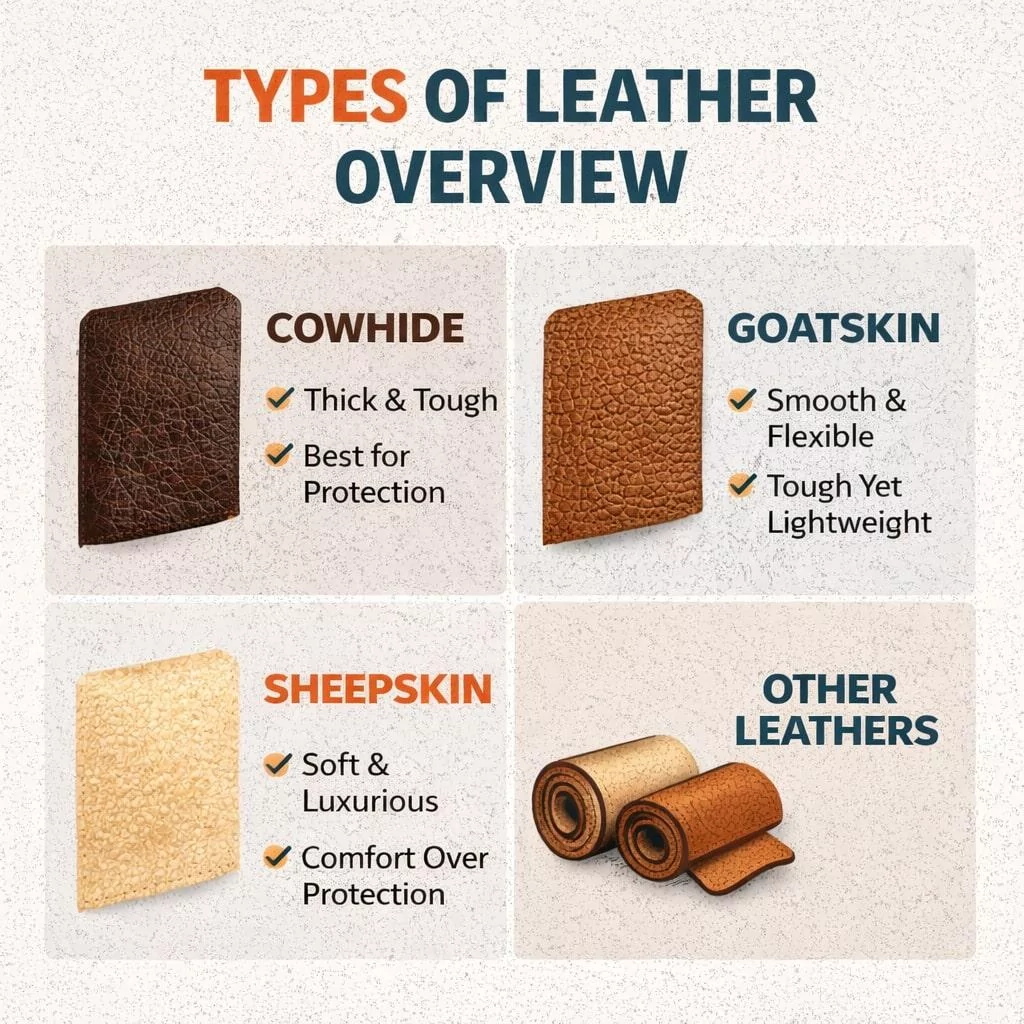
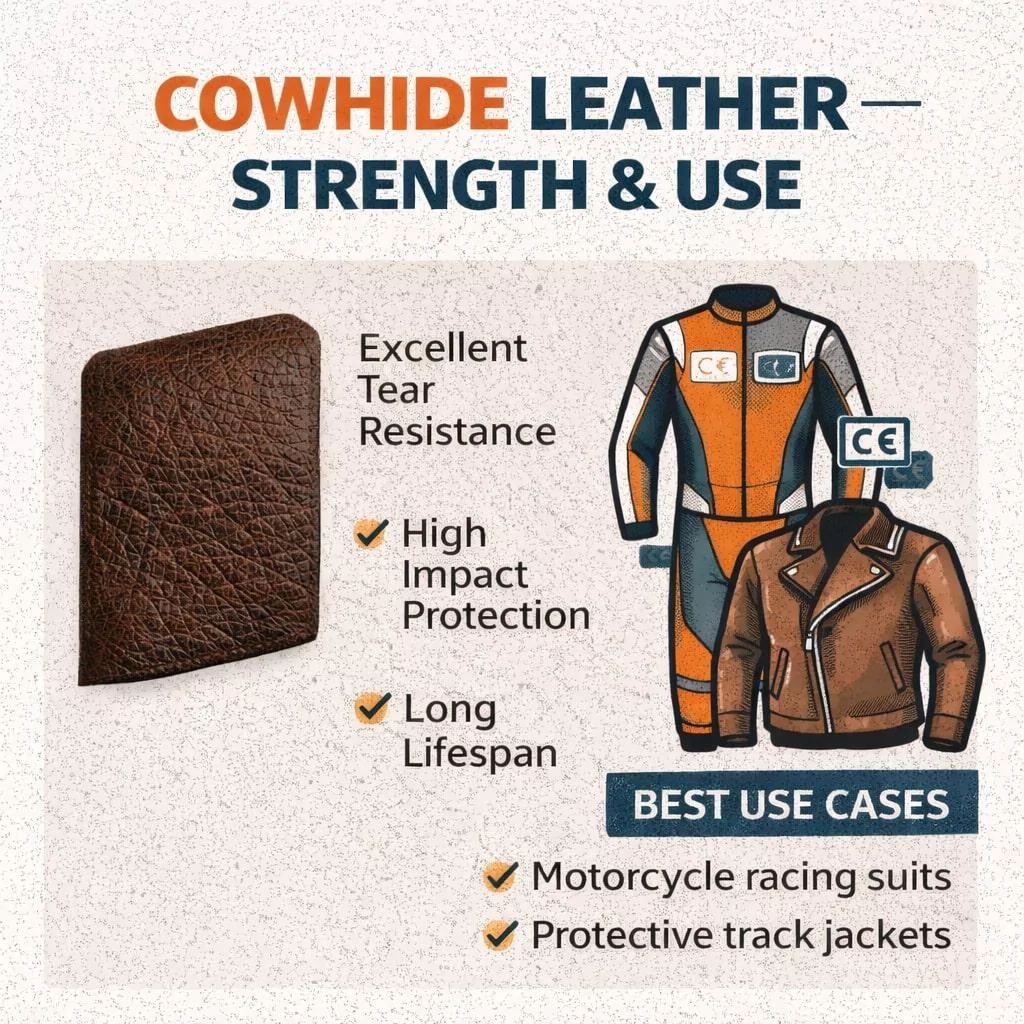
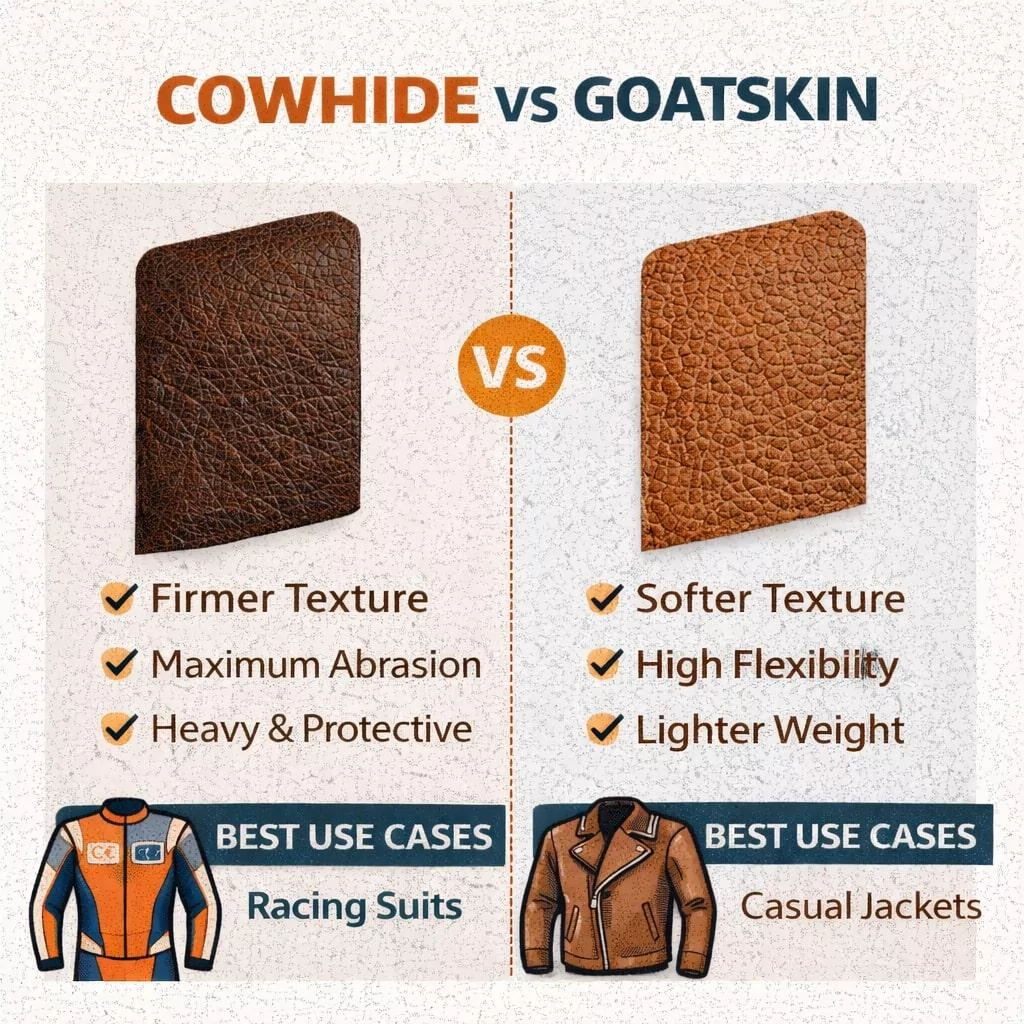
Cowhide is the most common and widely used leather in motorcycle gear. It is thick and tough.
How Cowhide Feels
Cowhide feels firm at first. Over time, it breaks in and becomes flexible while still keeping structure.
Cowhide Strength & Durability
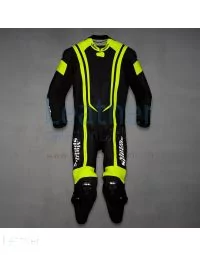
Cowhide is a thick hide and the leather most often used in racing suits and riding jackets. How well a garment resists abrasion depends on the thickness, tanning and construction, and its protection is shown by the EN 17092 class on the label, not by the animal the leather came from.
- Thick hide
- Abrasion and tear resistance depend on thickness, tanning and construction
Typical Use Cases
- Motorcycle racing suits
- Track jackets
- Protective riding gear
At Leather Collection, cowhide is often used in for riders who want a hard-wearing hide.
Other cowhide gear includes and the .
Goatskin Leather Explained
Goatskin offers a unique balance between softness and strength. It is lighter than cowhide.
How Goatskin Feels
Goatskin feels smooth and flexible from day one. It doesn't require long break-in time.
Goatskin Strength & Texture
Its natural grain is tight and pebbled.
- Abrasion resistance depends on thickness and construction
- High flexibility
- Fine, tight grain
Typical Use Cases
- Casual riding jackets
- Urban motorcycle wear
- Fashion leather jackets
Goatskin suits riders who want a lighter, flexible leather. A goatskin riding jacket should still state an EN 17092 class and include armour.
Sheepskin Leather Explained
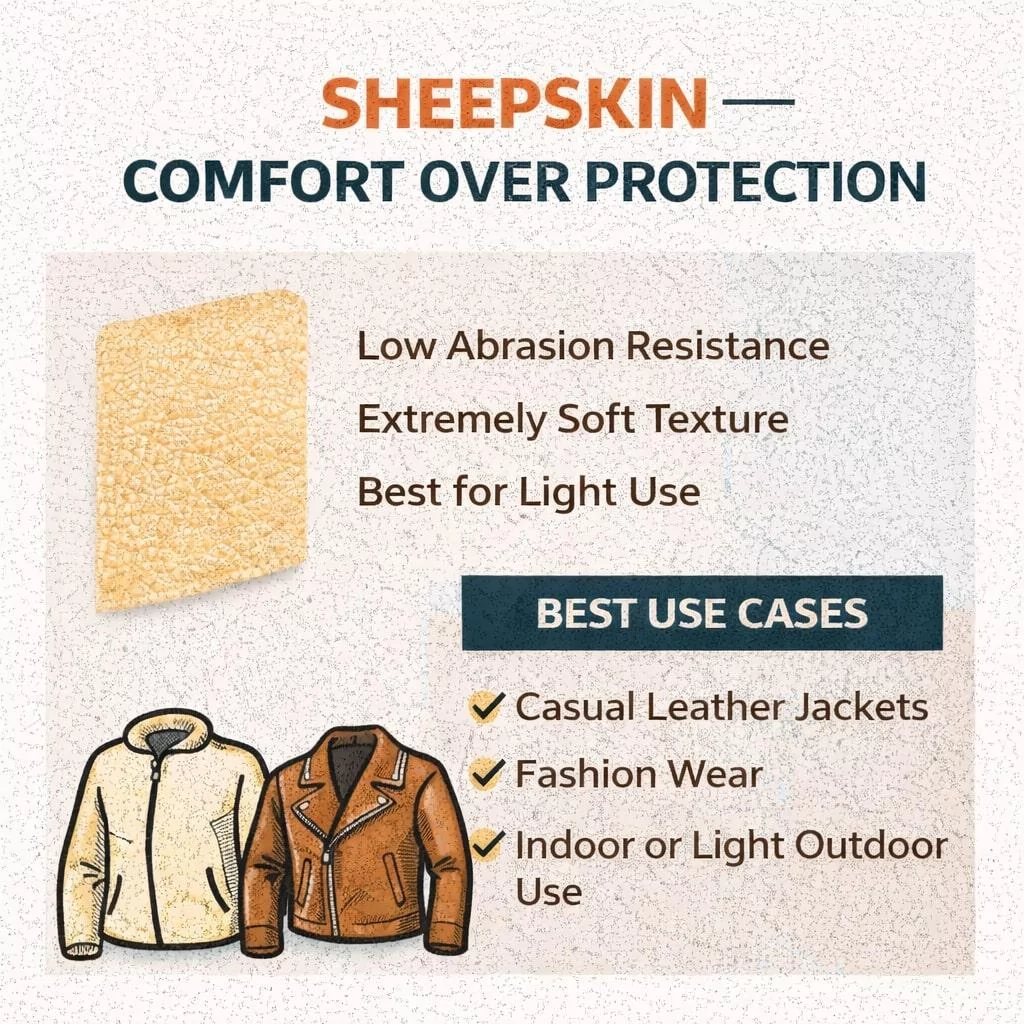
Sheepskin is known for softness and comfort. It is lightweight and soft but less rugged.
How Sheepskin Feels
It feels soft, smooth, and flexible - almost fabric-like.
Sheepskin Durability
This leather is not ideal for impact protection. It is more about comfort and style.
- Not chosen for abrasion protection
- Extremely soft texture
- Suited to light use
Typical Use Cases
- Casual leather jackets
- Fashion wear
- Indoor or light outdoor use
Sheepskin appears in casual styles such as the .
Full-Grain vs Other Leather Grades
Leather type isn't the only factor. Leather grade matters just as much.
Full-Grain Leather
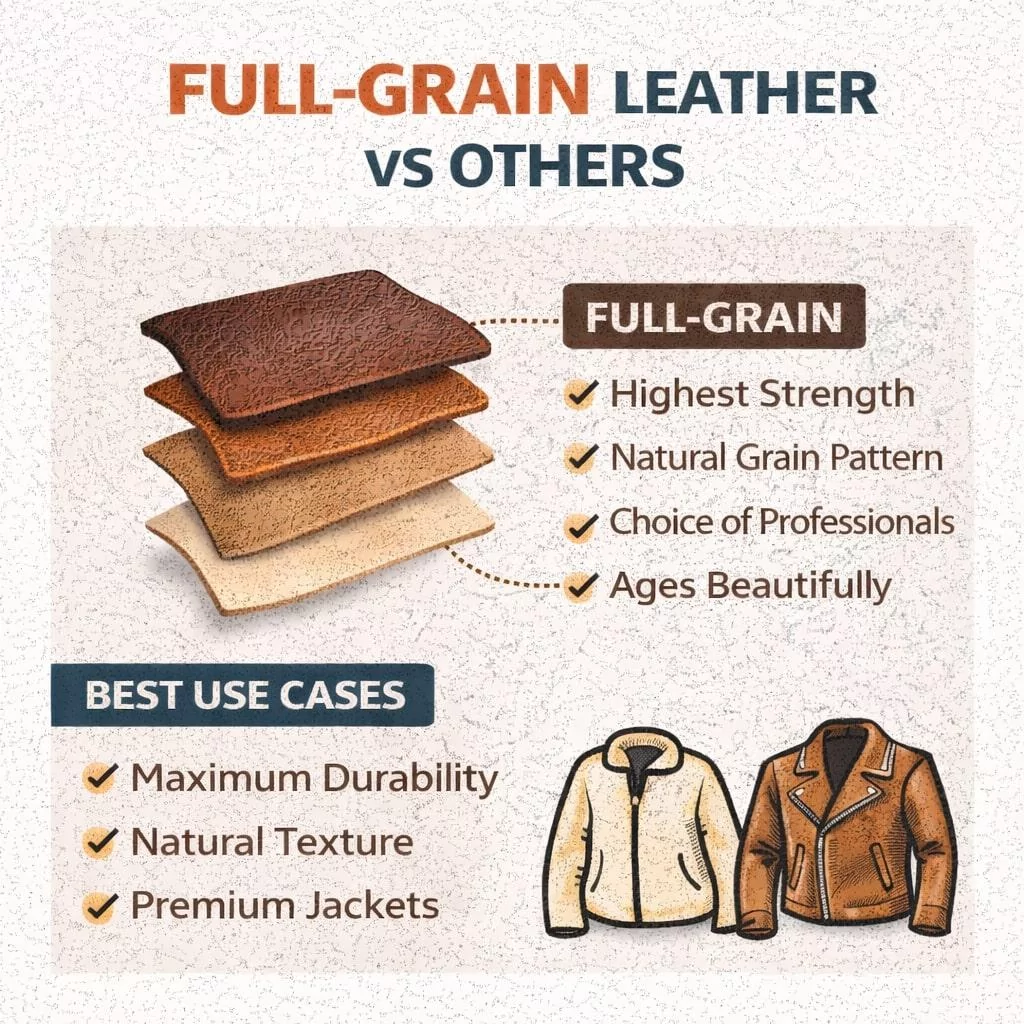
Full-grain is the grade that keeps the natural grain intact and contains the entire grain layer, with no removal of the surface.
- Retains the full grain layer
- Natural texture
- Develops a patina with use
Top-Grain Leather
Top-grain is sanded slightly for a uniform look.
- Smoother appearance
- Slightly less durable than full-grain
Corrected & Split Leather
Lower grades are often coated or heavily processed.
- Lower durability
- More coating and processing
Garments made from full-grain, top-grain, corrected-grain and suede leather can differ in abrasion resistance and in resistance to tearing and bursting, as described in Wikipedia: motorcycle personal protective equipment.
Leather Durability Comparison
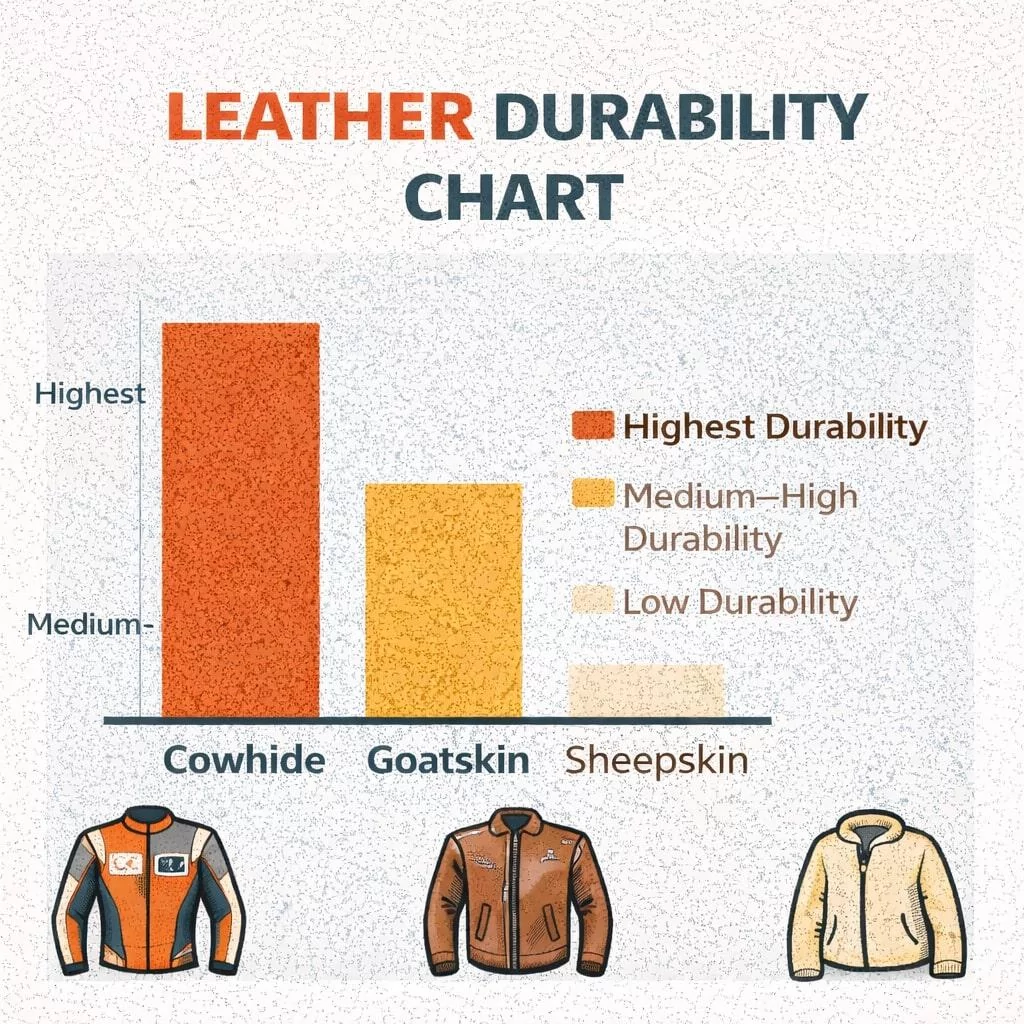
A quick comparison of the three leathers:
- Cowhide: generally the thickest and heaviest of the three
- Goatskin: lighter and more flexible
- Sheepskin: the softest and lightest
Durability depends on thickness, tanning, grade and construction as much as on the animal.
Protection comes from a garment with an EN 17092 class label and armour. Cowhide is the usual leather for higher classes, goatskin is lighter, and sheepskin suits fashion wear.
Racing vs Casual Leather Use
Leather for Racing
- Cowhide (primary choice)
- Full-grain is one option
- Armour and an EN 17092 class label on the garment
Leather for Casual Jackets
- Goatskin
- Sheepskin
- Lighter leather grades
Real examples are listed in the range.
How to Choose the Right Leather
Questions that narrow the choice:
- Will the jacket be ridden fast or casually?
- Is protection or comfort the priority?
- Will it be worn daily?
Choose a garment with an EN 17092 class label that fits the riding. Cowhide is the usual leather for higher classes, goatskin is lighter, and sheepskin suits fashion wear.
Frequently Asked Questions
Which leather lasts the longest?
Cowhide is generally the thickest of the three common types, which is why it is the usual choice for racing leathers. Goatskin is lighter, while sheepskin is softer and suited to light use. Durability depends on the grade, thickness, tanning and construction, and on how the garment is cared for.
Is goatskin good for motorcycle jackets?
Goatskin can be used in riding jackets. It is lighter and more flexible than cowhide and has a fine grain, so it feels comfortable from the first wear. Check that the specific jacket states an EN 17092 class and has armour before using it for riding. For track riding, cowhide or kangaroo leather is the more common choice in racing leathers.
Is sheepskin safe for riding?
Sheepskin is soft and comfortable but is not chosen for abrasion protection, so it suits casual wear better than fast riding. Riders who want protective gear usually choose thicker hides and a garment made specifically for riding rather than for fashion, with the construction details that come with it.
What is full-grain leather?
Full-grain leather keeps the entire grain layer, with no sanding or removal of the surface, and it develops a patina during use. Top-grain has the surface lightly sanded for a uniform look, while corrected-grain and split leathers are coated or processed more heavily than full-grain.
Does leather get better with age?
Many leathers soften with wear, and full-grain leather develops a patina. Cowhide starts firmer and breaks in over time, while goatskin and sheepskin feel soft from the start. For care, follow the garment's care label; the right treatment depends on the finish and construction.
Written by the Leather Collection Editorial Team.