 USA
 Brazil
 Germany
 France
 Italy
 Switzerland
 Sweden
 Spain
 Great Britain
 Norway
 Russia
 South Africa
 Japan
 New Zealand
 Australia


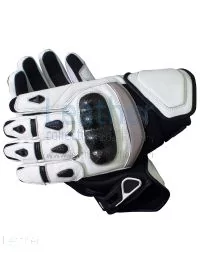
Gloves are one of the most important pieces of motorcycle gear. They protect the hands in a fall, shield them from wind and weather, and improve grip and feel on the controls. Leather is a common choice for men's motorcycle gloves, and this guide explains why are popular with riders and what to check before choosing a pair.
Key Takeaways
- Leather is a long-standing glove material because it resists abrasion and moulds to the hand.
- EN 13594 is the European standard for motorcycle gloves, with Level 1 and Level 2 performance levels.
- Check fit first: a snug glove keeps control of throttle, brake and clutch.
- Look for reinforced palms and knuckles, and match weather features to the climate.
- Air dry wet gloves and condition the leather occasionally.
Why Choose Leather for Motorcycle Gloves?
Leather has been a standard material for riding gloves for a long time. It combines abrasion resistance, a good feel on the bars and a fit that improves with wear.
Abrasion Resistance
In a slide, the palm and back of the hand meet the road surface. Leather resists abrasion well, which is why it is used for the palm and other exposed areas of many riding gloves.
Comfort and Fit
Leather moulds to the hand over time, giving a more personal fit. That flexibility matters for riders who spend long hours on the handlebars.
Ventilation
Leather is dense, so airflow usually comes from design features such as perforations or vented panels rather than from the material alone. These help in warm weather and on long rides.
Reinforcement
Many leather gloves add reinforced palms, knuckles and fingers, and some include padding or hard-shell knuckle protectors for extra coverage.
What to Look for in Men's Leather Motorcycle Gloves
When selecting , a few points decide whether a pair suits the rider.
Fit and Sizing
A glove should fit snugly without being tight. A snug fit keeps control of throttle, brake and clutch, while loose gloves can bunch and reduce grip. Trying a pair on, or checking a sizing chart when buying online, avoids most problems.
Standards and Protection
Look for gloves tested to EN 13594, the European standard for motorcycle riders' gloves. It defines two performance levels: Level 1, with lower ergonomic penalties, and Level 2, which gives greater protection and requires knuckle protection, an optional feature at Level 1 (SATRA). Testing covers abrasion, cut, tear and seam strength. The standard describes what a level means; the marking on the individual glove shows what it was tested to.
Weather Resistance
Leather alone is not waterproof. Riders in wet conditions often look for gloves with a waterproof liner or treatment, while for hot weather vented leather and perforations help prevent sweat build-up. A matching is a common companion for wet-weather riding.
Style and Design
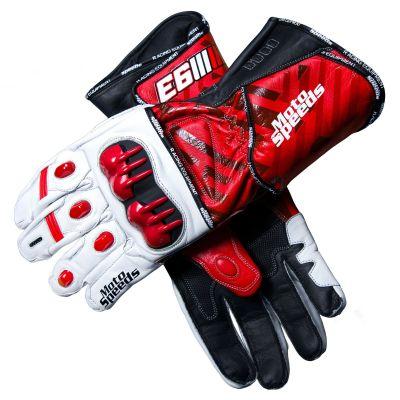
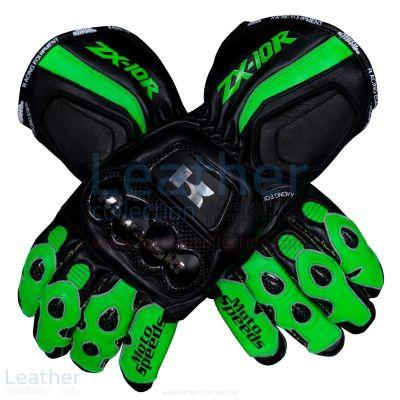
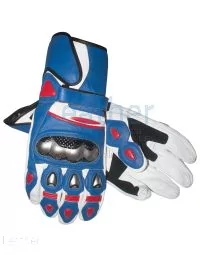
Gloves range from sleek and minimal to bold and rugged. Race-inspired designs, such as the , suit riders who want their gloves to echo the look of their bike.
Caring for Leather Motorcycle Gloves
Leather is a natural material, so a little regular care keeps it supple and extends its life.
- Cleaning: wipe gloves with a soft cloth to remove dirt; for a deeper clean, use only what the care label allows.
- Conditioning: follow the maker's care label; whether and which conditioner to use depends on the leather finish and glove construction.
- Drying: let wet gloves air dry at room temperature. Direct heat from a radiator or hairdryer can damage the leather.
Frequently Asked Questions
What is EN 13594?
EN 13594 is the European standard for protective gloves for motorcycle riders. It sets requirements and test methods for abrasion, cut, tear and seam strength, with two performance levels. Level 2 gives greater protection than Level 1 and requires knuckle protection, which is optional at Level 1.
How tight should motorcycle gloves fit?
Snug, but not restrictive. The glove should follow the shape of the hand without pinching or leaving gaps at the fingertips. Gloves that are too loose can bunch up and reduce grip on the controls, while gloves that are too tight limit blood flow and feel and cause fatigue on long rides.
Are leather motorcycle gloves waterproof?
Not on their own. Leather can absorb water, so riders who regularly face rain look for gloves with a waterproof liner or a water-repellent treatment. For summer, vented or perforated leather gloves are usually more comfortable than waterproof versions, which can feel warmer on the hand.
How do I dry wet leather gloves?
Let them air dry at room temperature, away from radiators, hairdryers and direct sunlight. Heat can dry the leather out and make it stiff or crack. Check the maker's care label for whether conditioner is suitable and for any glove-specific advice.
Written by the Leather Collection Editorial Team.