 USA
 Brazil
 Germany
 France
 Italy
 Switzerland
 Sweden
 Spain
 Great Britain
 Norway
 Russia
 South Africa
 Japan
 New Zealand
 Australia


A women's leather jacket can be bought for very different jobs: everyday wear, winter layering or riding a motorcycle. The right choice depends on the type of leather, the stitching, the fit, the lining and, for riders, the protection built in. This guide lists what to check before buying.
Key Takeaways
- Cowhide suits riding and daily wear, sheepskin and shearling suit soft fashion and winter jackets, and goatskin sits in between.
- Look for even stitching, reinforced seams at the shoulders and elbows, and zippers that run smoothly.
- A fitted cut works well, with the jacket snug at the shoulders and free to move when zipped.
- Riders should look for removable armour tested to EN 1621 and a garment class under EN 17092, and treat both as test ratings, not promises of protection.
- Lining, hardware and made-to-measure options affect comfort and long-term use as much as the leather does.
Choose the Right Leather Type
Each leather behaves differently, so the material should match how the jacket will be used.
Cowhide
- Thick and abrasion-resistant, which is why it is common in motorcycle jackets.
- Suits daily wear and riding.
- Takes longer to soften than lighter hides.
Sheepskin and Shearling
- Soft and light, with a relaxed drape.
- Comfortable for fashion jackets and winter styles.
- Less suited to riding than a thick cowhide.
Goatskin
- Flexible, with a fine grain.
- Sits between cowhide and sheepskin for weight and strength.
For riding, cowhide or goatskin is the usual starting point. For fashion wear, sheepskin gives the softest feel.
Explore different leather options here:
Check the Stitching and Construction
Stitching shows how a jacket is made, and it affects strength and shape over time. Useful points to inspect are:
- Double or triple stitching in stress areas.
- Even, tight stitch patterns with no loose threads.
- Reinforced seams around the shoulders and elbows.
- Secure stitching around the zippers.
Uneven or loose stitching is a common reason lower-cost jackets split at the seams, so it is worth examining closely before buying.
Match the Jacket to Its Purpose
Buying becomes easier once the main use is clear. Women's jackets generally fall into four groups.
Fashion Leather Jackets
Slim, modern cuts in lighter leather, intended for daily wear.
Motorcycle and Riding Jackets
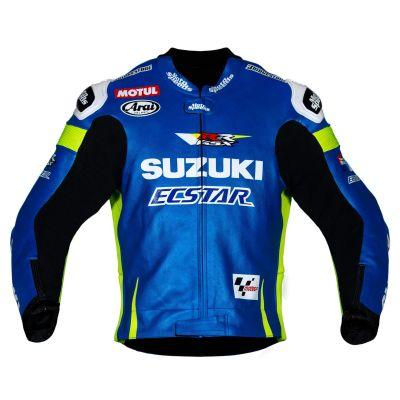
These add armour pockets, abrasion-resistant leather and strong zippers and panels. Riders who want a sportier cut can browse .
Winter Leather Jackets
Shearling, fur or quilted linings add insulation for cold weather.
Biker and Café Racer Jackets
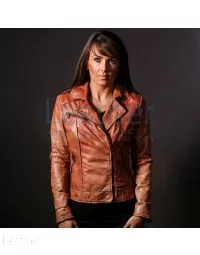
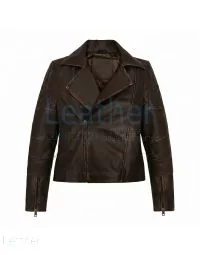
Biker jackets have a bold, asymmetrical look, while café racer jackets are minimal and easy to style with jeans and boots. A is one example of the biker cut.
Prioritize Fit and Comfort
A leather jacket should feel fitted but never restrictive. Women's jackets are cut for different shoulder, bust and hip proportions than men's, so the cut matters as much as the size label.
How Should a Woman's Leather Jacket Fit?
- Snug at the shoulders.
- Smooth across the chest, with no pulling or wrinkling.
- Sleeves ending just above the wrist when the arms are relaxed.
- Easy arm movement when zipped.
Leather softens and moulds to the body with wear, so a fitted silhouette is better than a loose one.
Look at the Lining and Interior
The interior affects warmth, comfort and how the jacket slides on over other layers.
- Polyester or mesh: lighter, suited to warm weather.
- Cotton: comfortable for everyday wear.
- Quilted lining: adds warmth for winter. Women who want the look on the outside as well can see .
- Thermal insulation: for riding in cold weather.
Pick a Jacket Style
- Biker jacket: bold and structured, popular with riders and style-led buyers.
- Café racer: minimal and clean, an easy everyday choice.
- Bomber: relaxed, waist-length with ribbed cuffs and hem. A lets buyers adjust the details.
- Cropped jacket: shorter than the hip, suited to casual outfits.
- Longer cuts: trench-style and 3/4 length jackets give more coverage in cold weather, and a also suits riders who want extra coverage.
Safety Features for Motorcycle Riders
For riding, the jacket needs protective features in addition to style. Useful points to check are:
- Removable armour at the shoulders and elbows, and a back protector.
- Abrasion-resistant leather such as cowhide.
- Reinforced seams in impact zones.
- Pre-curved sleeves that match a riding position.
- Strong zippers.
Two standards are worth knowing. Armour is tested under EN 1621, and the Motorcycle armour overview on Wikipedia notes that limb protectors must keep average transmitted force under 35 kN at Level 1 and under 20 kN at Level 2. Whole garments are classed under EN 17092 from AAA to C, and testing body MCG describes Class AAA as suitable for leather suits used on race tracks. These are test ratings and do not promise protection in every crash.
Explore a women's riding jacket here:
Inspect the Hardware
Zippers, buttons, buckles and snaps are the parts used most often. Zippers from established makers such as YKK or SBS, smooth zipper travel and corrosion-resistant buckles all point to hardware that will hold up. Hardware that sticks, tarnishes or feels light is a sign to look at other jackets.
Consider Custom Options
Made-to-order jackets can be adjusted to the wearer. Common options include custom measurements, colour changes and sleeve or waist adjustments, though what is available varies by product, so each listing should be checked. Custom sizing is most useful for riders and for anyone whose measurements fall between standard sizes.
Weigh Value Over Price
The cost of a women's leather jacket depends on the type of leather, whether armour is included, the lining material, the complexity of the design and whether it is handmade. A jacket that fits, suits its purpose and is well constructed gives better value than one chosen on price alone.
Final Checklist
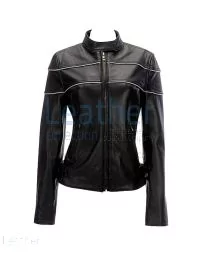
Before buying, check the leather, stitching, purpose, fit, lining and hardware, and confirm that the style matches how often and where the jacket will be worn. Start with the women's leather jackets collection. A related example is the women's classic black motorcycle leather jacket.
Frequently Asked Questions
Which leather suits a women's jacket?
It depends on use. Cowhide is thick and abrasion-resistant, which suits riding and daily wear. Sheepskin and shearling are softer and lighter, which suits fashion and winter jackets. Goatskin has a fine grain and sits between the two for weight and strength.
How should a women's leather jacket fit?
It should be snug at the shoulders and smooth across the chest, with sleeves ending just above the wrist. The wearer should be able to move the arms freely when it is zipped. Leather softens with wear, so a fitted jacket is preferable to a loose one.
What safety features should a motorcycle jacket have?
Look for abrasion-resistant leather, reinforced seams, pre-curved sleeves and removable armour at the shoulders and elbows, plus a back protector. Armour is tested under EN 1621 at Level 1 or Level 2, and whole garments are classed under EN 17092. Both are test ratings, not promises of protection.
Can a leather jacket be made to measure?
Some can. Made-to-order jackets may offer custom measurements, colour options and sleeve or waist adjustments, depending on the product. The listing for each jacket shows which options apply, and measurements should be taken carefully for the result to match the intended fit.
Written by the Leather Collection Editorial Team.