 USA
USA  Brazil
  Germany
  France
  Italy
Italy  Switzerland
  Sweden
  Spain
Spain  Great Britain
  Norway
  Russia
  South Africa
  Japan
Japan  New Zealand
  Australia
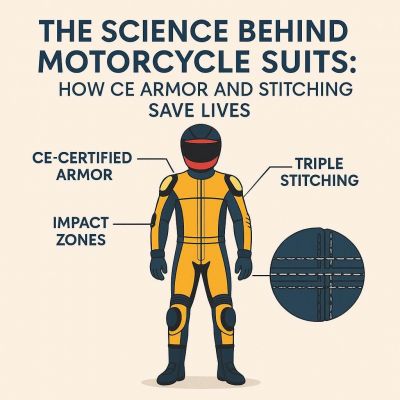
A motorcycle race suit is a system: abrasion-resistant leather, seams that hold under load, and armour that stays over the joints. Each part is tested differently, and the labels on a suit only make sense once the standards behind them are clear. This guide explains how CE armour, impact zones, materials and stitching work together.
Key Takeaways
- Race suit protection comes from three things working together: the leather or fabric, the seams and the impact armour.
- EN 17092 rates the garment in classes AAA to C; armour is tested separately, for limbs under EN 1621-1.
- Level 2 armour transmits less force than Level 1, with possible weight and restriction trade-offs.
- Fit matters: armour that shifts away from the joint cannot do its job.
- Armour and seams should be inspected after any crash.
Why Motorcycle Racing Suit Safety Matters
In a slide, the suit takes the contact first. It has to resist abrasion without opening up, stay attached to the armour and keep that armour on the joint. Protective gear is designed to reduce abrasion and impact injuries, but it does not remove the risk, and no suit makes a crash harmless.
Understanding CE and EN 17092 Classes
Motorcycle protective garments sold in Europe have to meet European personal protective equipment rules, and EN 17092 is the standard used for the garment itself. According to SATRA's overview of EN 17092, it defines five classes:
- Class AAA: the highest level of protection from impact and abrasion.
- Class AA: a versatile level for a range of riding activities.
- Class A: the least ergonomic and weight penalties of the impact-protected classes.
- Class B: abrasion protection without impact protection.
- Class C: impact protectors worn as an under- or over-garment.
The class applies to a specific garment, so the label on that product is the reference. Riders comparing can check each product for the class it states.
Impact Zones Explained
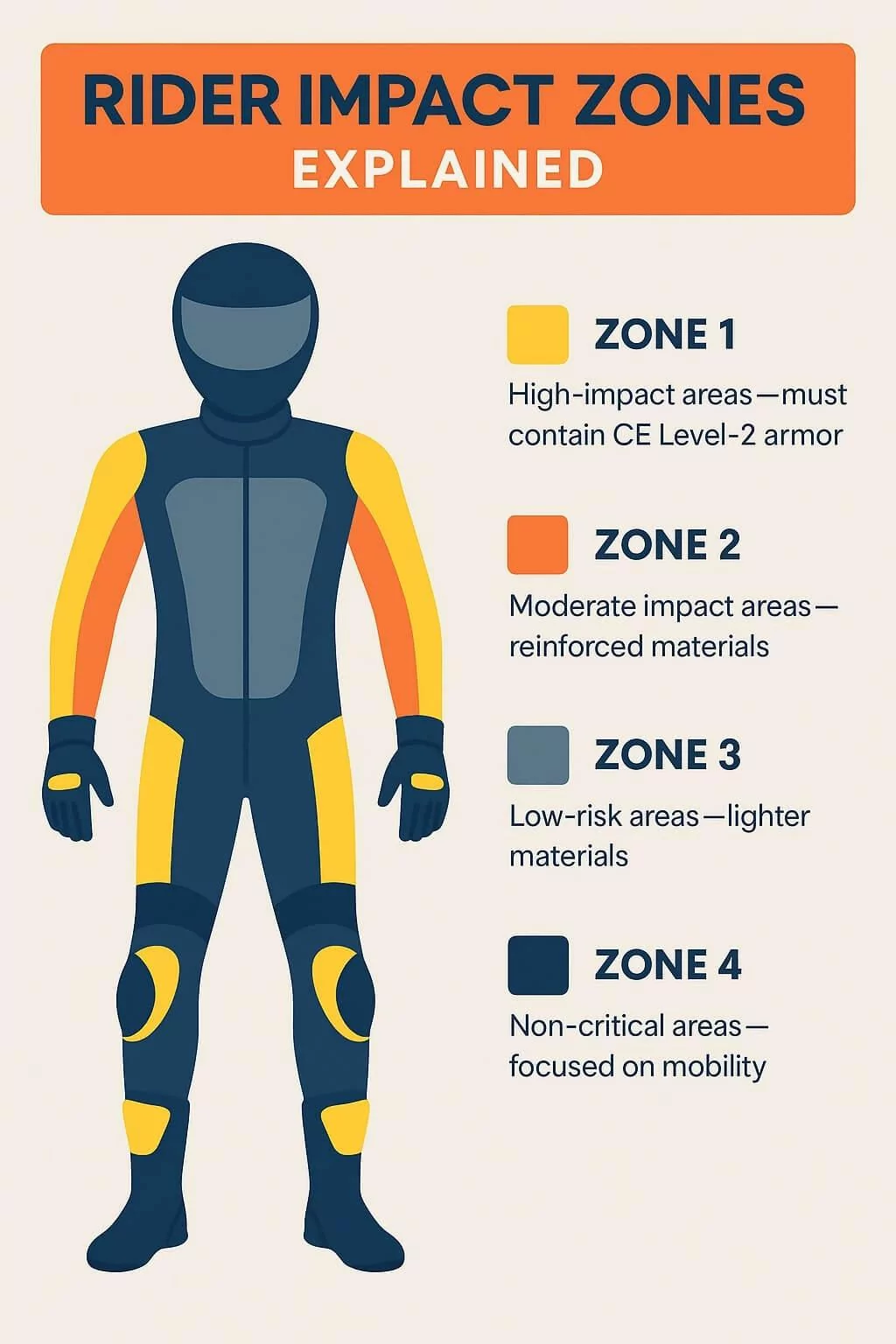
Most crashes load the same areas first: shoulders, elbows, hips and knees. EN 17092 reflects this by dividing a garment into three risk zones: Zone 1 covers high-risk areas, Zone 2 moderate-risk areas and Zone 3 low-risk areas. Each zone has its own requirements for abrasion and seam strength, so the areas most likely to hit the road face the toughest tests.
Where Armour Sits
- Shoulders and elbows: limb protectors tested under EN 1621-1.
- Hips and knees: limb protectors tested under EN 1621-1.
- Back: a back protector, tested under its own part of the EN 1621 series.
- Chest: an optional protector, often chosen for track riding.
Materials in a Race Suit
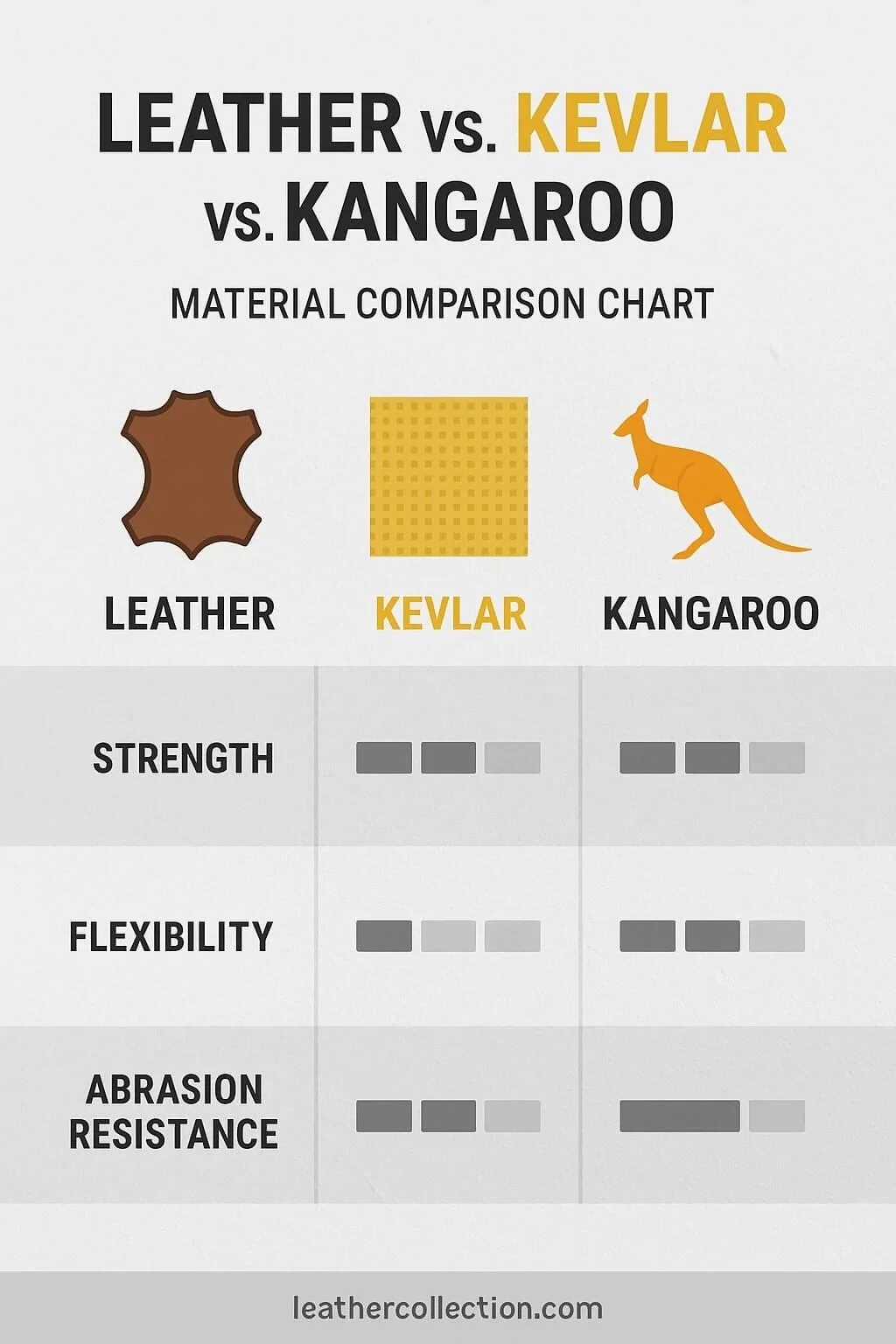
The outer shell resists abrasion, while the inner layers add comfort and absorb energy. The EN 17092 abrasion test uses a Darmstadt machine, where the material slides along a surface and a hole of 5 mm or more in any direction on the layer closest to the body counts as a failure.
Cowhide Leather
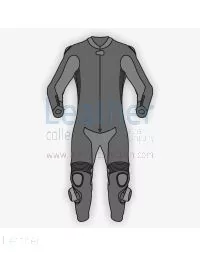
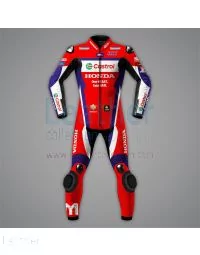
Cowhide is a long-standing choice for race suits because a thick hide gives a durable sliding surface. A suit such as the shows this construction. Thickness and tanning vary, which is why the finished garment is tested rather than the leather by name.
Kangaroo Leather
Kangaroo leather is another material found in race suits, usually chosen for lower weight. The class on the label still depends on the tested garment, not on the type of leather alone.
Stretch Panels and Textile Inserts
Stretch panels at the elbows, knees and back of the knee help the suit move with the rider. Textile inserts, including aramid fabrics, are used in some areas to combine flexibility with tear resistance.
Liners and Mesh
A breathable inner liner wicks sweat, and foam padding adds comfort. Neither replaces armour.
Stitching: Small Threads, Big Job
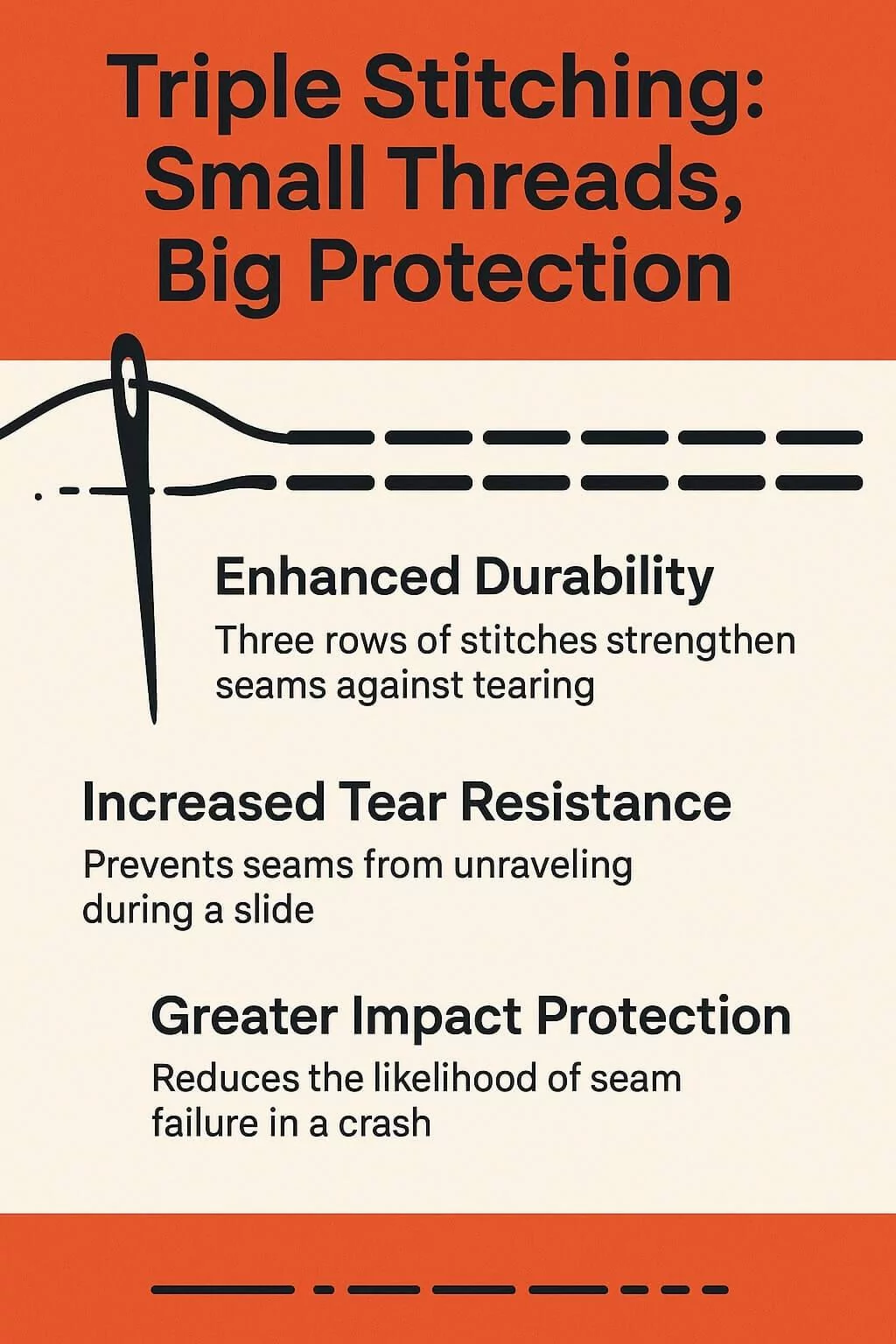
Armour and leather mean little if the seams open. During a slide, seams carry large loads, which is why EN 17092 tests seam strength and tear strength as well as abrasion.
Multiple Rows of Stitching
Some race suits use more than one row of stitching along critical seams. Several rows can spread load across more thread, which is why makers use them; whether a seam holds is what the EN 17092 seam test assesses on the finished garment. How many rows a particular suit has should be checked on that suit, since a count is not part of the class label.
Why the Seams Count
A seam that opens exposes the rider and lets armour move. Checking stitching around armour pockets, shoulders and the seat area before use is a simple habit that catches wear early.
How Modern Armour Works
Armour is made from energy-absorbing materials. Some armour uses materials that are flexible in normal movement and stiffen on impact. It is tested separately from the garment: as SATRA explains, EN 17092 refers to the relevant part of EN 1621 depending on the body area.
Armour Levels Explained
| Armour type | Standard | Mean transmitted force must be below |
|---|---|---|
| Limb protector, Level 1 | EN 1621-1 | 35 kN (no single value over 50 kN) |
| Limb protector, Level 2 | EN 1621-1 | 20 kN |
| Back protector, Level 1 | EN 1621-2 | 18 kN (no single value over 24 kN) |
| Back protector, Level 2 | EN 1621-2 | 9 kN |
A lower figure means less force reaches the body. The limits are those for a pass in the test, and the values for the two limb levels and the back protector are set out on SATRA's EN 1621 page and in the standards. Level 2 transmits less force, with possible weight and restriction trade-offs.
Additional Armour Types
- Back protectors: spread spinal impacts over a larger area.
- Chest protectors: add coverage at the front of the torso.
- Hip and knee protectors: cover the joints most exposed in side slides.
How Suits Are Tested
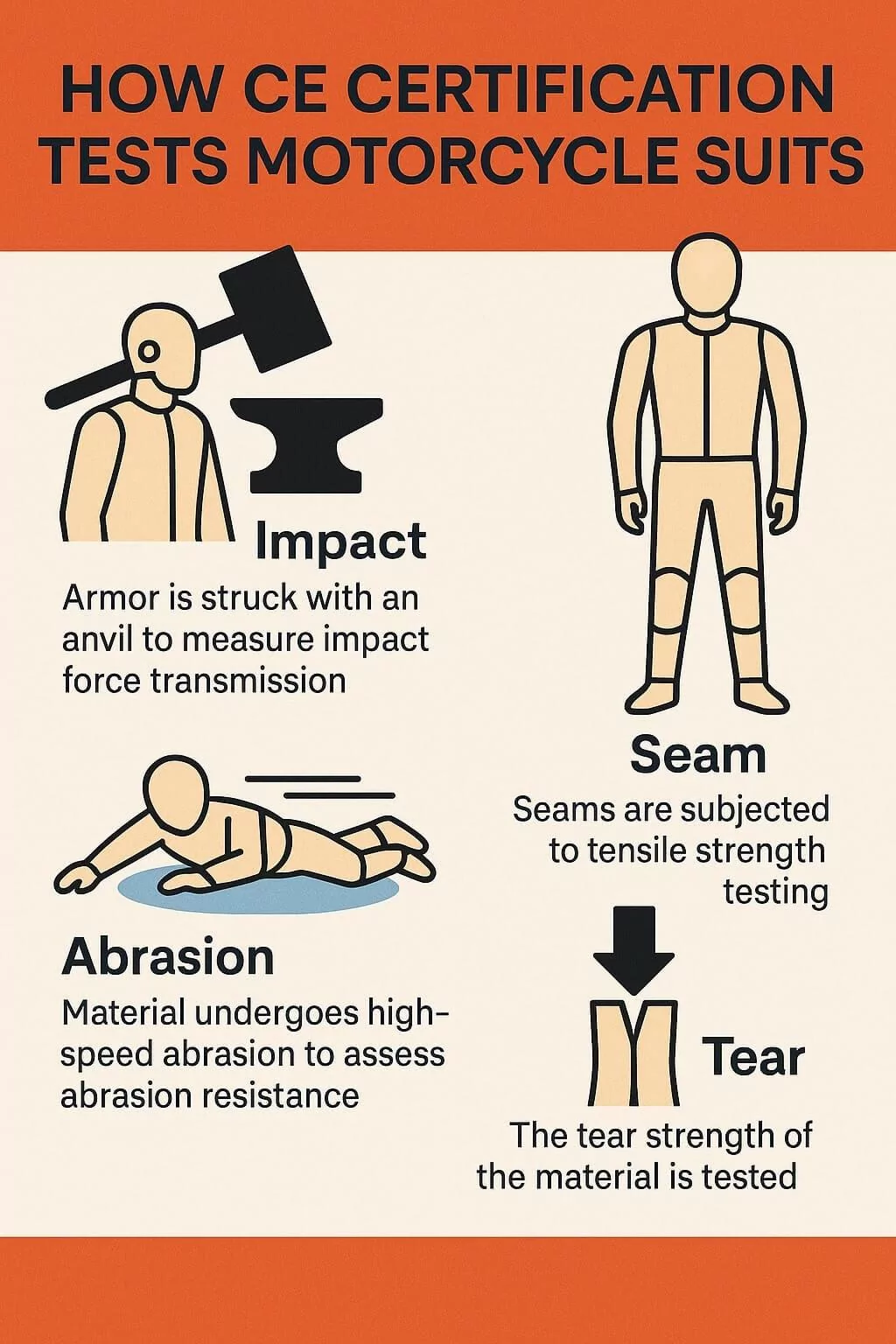
Before a garment can be sold with an EN 17092 class, it is tested under controlled conditions that mimic the forces in a crash.
Common Test Methods
- Abrasion: the Darmstadt machine slides the material along a surface from variable initial speeds; a hole of 5 mm or more on the layer closest to the body fails.
- Tear strength: measures how well the material resists a tear that starts to spread.
- Seam strength: checks how much load key seams carry before they open.
- Impact: for armour, measures how much force passes through to the body.
Why Fit Matters for Safety
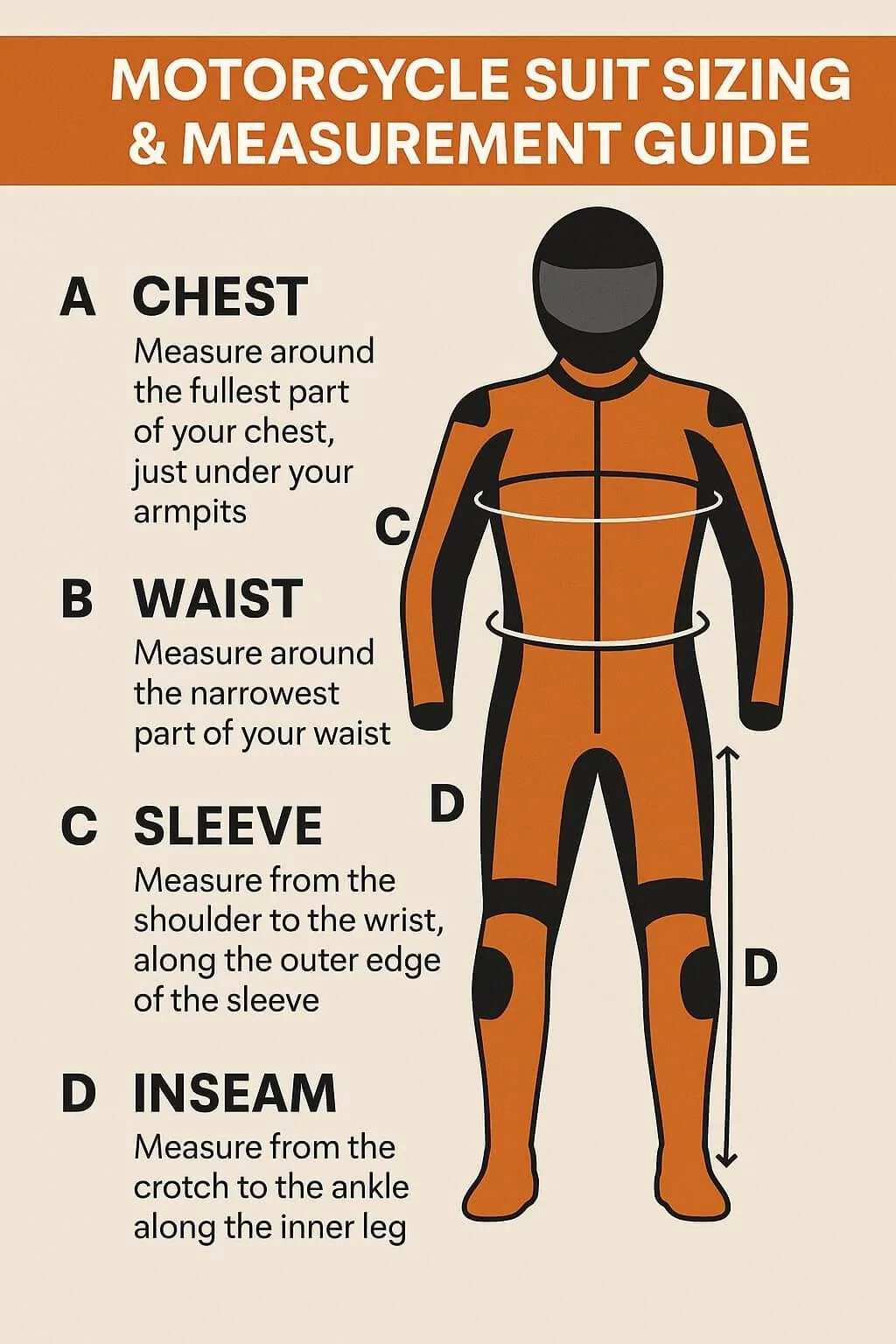
A suit protects better when it fits. The standard requires that impact protectors sit in the garment so they cover the body part they are meant to protect. Armour that shifts away from the knee or elbow does little, and a suit that is too tight restricts movement. A made-to-measure option such as is built around the rider's own measurements.
A close fit places the armour over the joint and keeps the suit stable in the riding position.
Suit Maintenance and Replacement
Care Tips
- Clean as the suit's care label instructs, and avoid soaking the leather unless the maker says otherwise.
- Whether and which conditioner to use depends on the leather finish and construction, so follow the suit maker's care label.
- Check seams and zippers regularly.
- After any crash, follow the manufacturer's inspection and replacement guidance for the armour and the suit.
Signs a Suit Needs Attention
- A heavy fall or visible seam damage.
- Leather that feels stiff or has lost flexibility.
- Armour that no longer fits tightly or shows cracks.
Conclusion
Race suit safety comes from several parts working together: tested leather, seams that hold and armour that stays on the joint. Reading the EN 17092 class and the EN 1621 level on a label, and checking fit, tells a rider more than any single feature. For a wider selection, see and compare labels, protection details and fit options.
Frequently Asked Questions
What does CE certified mean on a motorcycle suit?
CE marking shows that a garment is intended to meet European personal protective equipment rules. For motorcycle clothing, EN 17092 is the garment standard, with classes AAA to C tested for abrasion, seam strength and tear strength. Armour is tested separately under EN 1621. The marking and class on the specific product should be checked.
What is the difference between Level 1 and Level 2 armour?
Level 2 armour transmits less force than Level 1. For limb protectors under EN 1621-1, Level 1 requires a mean transmitted force below 35 kN with no single value over 50 kN, and Level 2 requires a mean below 20 kN. Level 2 can bring extra weight or restriction, so comfort and fit remain part of the decision.
Why do seams matter on a race suit?
In a slide, seams carry heavy loads. If they open, the leather separates and the rider is exposed, and armour can move away from the joint. EN 17092 therefore tests seam strength and tear strength alongside abrasion. Multiple rows of stitching are common on critical seams, but the number should be checked on each suit.
Can the armour in a suit be replaced?
Many suits have pockets that take replacement armour. The replacement should carry an EN 1621 marking and fit the pocket so it stays over the joint. Armour that has taken a heavy impact should be inspected or replaced following the manufacturer's guidance.
Written by the Leather Collection Editorial Team.