 USA
 Brazil
 Germany
 France
 Italy
 Switzerland
 Sweden
 Spain
 Great Britain
 Norway
 Russia
 South Africa
 Japan
 New Zealand
 Australia


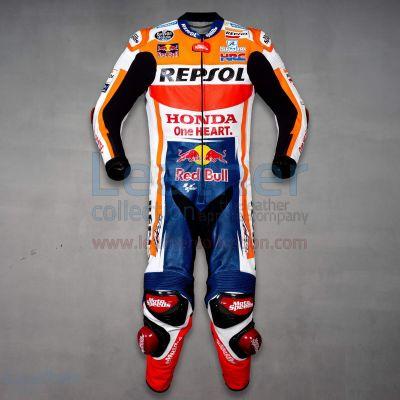
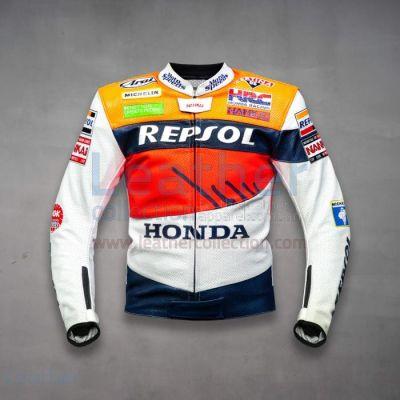
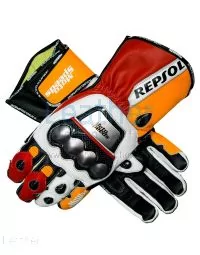
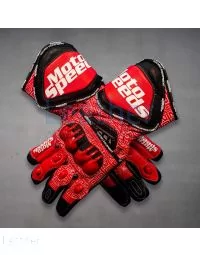
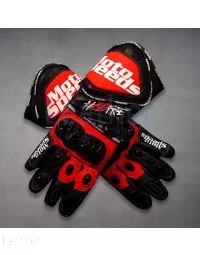
Few liveries are as recognizable in motorcycle racing as the orange, red and white of Repsol, which sponsored the factory Honda MotoGP team for three decades. Riders such as Mick Doohan, Valentino Rossi and Marc Marquez raced in those colours, according to the Repsol Honda article on Wikipedia. The gloves described here follow that look while borrowing design ideas that racing gloves use to protect the hand.
Key Takeaways
- The partnership between Repsol and Honda ran from 1995 to the end of 2024, and the gloves are replicas inspired by that livery.
- Racing gloves combine soft palm leather for feel with tougher leather on the back of the hand.
- Knuckle protection, palm sliders, a secure wrist closure and external seams are the features to check.
- EN 13594 is the European standard that sets abrasion, seam and closure tests for motorcycle gloves.
- Pre-curved fingers and perforation reduce fatigue on long rides.
The is a replica inspired by this livery, made for street and track riding where precise control of the throttle and brake lever matters.
The Engineering Behind the Grip
A racing glove aims for a close, second-skin feel. To control a high-performance bike, a rider needs to feel the throttle and the front brake lever clearly.
Material Choices
Racing gloves usually combine several materials to balance feel and durability:
- Goatskin and cowhide: goatskin is commonly used on the palm for sensitivity, while cowhide on the back of the hand adds abrasion resistance.
- Reinforcement panels: high-wear zones often carry extra layers or synthetic lining.
- Grip overlays: textured panels on the index and middle fingers help hold the levers, including in damp conditions.
Protection Features in Racing Gloves
A fall at moderate speed subjects the hands to heavy friction and impact, which is why racing gloves add protection in specific zones.
Common Protective Features
- Knuckle protection: hard or semi-hard guards that spread impact over the knuckles.
- Palm sliders: hard panels on the heel of the palm that let the hand slide across the surface instead of gripping it.
- Finger bridge: some racing gloves link the little finger to the ring finger; check the maker's explanation of its purpose.
- Wrist closure: a secure strap helps keep the glove on the hand during a fall.
The European standard EN 13594 covers motorcycle riding gloves. It sets two levels, with knuckle protection mandatory at level 2 and optional at level 1, and tests palm abrasion, seam strength and how well the wrist closure holds the glove on. Gloves sold with this marking should state the level on the label or product page. A replica glove is not certified simply because it looks like a race glove, so check the product details.
Ergonomics and Rider Comfort
Long rides tire the hands, so comfort details matter as much as protection.
Performance and Cooling Details
- Pre-curved fingers: the glove is shaped in a natural curl, which reduces the effort needed to hold the grips.
- External seams: seams on the outside of the fingers remove pressure points against the skin.
- Perforation: small holes between the fingers allow airflow in warm weather.
The Repsol Look on the Handlebars
Wearing Repsol-style is a nod to the Honda factory team. Riders of any sportbike can use them to match their kit. For other red-and-white options, the carries a similar colour scheme, and the show how a rider-specific replica differs. Fans of the Honda rider can also browse the collection.
Final Thoughts
Repsol-inspired gloves pair a recognizable racing look with the protective ideas used in sport riding. Before buying any pair, check the standard marking, the knuckle and palm protection and the fit across the hand.
Frequently Asked Questions
What is EN 13594?
EN 13594 is the European standard for protective gloves for motorcycle riders. It defines two protection levels and tests abrasion resistance, seam strength and wrist-closure retention. Knuckle protection is required at level 2 and optional at level 1. A glove should state the level on its label if it was tested to the standard.
Are replica racing gloves certified?
Not automatically. A replica is designed to look like a race glove, but certification depends on testing to a standard such as EN 13594. Check the product page or the label for the standard and level before assuming that a pair meets it.
Why do racing gloves have palm sliders?
Palm sliders are hard panels on the heel of the palm. In a fall, they are designed to let the hand slide over the road surface instead of catching on it. Whether a particular glove has them, and how they are shaped, should be checked on the product page.
How tight should motorcycle gloves fit?
A glove should be snug across the palm and fingers without pressing on the knuckles or tips of the fingers. Fully close the wrist strap and grip the bars: the leather should not bunch, and the fingers should not touch the end of the glove.
Written by the Leather Collection Editorial Team.