 USA
USA  Brazil
  Germany
  France
  Italy
Italy  Switzerland
  Sweden
  Spain
Spain  Great Britain
  Norway
  Russia
  South Africa
  Japan
Japan  New Zealand
  Australia
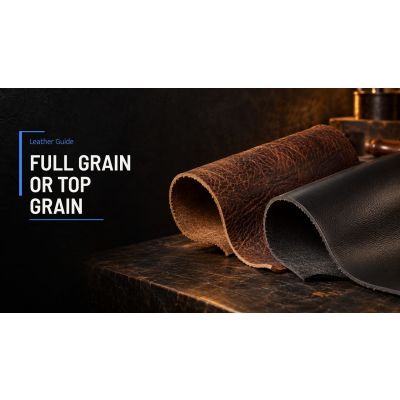
Full-grain leather keeps the entire grain layer of the hide, with nothing sanded off the surface. Top-grain leather includes the outer grain layer of the hide, and corrected-grain leather is the variety whose flaws are buffed or sanded away before dyeing and embossing. Full-grain is usually considered the highest grade of leather; the names also describe which layer is used and how the surface was treated, so the label alone does not show finish or construction. This guide explains what each label means, so product descriptions are easier to read.
Key Takeaways
- Full-grain means the whole grain layer is intact, with no surface removal.
- Top-grain includes the outer grain layer; corrected-grain is the type whose flaws are buffed or sanded away.
- Split leather comes from the fibrous layer under the grain, and "genuine leather" is not a grade.
- A close look at the surface, the finish and the product description tells more than the label alone.
How a hide is built: grain and corium
A cattle hide has two main layers. The outer one is the grain, made of finer, more densely packed fibres. Under it sits the corium, a more fibrous layer. Tanneries can separate the two, and most leather grade names come from which layer is used and what is done to its surface (Wikipedia, Leather).
That is why grade names matter less on their own than the questions behind them: which layer is this, was the surface altered, and what finish sits on top?
What full-grain leather means
Full-grain leather contains the entire grain layer, without any removal of the surface. Because nothing is sanded away, the natural surface of the hide can remain visible. Wikipedia notes that full-grain leather develops a patina over its useful life, which is the gradual change in surface tone and sheen that comes with wear.
What top-grain leather means
Top-grain leather includes the outer grain layer of the hide, the part with finer, more densely packed fibres. A related term, corrected grain, describes leather whose surface has been given finishing treatments for a more uniform look, which usually involves buffing or sanding away flaws in the grain, then dyeing and embossing.
Product descriptions differ in how much they say, so a description of the finish or clear photos of the actual leather tell more than the grade name alone.
Split leather and "genuine leather"
Once the grain has been separated from the hide, the remaining corium can be turned into split leather, which is commonly used to make suede. Its surface differs from a grain surface because it lacks the grain layer.
"Genuine leather" is a label that often confuses buyers. It is not a specific grade, and it often indicates split leather that has been heavily processed. Bonded leather is another case: the US Federal Trade Commission's Guides for Select Leather and Imitation Leather Products say that if the term bonded leather is used, the percentages of leather fibres and non-leather substances should be disclosed (16 CFR 24.2). Rules differ in other countries.
Full-grain, top-grain, split and bonded at a glance
| Type | Layer used | Surface treatment | What to watch for |
|---|---|---|---|
| Full-grain | Whole grain layer | Not removed | Natural marks may remain visible |
| Top-grain | Outer grain layer | Varies with the finish applied | Ask which finish was used |
| Corrected grain | Grain side | Flaws buffed away, dyed, sometimes embossed | Uniform look, applied surface |
| Split | Corium under the grain | Varies; suede is a common result | Different surface from grain leather |
| Bonded | Ground leather fibres | Combined with other substances | Disclosure of fibre percentage is advised in the US |
Choosing by garment, not by label
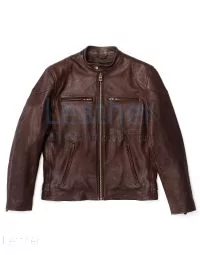
For a jacket, the surface is the most visible part of the garment, so the look of the leather matters. For a style such as the , the or other items in the range, read the product page and ask the maker which layer and finish a given jacket uses.
Questions worth asking before you buy
- Which layer of the hide is used, and was the surface sanded, buffed or embossed?
- Is the finish a thin coat or a heavier applied surface?
- Does the maker provide close-up photos or a leather sample?
- What care does the maker recommend for this particular finish?
Care and aging
Follow the garment's care label and the maker's instructions. The right product depends on the finish and construction of the leather, and the same treatment does not suit every garment. Full-grain leather develops a patina with wear, so expect a leather left with its natural surface to change in appearance with wear, which some owners treat as part of its appeal.
Frequently Asked Questions
Is top-grain leather lower quality than full-grain?
Full-grain is usually considered the highest grade of leather, because the whole grain layer is intact. That ranking does not show how a particular jacket is finished or made, though. A top-grain or corrected-grain garment can still suit someone who wants a more uniform surface. Ask which layer and finish the maker uses before comparing labels.
Is genuine leather real leather?
Yes, it is made from animal hide, but the phrase is not a grade and has no specific standard. It often indicates split leather that has been extensively processed, so it says little about the surface. If a garment is described only as genuine leather, ask which layer of the hide was used.
Does full-grain leather have visible marks?
It can. Full-grain leather has no surface removed, so the natural surface of the hide can remain visible, and it develops a patina with wear. Some buyers like that character; others prefer a more even look. A close-up photo of the actual leather helps you decide.
Is bonded leather the same as top-grain?
No. Bonded leather is made from ground or shredded leather fibres combined with other substances, so it is a different material from a whole piece of hide. In the US, the FTC's leather guides say the percentages of leather fibres and non-leather substances should be disclosed when the term is used. Rules differ elsewhere.
Written by the Leather Collection Editorial Team.