 USA
 Brazil
 Germany
 France
 Italy
 Switzerland
 Sweden
 Spain
 Great Britain
 Norway
 Russia
 South Africa
 Japan
 New Zealand
 Australia


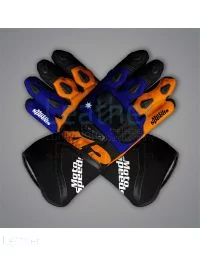
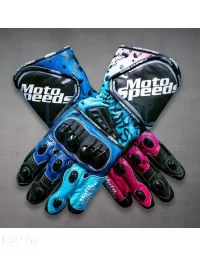
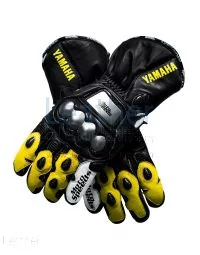
Gloves are an important piece of riding gear: hands are often used to break a fall and handle every control input. The replica-style gloves inspired by Fabio Quartararo’s 2024 French GP look, are a good starting point for looking at what race gloves are built to do and how to choose a pair.
Key Takeaways
- The French GP 2024 gloves are a replica-style design inspired by Fabio Quartararo’s Monster Energy Yamaha look.
- Motorcycle glove protection is defined by EN 13594, which sets Level 1 and Level 2 performance tiers.
- Knuckle protection is mandatory for Level 2 gloves and optional for Level 1.
- Fit matters as much as features.
The 2024 French GP and Quartararo
The 2024 French Grand Prix was held at the Bugatti Circuit in Le Mans on 12 May 2024. Quartararo raced for the Monster Energy Yamaha MotoGP Team, and Jorge Martin won the race on a Ducati. Quartararo retired from the race after an accident, according to the official results as summarized by Wikipedia.
The gloves covered here are a replica-style design inspired by Quartararo’s Monster Energy Yamaha look; the product name refers to the 2024 French GP. They are inspired by a MotoGP rider and are not connected with any team or manufacturer. The matching follows the same design.
What Race-Style Gloves Are Built to Do
Race gloves share a handful of design features, and each one answers a specific riding need.
- Palm and finger construction: Thin leather on the palm and fingers keeps feel for the controls, while reinforced panels cover areas that slide on the road in a fall.
- Pre-curved fingers: Fingers are shaped to rest in a gripping position, so the glove does not bunch or pull against the bars.
- Knuckle protection: Hard or padded knuckle protectors are fitted to absorb impact in a crash.
- Cuff and wrist closure: A longer cuff and a secure strap help keep the glove on the hand if the rider falls.
- Perforation: Small perforations let air pass through in warm weather.
What the Standard Says About Glove Protection
Protective motorcycle gloves are covered by EN 13594:2015. According to SATRA, the standard specifies two performance tiers: Level 1, designed to offer protection with lower ergonomic penalties, and Level 2, which gives greater protection with potentially more weight and restriction. Impact protection at the knuckles is optional for Level 1 gloves but mandatory for Level 2 gloves, and for any glove designed to absorb impact energy in that area.
A standard describes what a glove was tested against. It does not promise any particular outcome in a crash, so check the product description for the marking before relying on a glove for track or road use.
Choosing Gloves for Your Riding Style
- Match the glove to the riding. Track and sport riding call for race-style gloves with knuckle protection, while touring and commuting may favor more flexible, weather-aware designs.
- Check the fit. Gloves should fit snugly without pinching, with the fingers able to reach the tips without crushing.
- Look at the construction. Seams, closures and protectors matter more than the graphics, so compare what each pair actually includes.
- Decide between replica and race use. A MotoGP-style design is a good fit for fans and track-day riders who want the look, and replicas can be made to the wearer’s size. For other MotoGP-inspired options, see the or the .
Race-style gloves are designed with professional in mind, but track-day and road riders can use the same design principles when choosing a pair.
Frequently Asked Questions
What is EN 13594 and why does it matter for gloves?
EN 13594:2015 is the European standard for protective motorcycle gloves. It sets requirements for sizing, ergonomics, mechanical properties and marking, and defines Level 1 and Level 2 tiers. It matters because it gives riders a common way to compare gloves, although a standard describes test performance and does not promise any specific outcome in a crash.
Do all motorcycle gloves have knuckle protection?
No. Under EN 13594 knuckle impact protection is optional for Level 1 gloves and mandatory for Level 2 gloves, and for any glove designed to attenuate impact energy at the knuckles. Gloves without protectors may still be abrasion resistant, so check the product description and marking for exactly what a pair includes.
How should motorcycle racing gloves fit?
Racing gloves should fit snugly, with the fingertips reaching the end of each finger without being crushed and no pressure points across the knuckles. They normally feel tighter than everyday gloves until the leather has softened. Measure the hand with the manufacturer’s sizing guide, and test the grip on the bars if possible.
Are replica MotoGP gloves the same as the ones riders race in?
Not necessarily. A replica or replica-style glove copies the look of a rider’s gloves, and it is a separate product with its own construction, protectors and markings. It is chosen for its design as much as its features, so judge it by what the product description states rather than by the rider it is inspired by.
Written by the Leather Collection Editorial Team.