 USA
USA  Brazil
  Germany
  France
  Italy
Italy  Switzerland
  Sweden
  Spain
Spain  Great Britain
  Norway
  Russia
  South Africa
  Japan
Japan  New Zealand
  Australia

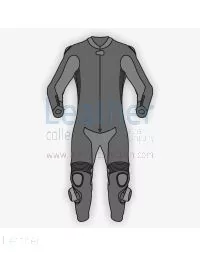
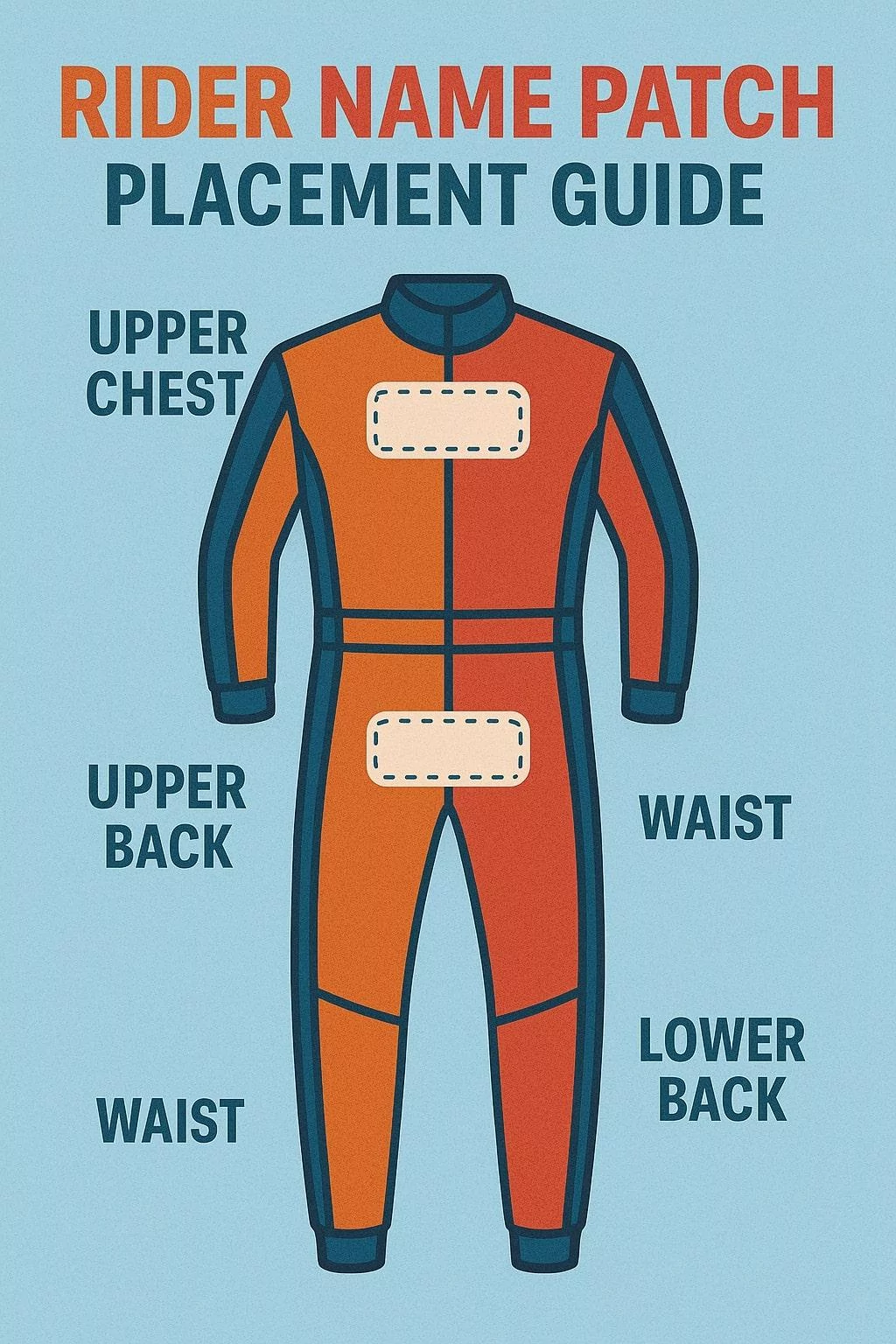
A race suit carries the rider's name, number, sponsor logos and often a national flag. Each element can be applied by embroidery, printing or a stitched patch, and the choice affects weight, durability and where a graphic can safely sit. Made-to-order suits such as the from Leather Collection are listed with custom embroidery and patches for names, numbers, logos and team branding.
Key Takeaways
- Embroidery and stitched patches are attached with thread, while printing sits on the surface and shows wear first.
- Dye sublimation needs polyester, so it suits fabric inserts and linings rather than the leather itself.
- Graphics belong on low-stress areas, clear of impact protectors and stretch panels.
- Combining methods is common: embroidery for names, printing for colour areas, patches for changeable logos.
Table of Contents
- Why Motorcycle Suit Customization Matters
- The Three Main Customization Methods
- Logo Printing and Sublimation Explained
- Embroidery: Raised Texture and Team Look
- Patches: Flexible and Replaceable
- Colour Durability and Track Abuse
- Customization and Rider Safety
- How to Choose the Right Option
- Frequently Asked Questions
Why Motorcycle Suit Customization Matters
Names and numbers help friends and marshals pick a rider out on a busy track day, and team colours or club badges show who a rider belongs to. For many riders a personal graphic is the reason to order a made-to-measure suit.
Suits in the range are made to order, so the graphic plan is specified with the suit instead of added afterward. That lets placement be worked around armour pockets, seams and stretch panels. The same thinking applies to and to a ready-pattern option such as the .
The Three Main Customization Methods
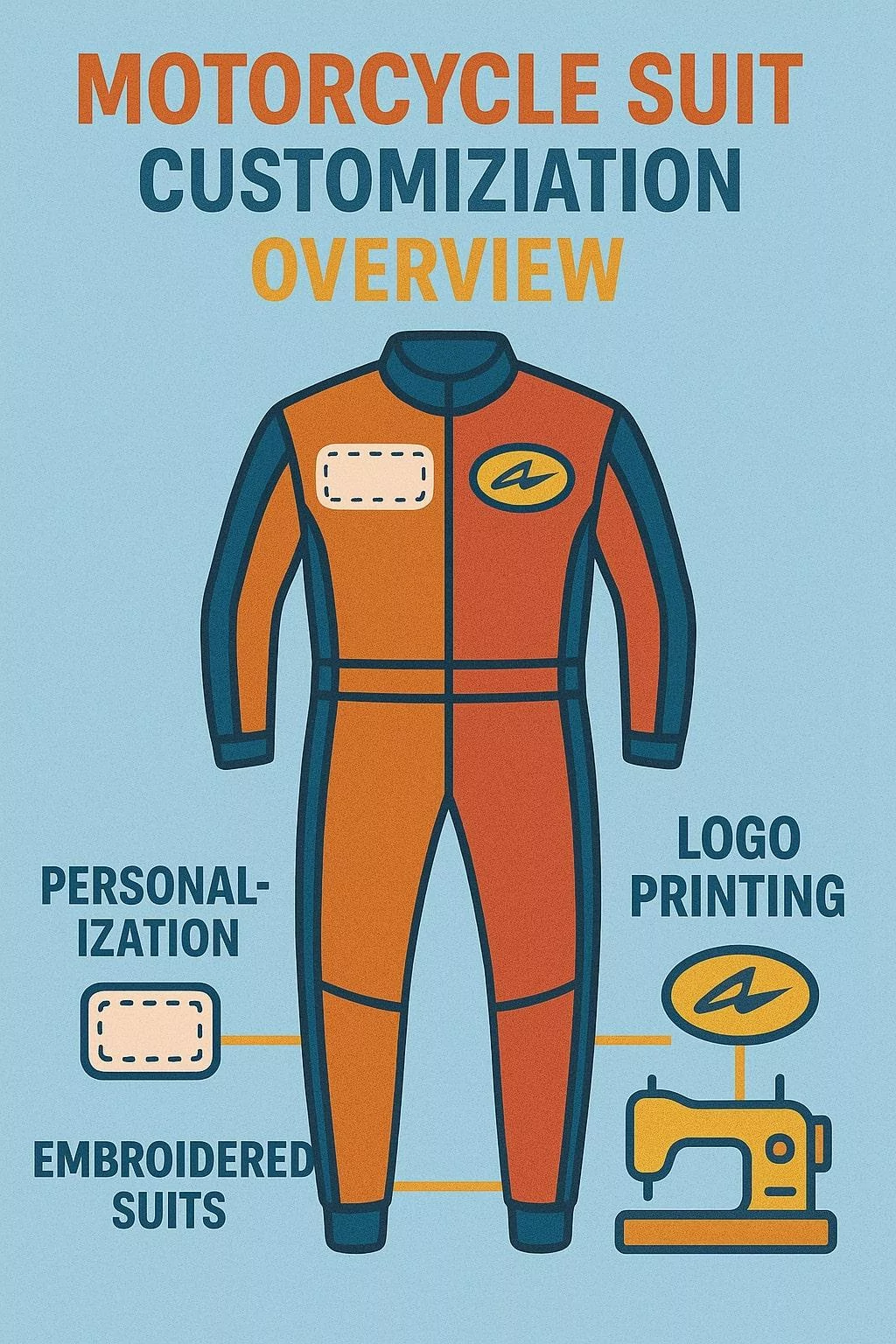
There are three main ways to customize a leather suit:
- Printing and sublimation
- Embroidery
- Patches
Each balances durability, weight and appearance differently.
Logo Printing and Sublimation Explained
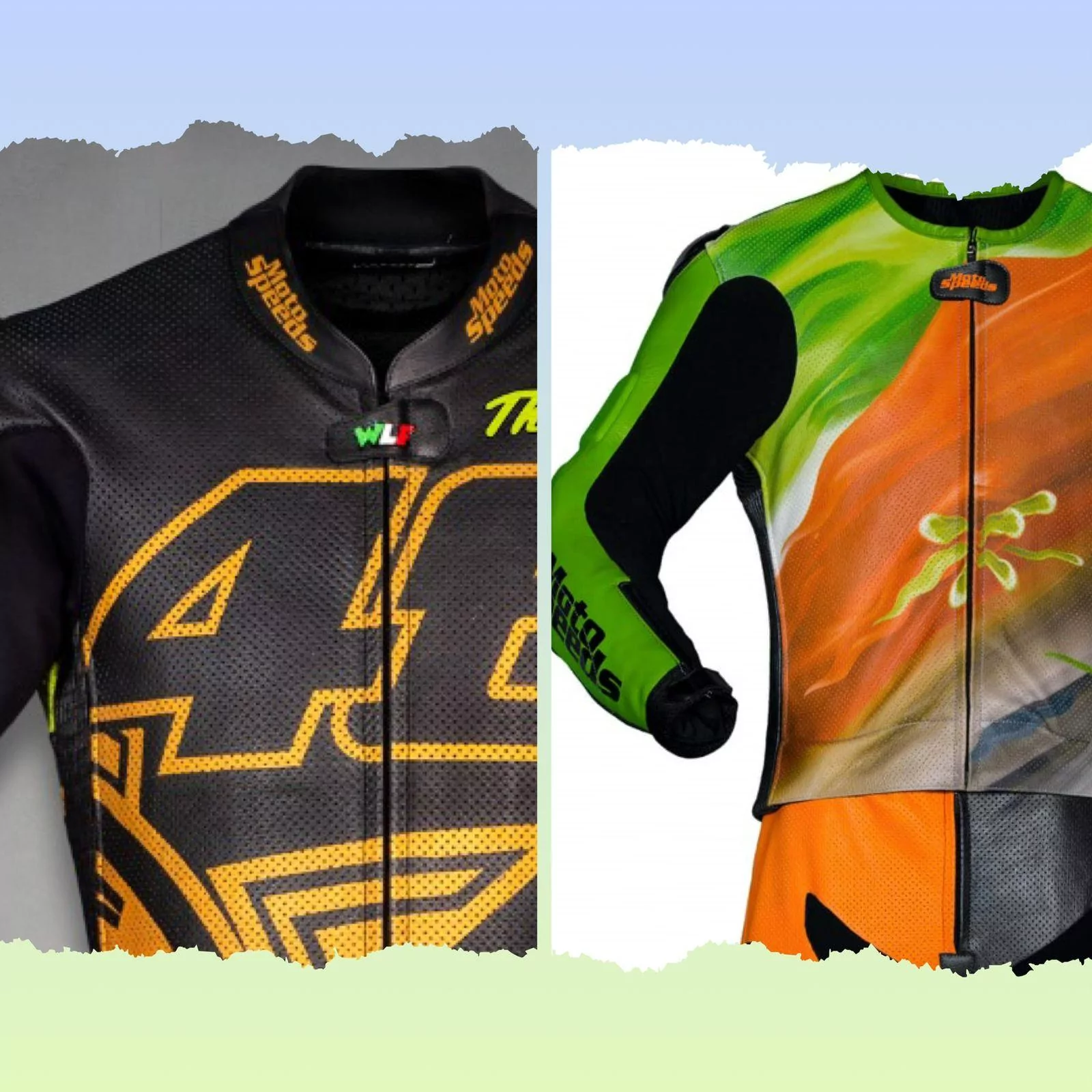
Printing suits bold colours and complex artwork. One caution applies to sublimation: dye sublimation transfer printing works with polyester and polymer-coated substrates, according to Wikipedia, and leather is neither. On a leather suit, sublimation therefore belongs on polyester parts such as linings or fabric inserts, while leather panels need other printing methods or dyed colour.
Why Riders Choose Printing
- No added bulk or weight
- Wide colour range
- Smooth surface with no seams
- Suited to full-panel graphics
Printing suits low-abrasion areas away from armour and stretch panels, such as the chest or lower back panels. Because the graphic sits on the surface, it can wear or fade first with heavy track use, heat and repeated abrasion.
Embroidery: Raised Texture and Team Look
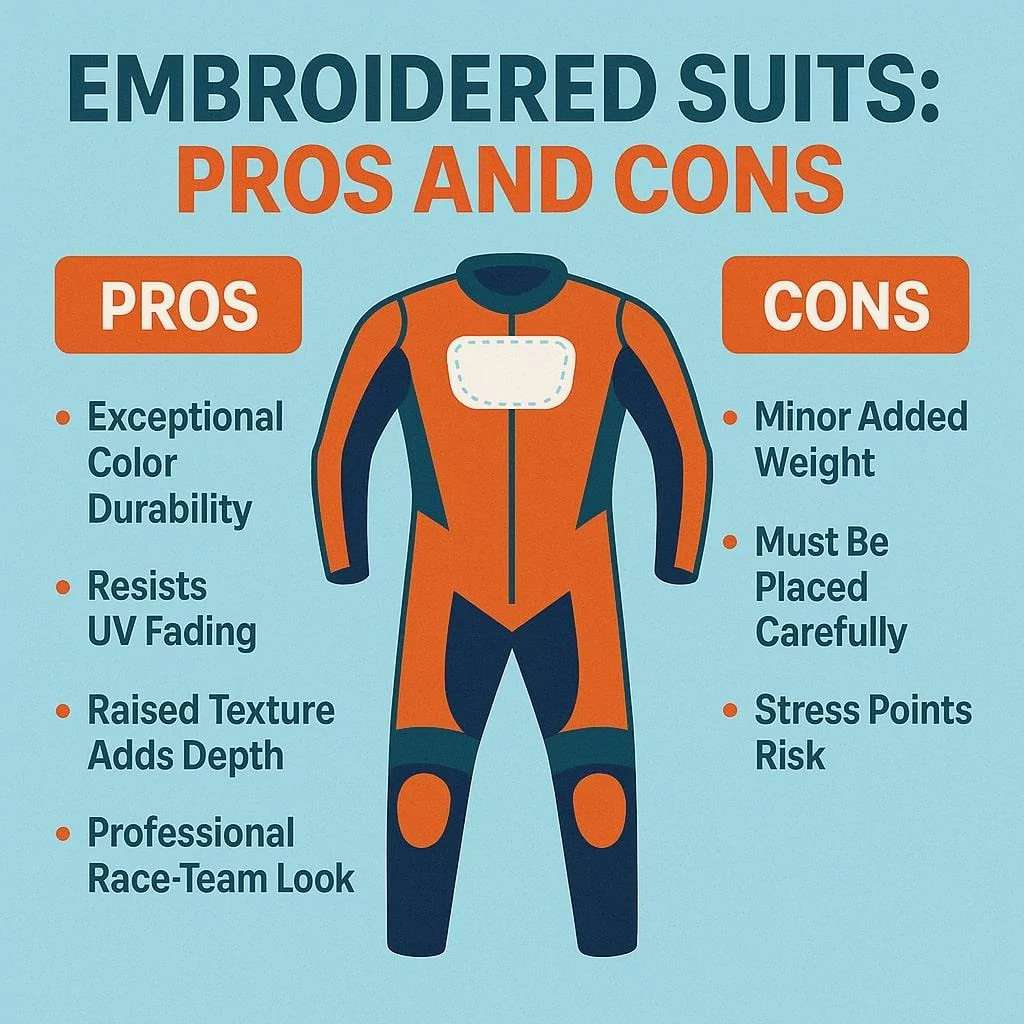
Embroidery is classic and is widely used for rider names and sponsor logos. Thread is stitched into the material, so the design is part of the surface instead of a coating that can rub away.
Benefits of Embroidered Suits
- Raised texture adds depth
- Stitched thread is physically attached
- Clean, team-style look
Embroidery adds a little weight and perforates the leather with stitches, so it should be placed with care and kept away from stress points. On Leather Collection suits, custom embroidery is hand stitched with edge binding to stop it unravelling.
Patches: Flexible and Replaceable
Patches combine flexibility with identity. Riders use them for sponsor logos, flags or club badges, and Leather Collection lists custom patches for team logos or sponsor names.
Why Riders Use Patches
- Easy to replace or update
- Stitched attachment
- Useful when sponsors change
Patches suit the chest, thighs and back hump. They should never cover stretch zones or armour areas.
Colour Durability and Track Abuse
Slides, heat, sweat and sunlight all test a customization on a track suit.
Durability Comparison
- Embroidery: thread attached through the material
- Patches: durable when well stitched, and replaceable
- Printing: surface graphic that shows wear first
Stitched elements can be re-stitched or replaced, which is harder to do with a printed surface.
Customization and Rider Safety
Customization should never interfere with protection. The EN 17092 standard for motorcycle protective clothing includes tests for abrasion resistance, seam strength and tear resistance, according to SATRA, which is one reason stitching quality matters.
Safe Customization Rules
- Keep logos clear of impact zones
- Avoid thick embroidery near armour pockets
- Keep stretch panels flexible
- Maintain CE armour alignment
Ask the maker whether customization affects the garment's certification.
How to Choose the Right Option
Useful questions include whether maximum durability matters, whether sponsors change often, whether weight is a concern and whether bold graphics or subtle styling is preferred.
Choose printing for bold visuals on low-wear areas, embroidery for long-term branding and patches for flexibility. Methods can be combined, and riders can compare ready-made options in the .
Frequently Asked Questions
Does embroidery weaken leather?
Embroidery passes thread through the leather, so every stitch is a small perforation. Light, well-placed embroidery on low-stress areas is routine, but dense designs near seams or armour pockets add stiffness and are worth avoiding. A maker should plan placement, density and edge binding during construction instead of adding it afterward.
Can sublimation printing be used on leather?
No. Dye sublimation works on polyester and polymer-coated materials, and leather is neither. On a leather suit it can be used on polyester inserts or linings, while leather panels are customized by other printing methods, dyeing, embroidery or patches. Asking the maker which method suits each panel avoids disappointment.
Are patches suitable for racing suits?
Yes, when they are well stitched and placed on areas such as the chest, thighs or back hump. They should not cover stretch panels or impact protector zones. Patches are practical when sponsors or club badges change, because a stitched patch can be removed and replaced without redoing the whole suit.
Can embroidery and printing be mixed on one suit?
Yes. Many riders use embroidery for names and numbers and printing for larger graphics on low-wear areas. The combination keeps weight down while giving the most important details a stitched finish. The graphic plan should be agreed with the maker before the suit is cut so everything lines up with seams and armour.
Is customization allowed at racing events?
Rules differ by organizer and series. Competition classes can restrict sponsor logos, numbers and colours, so riders should check the regulations of the specific event or championship before ordering a design. Asking the organizer before the suit is cut settles any doubt about logos, numbers and colours.
Written by the Leather Collection Editorial Team.