 USA
USA  Brazil
  Germany
  France
  Italy
Italy  Switzerland
  Sweden
  Spain
Spain  Great Britain
  Norway
  Russia
  South Africa
  Japan
Japan  New Zealand
  Australia
Choosing between cowhide and kangaroo leather is one of the main decisions when buying a motorcycle racing suit. Both materials are used by track riders, but they differ in thickness, weight, flexibility and how forgiving they are to fit. This guide compares them for track days, racing and street riding so the choice follows the way you actually ride.
Key Takeaways
- Cowhide is thicker and heavier; kangaroo can be cut thinner while keeping its strength, which usually means a lighter suit.
- The EN 17092 class on the label describes the garment as tested, so compare classes rather than assuming one hide is always stronger.
- Impact protection comes from the armour (EN 1621), not from the leather.
- Fit in the riding crouch and armour position matter more than the material name.
Quick Comparison
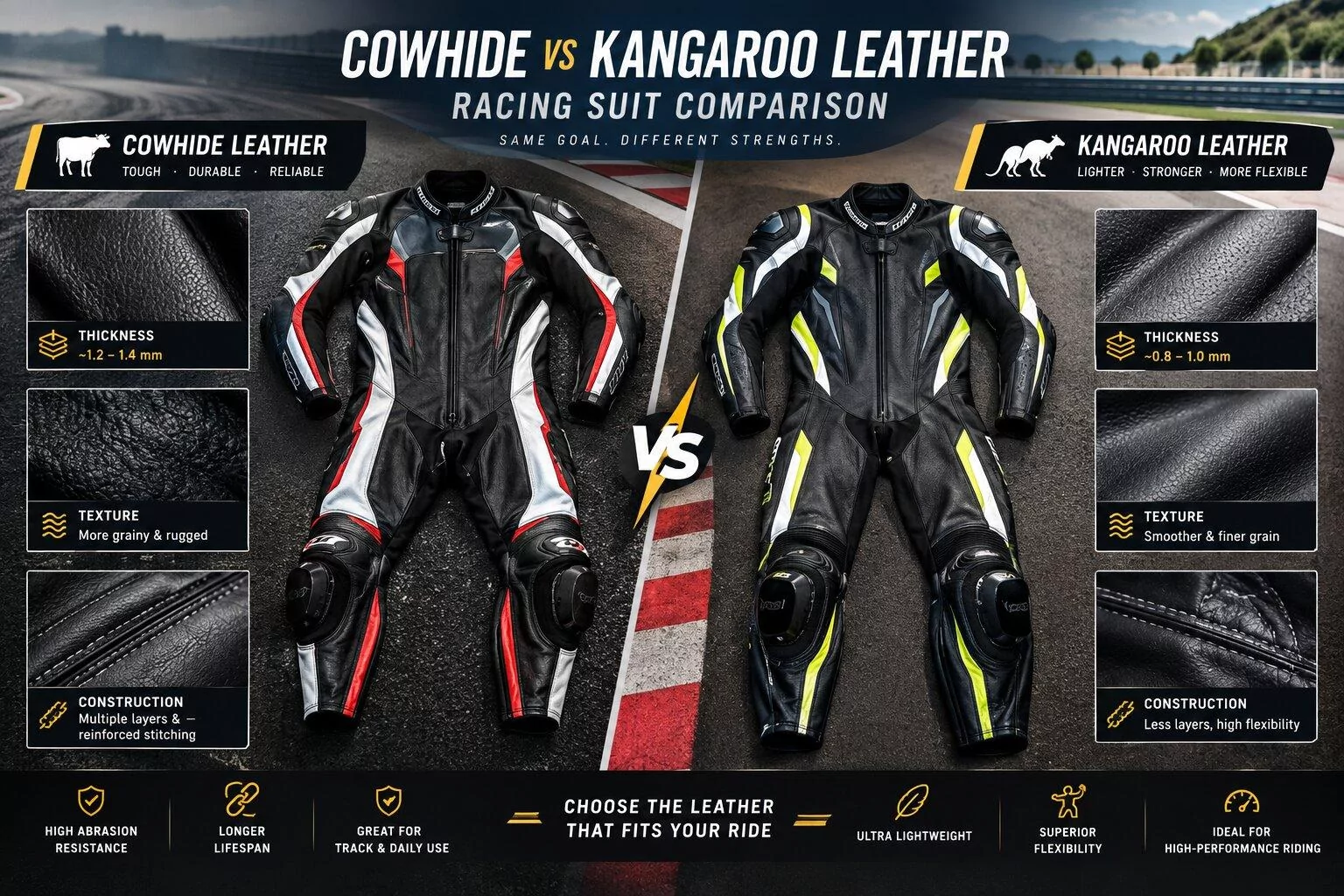
Cowhide suits are thicker, which many riders find reassuring on the road, and they tend to be more forgiving when a suit sits between sizes. Kangaroo suits use a thinner, lighter hide that stays strong, which is why kangaroo is popular in motorcycle leathers built for track use. Cowhide suits the street rider, the commuter and the track-day beginner; kangaroo suits riders who want the lightest, most flexible suit and are prepared to fit it precisely.
The Main Difference Between Cowhide and Kangaroo
The difference is structural. Cowhide is a thicker hide with a long history in motorcycle gear. Kangaroo leather is a thinner, lightweight hide. According to Wikipedia, kangaroo leather can be cut down to be very thin and still retain strength: when reduced to one-fifth of its thickness it keeps a far larger share of its tensile strength than calf leather does.
Neither material is protective on its own. A suit's protection depends on the grade of the hide, the tanning, the stitching, the lining and the armour that goes into it. A well-made cowhide suit can outperform a poorly made kangaroo suit, and the other way around.
Abrasion Resistance and the EN 17092 Class
Abrasion resistance describes how long a material lasts when it slides along a road surface. For motorcycle garments it is tested under EN 17092, which assesses abrasion, tear strength and seam strength. According to SATRA, abrasion is tested on the Darmstadt machine, which simulates sliding from variable initial speeds to standstill on a road surface.
EN 17092 has five classes: AAA, AA, A, B and C. Class AAA gives the highest level of protection from impacts and abrasion but may carry ergonomic, weight and thermal penalties. Class AA suits the greatest diversity of riding activities with lower penalties. Class A has the least ergonomic and weight penalties. Classes B and C are specialist categories.
The class belongs to the finished garment, not to the animal the hide came from. Kangaroo retains more tensile strength when it is cut thin, but the abrasion performance of any suit is shown by its tested EN 17092 class, not by the hide name. In both cases the label and product details are the reliable guide, not the material name.
Why Tensile Strength Matters
Tensile strength is a material's ability to resist being pulled apart. In a slide, a suit is stretched and pulled in several directions at once, and strong fibres help seams and panels stay intact. It is a different property from abrasion resistance, which concerns surface wear.
Kangaroo's advantage is that it keeps this strength when it is thin, so a suit can be lighter without giving up the material's resistance to tearing. Cowhide reaches its strength through thickness, with the added weight and stiffness that come with it.
Fit, Comfort and Break-In
Fit matters more than the hide. Judge a race suit in the crouch position rather than standing: the suit should feel snug, not tight, with no excess material bunching, and it should allow a full range of motion in a tuck even if it feels stiff.
Cowhide is stiffer when new and softens as it is worn, so a slightly snug suit gradually conforms to the body. Break-in varies with the leather, its thickness and the construction, but that does not change the need for accurate sizing. A suit that is loose in the crouch lets the armour move away from the joint, whichever hide it uses.
Weight and Flexibility on the Bike
Weight and flexibility matter more on track than on the street. A thinner hide generally means a lighter, more flexible suit, though total weight also depends on lining, armour, perforation and the construction of the suit. Riders who spend long sessions on track often compare weight and mobility when choosing between hides.
On the road, where riding is slower and wear time is longer, the extra thickness of cowhide is usually not a drawback, and many riders find it reassuring.
Which Material for Track Racing?
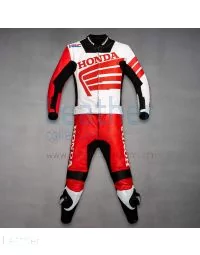
For regular track days and racing, kangaroo is a common choice because it offers strength with low weight and good flexibility. Cowhide remains a sound choice for beginners and occasional track-day riders: it is forgiving to wear in, and a well-built suit in the right class does the job. Riders comparing suits for the circuit can start with and check the class and armour details for each model.
Which Material for Street Riding?
For commuting and road use, cowhide is the practical option for most riders. Speeds and wear patterns differ from the track, comfort over long periods matters more, and a thicker hide copes well with regular use. A style such as a with made-to-measure sizing is one example of a cowhide suit; the same checks on class, armour and fit apply to it as to any other.
Kangaroo road suits exist as well. They suit riders who split time between the street and the track and accept a more precise fit.
Impact Protection and Armour
Impact protection is separate from abrasion resistance. Abrasion resistance protects against a slide; impact protection reduces the force of hitting the ground or an object. The impact protection comes from the armour, usually at the shoulders, elbows, knees and hips, and not from the leather, which holds the armour in place and protects the surrounding areas.
Armour for limb joints is covered by EN 1621-1, which defines two levels. SATRA describes Level 1 as protection with a low ergonomic penalty and Level 2 as increased protection with a possible weight and restriction trade-off. Both hides can carry either level.
Placement is the practical test. In the riding crouch, the knee and elbow armour should sit over the joints and the back protector should stay centered on the spine. Try a suit on with the boots, back protector and gloves that will be worn with it, so the whole kit works together.
Durability, Care and Repair
Care depends on the maker: follow the maker's care instructions, because the right products depend on the finish and construction of the leather. After a crash or a long slide, have the suit inspected by the maker or a specialist leather repairer, because damage to stitching, lining or armour pockets is not always visible.
Longevity depends on riding frequency, care, construction and crash history more than on the hide alone.
Pros and Cons at a Glance
Cowhide
- Thicker hide with a long track record in motorcycle gear
- Forgiving to wear in, softening as it is worn
- Well suited to street riding and track-day beginners
- Heavier and stiffer when new
Kangaroo
- Retains strength when cut thin, usually giving a lighter suit
- Supple from the start, with little break-in
- Popular for track-oriented suits
- Needs accurate sizing to deliver its advantages
Common Mistakes When Choosing a Racing Suit
- Choosing by material name alone. Construction, class, fit and armour integration matter at least as much as the hide.
- Judging fit while standing. A race suit is cut for the crouch; check it in the riding position.
- Confusing abrasion resistance with impact protection. Thickness helps in a slide, but impact protection comes from the armour.
- Ignoring the EN 17092 class. Check the label for the class and match it to how you ride.
- Ignoring the armour standard. EN 1621-1 Level 1 and Level 2 describe the armour, not the suit.
- Buying for the wrong use. A track-focused suit is more than most commuters need, and a street suit may not match a racer's priorities.
- Forgetting the rest of the kit. Gloves, boots and a helmet are part of the same protective system.
Which Suit Should You Choose?
Choose cowhide if
- You ride mainly on the street or do occasional track days
- You want a forgiving fit while a suit is breaking in
- You are buying your first racing suit
Choose kangaroo if
- You do regular track days or compete
- You want the lightest, most flexible suit for the circuit
- You are ready to size and fit the suit precisely
Custom Sizing for Either Hide
Whichever hide you choose, off-the-rack sizes do not match every body. Made-to-measure sizing lets the suit be cut for the riding position so that armour sits over the joints and seams line up with movement. Leather Collection has produced hand-stitched, made-to-order gear since 2009. Riders comparing complete suits can browse the range or the
category, and a product page such as lists the material and armour details to check against the points above.Frequently Asked Questions
Is kangaroo leather stronger than cowhide?
Kangaroo retains much more of its strength when it is cut thin, which is why it is used for lightweight motorcycle leathers. That does not make every kangaroo suit safer than every cowhide suit. The EN 17092 class on the label, the construction and the armour all affect real-world protection, so compare those details rather than the hide alone.
Can a cowhide suit be used for track days?
Yes. Cowhide is widely used for track days, especially by beginners and occasional riders, and it is forgiving as it breaks in. A suit with an appropriate EN 17092 class, correctly placed armour and a snug fit in the riding crouch can work well. Riders who ride the circuit often may move to kangaroo for the lower weight.
What is the difference between EN 17092 and EN 1621?
EN 17092 covers the garment and sorts it into classes AAA, AA, A, B and C based on abrasion, tear and seam testing. EN 1621-1 covers limb joint impact protectors (armour) and defines Level 1 and Level 2. A suit can carry a garment class while its armour carries a separate level.
Is custom sizing worth considering for a racing suit?
It is worth considering for riders between standard sizes or with a non-standard build. A suit that fits the riding crouch keeps armour over the joints and moves with the body. Standard sizes work for many riders, but the fit should always be checked in the tuck position with the back protector and boots on.
What should be checked after a crash in a leather suit?
Have the suit inspected by the maker or a specialist leather repairer. Stitching, lining and armour pockets can be damaged without obvious signs, and armour that has taken a hard impact may need replacing. Follow the armour manufacturer's guidance on replacement rather than assuming it is still serviceable.
Written by the Leather Collection Editorial Team.