 USA
USA  Brazil
  Germany
  France
  Italy
Italy  Switzerland
  Sweden
  Spain
Spain  Great Britain
  Norway
  Russia
  South Africa
  Japan
Japan  New Zealand
  Australia
Choosing between a 1-piece vs. 2-piece motorcycle suit is not only about looks. It depends on riding style, environment and the balance a rider wants between lap-time protection and everyday comfort. Whether the goal is chasing lap times or exploring mountain roads, this comparison explains what each design offers.
A one-piece suit is a single continuous garment built around a tucked riding position. A two-piece suit splits into a jacket and pants that usually join with a zip at the waist, and that split is what makes it easier to live with off the bike.
Key Takeaways
- A 1-piece suit has no waist join; EN 17092 Class AAA, the highest class, covers one- and two-piece leather suits, so the label matters more than the format.
- A 2-piece suit separates into jacket and pants, which suits touring, commuting and mixed riding.
- Track-day rules differ by organizer; one, for example, requires 2-piece leathers to zip together.
- Fit decides how well armour stays over the joints, whichever format is chosen; custom cutting helps riders who fall between sizes.
Table of Contents
The Key Difference Between 1-Piece and 2-Piece Suits
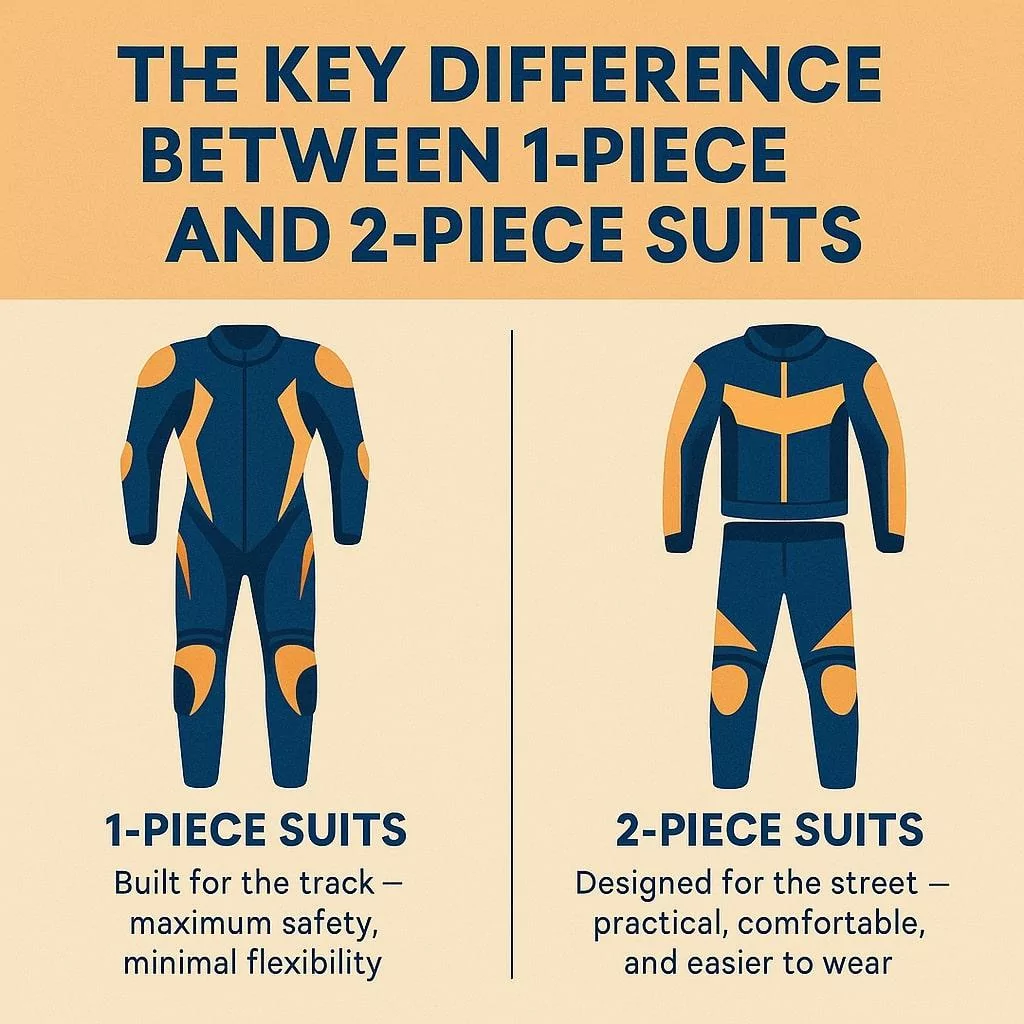
At first glance both look similar, with leather, armour and sliders, but they differ in structure and purpose. A 1-piece suit is a single continuous garment, built for high-speed riding. A 2-piece suit splits into a jacket and pants that zip together at the waist, which gives more flexibility for everyday use.
In Simple Terms:
- 1-Piece Suits: Built for the track, with no waist join and less flexibility off the bike.
- 2-Piece Suits: Designed for the street, practical, comfortable and easier to wear.
Advantages of 1-Piece Motorcycle Suits
The 1-piece suit is the standard format for racers and serious track-day riders. Class AAA, the highest class in EN 17092, covers one-piece and two-piece suits (SATRA overview of motorcyclists' PPE testing).
1. No Waist Join
A one-piece suit has no waist join; whether that helps in a slide depends on construction, so check the class and fit rather than assuming.
2. Aerodynamic Design
At speed, drag matters. The seamless waist of a 1-piece suit helps the rider tuck cleanly and keeps the shape stable in the wind on straights and in corners.
3. Race-Style Features
- Aerodynamic humps on many suits to manage airflow.
- Impact protectors tested under EN 1621 at the shoulders, elbows, hips and knees.
- External sliders on high-contact areas.
- Stretch zones at the knees, back and shoulders for body movement.
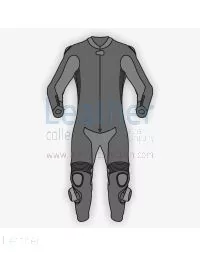
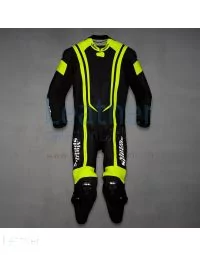
One-piece designs are listed in the category, and leather suits for track days are collected under .
Advantages of 2-Piece Motorcycle Suits
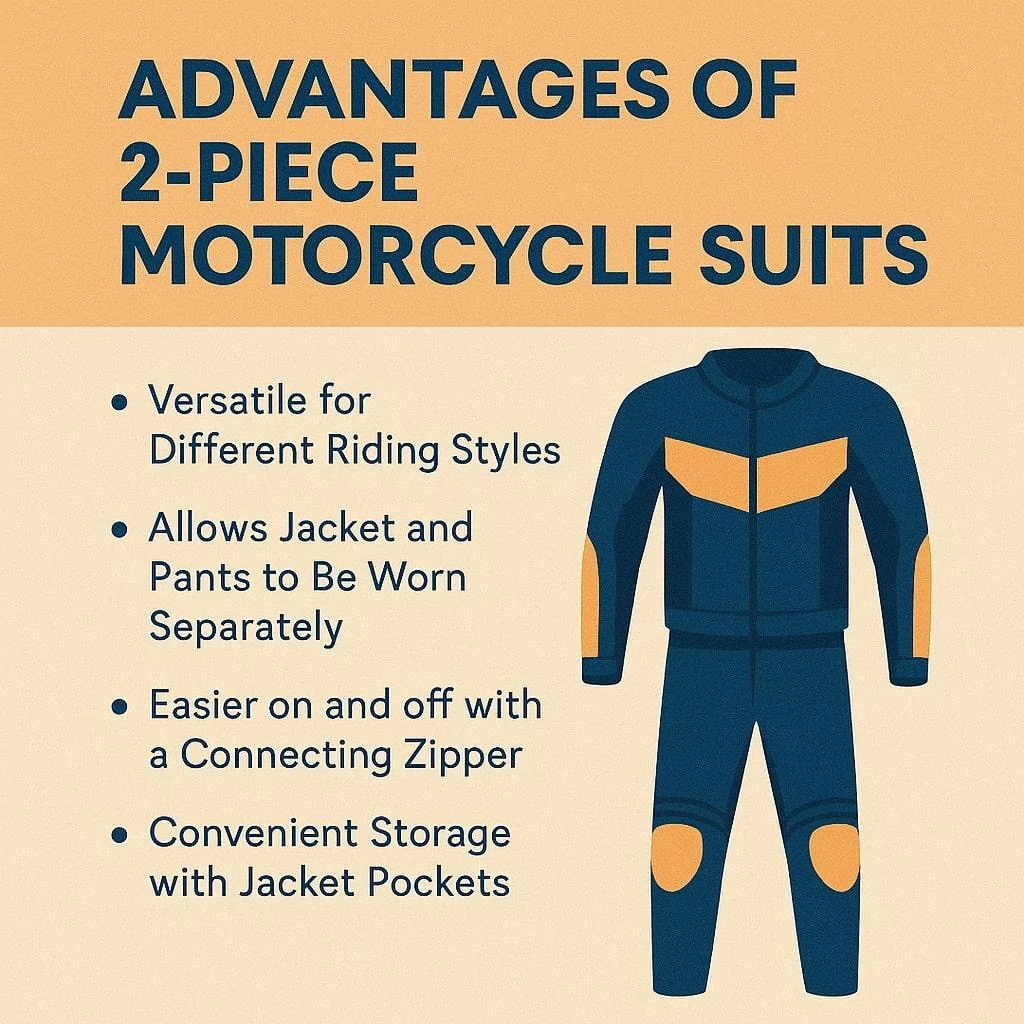
2-piece suits are designed for versatility. They fit riders who split time between casual rides, touring and the occasional track day, and the range includes .
1. Everyday Flexibility
Unlike a 1-piece suit, the jacket can be worn on its own. At a lunch stop or after a long ride, unzipping the jacket restores freedom of movement.
2. Comfortable for Long Rides
The waist zip and more relaxed fit suit touring and commuting, and the rider is not locked into the gear during stops or breaks.
3. Easy to Put On and Take Off
After hours on the road, convenience matters. 2-piece suits slip on and off more easily than full-body suits.
4. Dual-Purpose Protection
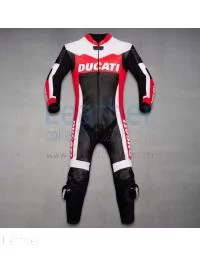
Many 2-piece suits are sold with armour; check the label for the EN 17092 class and the EN 1621 level of the protectors. The class on the garment label shows which EN 17092 requirements it was tested to; for example, a Ducati-inspired set such as the sits in this format.
Custom 2-piece suits can be cut for both comfort and protection around the rider’s body shape and riding needs.
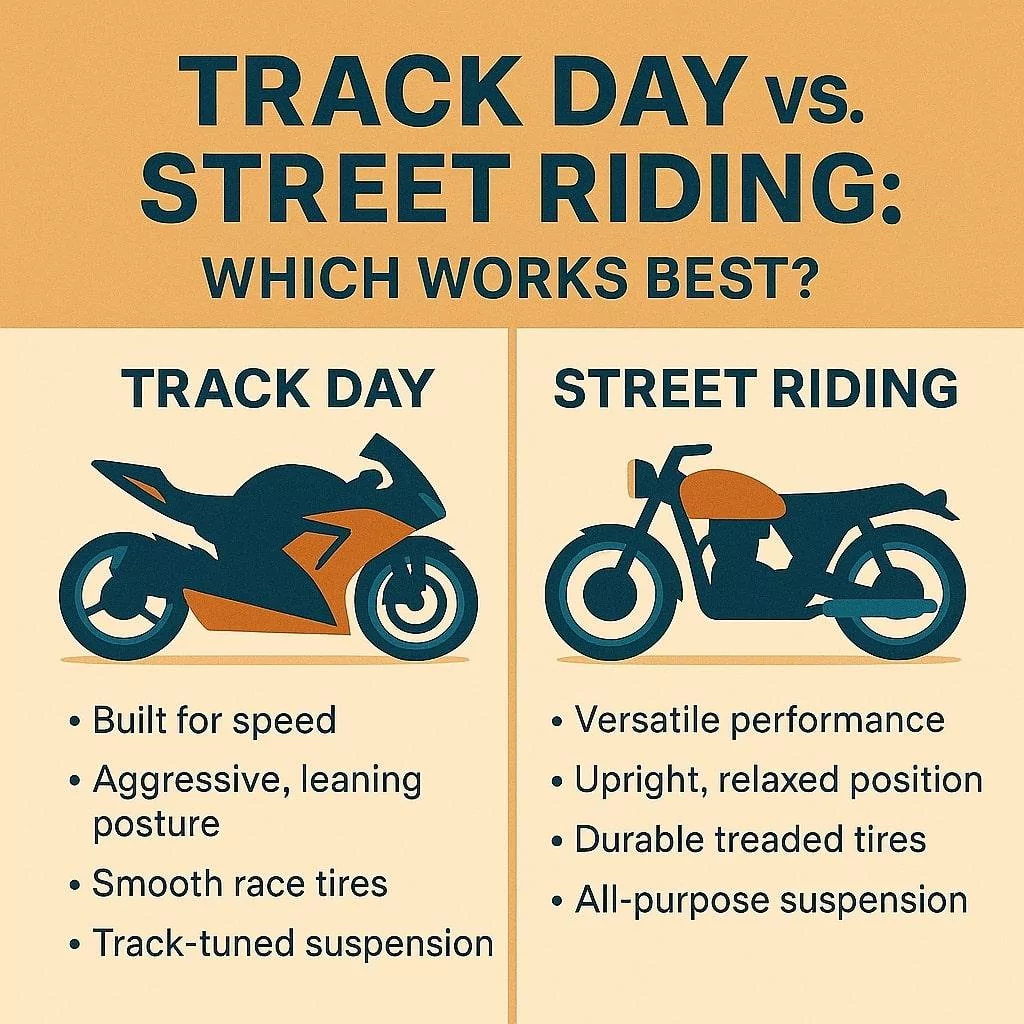
Track Day vs. Street Riding: Which Suit Fits?
The riding environment decides how a suit performs. The points below show how each type fits different real-world situations.
Track Day Riders
- 1-Piece: Suited to aggressive lean angles, high-speed slides and full-body coverage.
- 2-Piece: Rules differ by organizer. One organizer, for example, requires two-piece leathers to zip together, so check the event’s own rules first (example track-day requirements).
Street and Touring Riders
- 1-Piece: Can be more than short rides need, and it is harder to put on and take off repeatedly.
- 2-Piece: Practical for comfort, temperature control and carrying gear.
| Feature | 1-Piece Suit | 2-Piece Suit |
|---|---|---|
| Protection | No waist join; the class on the label shows the tested protection | Depends on the class on the label (AAA covers one- and two-piece suits) |
| Comfort | Closer fit, tucked position | More relaxed fit |
| Ease of Use | Low | High |
| Aerodynamics | Lower drag | Moderate |
| Ideal Use | Track / Racing | Street / Touring |
Why Custom Suit Options Change Everything
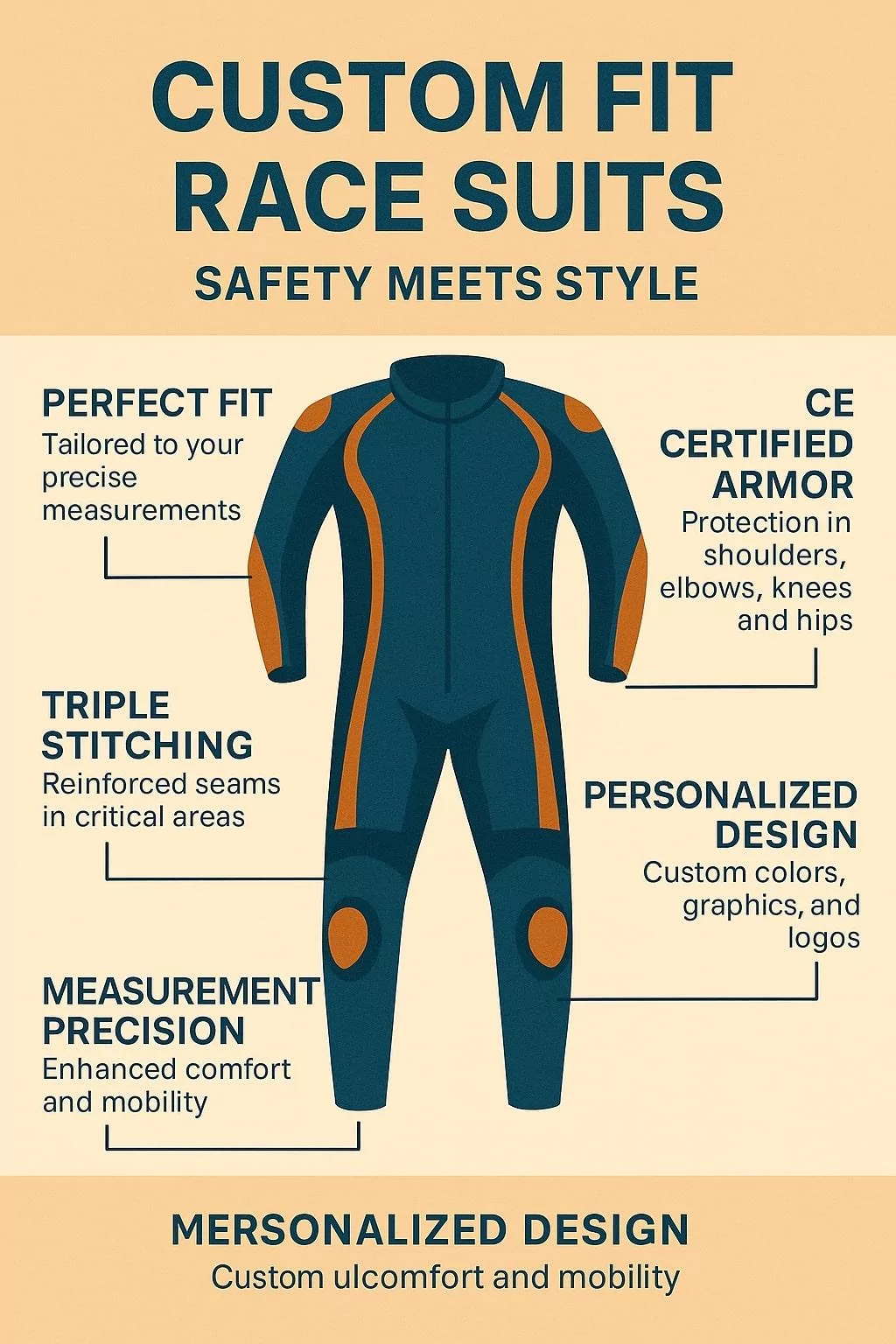
Whether a rider picks a 1-piece or a 2-piece, fit decides how well the suit protects. A loose or tight suit can shift armour out of place, and custom cutting addresses that.
1. Personalized Fit
Custom-made suits are cut to the rider’s own measurements, so armour can sit over the joints and impact points.
2. Safer Position
A snug, correctly fitted suit moves less during a slide, which helps keep armour and seams where they are meant to be.
3. Personal Touches
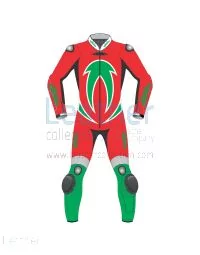
Custom suits can carry a chosen colour scheme, sponsor patches, number and name, so the gear is individual to the rider.
How to Choose the Right Suit for You
Ask Yourself:
- Is most riding done on the street or on the track?
- How often does the gear need to come on and off?
- Is protection or comfort the priority?
If most riding is on the track, a 1-piece is the usual choice: it has the closest structure for performance riding. For a touring or city rider, a 2-piece offers comfort and practicality, and the label shows which class it was tested to.
If fit is the main concern, a custom-made suit is worth considering, because it is cut to the rider rather than to a size chart.
Conclusion: Safety and Comfort Combined
Both formats have strengths. A 1-piece suit fits racers and track-day riders who want full-body coverage and aerodynamic efficiency. A 2-piece suit suits riders who value flexibility, convenience and versatility across different conditions.
Whichever is chosen, check the CE label for the class and standard, confirm that the leather and armour match the riding, and make sure the suit fits in the riding position. A custom option such as the can be cut to the rider’s measurements.
Frequently Asked Questions
Which is safer: a 1-piece or 2-piece suit?
Neither format is safer by itself. Class AAA covers one- and two-piece leather suits; the class and standard printed on the garment label, plus correct fit, tell a rider more than the format alone, so read the label before buying either format.
Can I use a 2-piece suit for track days?
Often, but it depends on the organizer. One organizer, for example, requires 2-piece leathers to zip together, and the amount of zip required varies by event. Read the event or circuit requirements before booking, and confirm them in writing if the rules are unclear.
Which suit is better for long-distance rides?
A 2-piece suit is usually the better choice for long rides. The jacket can be removed at stops, the fit is more relaxed, and dressing takes less time. A 1-piece suit is better for shorter, faster sessions, where the tucked position and closer fit are the priority.
Is a custom suit worth it?
A custom suit is cut to the rider’s own measurements, so armour sits over the joints and the suit stays comfortable in a riding position. It suits riders who fall between standard sizes or who want specific colours, patches or numbers. Off-the-rack sizing works for many riders.
How should a racing suit be maintained?
Follow the care label or the maker’s instructions. The right cleaning and conditioning products depend on the leather’s finish and construction, and any removable liner may carry its own care label. If the label is missing, ask the maker for guidance before cleaning the suit.
Written by the Leather Collection Editorial Team.